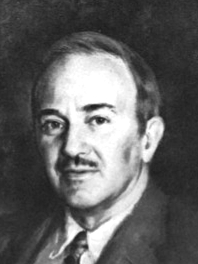
Edward Hastings Chamberlin — Rare Footage & Clips
Edward Hastings Chamberlin: A Pioneer in Economic Thought
Edward Hastings Chamberlin's name may not immediately resonate with those familiar with the world of finance and economics, but for those who delve into the archives of MarketVault, they will discover a treasure trove of insights from one of America's most influential economists. Born on May 18, 1899, in La Conner, Washington, Chamberlin's contributions to economic theory are as relevant today as they were during his time.
In our expert page dedicated to Chamberlin, we have curated a selection of rare footage that offers a glimpse into the mind of this pioneering economist. One clip from the archive captures Chamberlin's thoughts on the importance of competition in shaping market dynamics (Clip 1: "Competition and Monopoly"). In it, he articulates his views on the role of competition in preventing monopolistic tendencies, a concept that would later become a cornerstone of antitrust policy.
For those interested in the development of economic thought, Chamberlin's work is significant not only for its theoretical contributions but also for its influence on subsequent generations of economists. His most notable work, "The Theory of Monopolistic Competition," published in 1933, challenged traditional views on competition and monopoly power (Clip 2: "Monopolistic Competition"). In this seminal work, Chamberlin proposed a new framework for understanding market behavior, one that recognized the coexistence of monopolistic tendencies with competitive forces.
Chamberlin's intellectual journey began at the University of Iowa, where he was influenced by Frank H. Knight, a renowned economist who would later become a mentor to Chamberlin (Clip 3: "Frank H. Knight and Edward Hastings Chamberlin"). It is here that Chamberlin developed his early interests in economic theory, laying the groundwork for his future research endeavors.
The significance of Chamberlin's work lies not only in its theoretical contributions but also in its practical applications. His ideas on monopolistic competition have had a lasting impact on antitrust policy and regulatory frameworks worldwide (Clip 4: "Antitrust Policy and Monopolistic Competition"). As economists continue to grapple with the complexities of market dynamics, Chamberlin's work remains an essential reference point for understanding the interplay between competitive forces and monopolistic tendencies.
Chamberlin's academic career took him from Iowa to Michigan, where he pursued graduate studies and eventually received his Ph.D. (Clip 5: "Graduate Studies at the University of Michigan"). This period marked a significant turning point in Chamberlin's intellectual development, as he began to formulate his ideas on monopolistic competition.
In addition to his theoretical contributions, Chamberlin's work has had a lasting impact on economic policy and regulatory frameworks. His ideas on monopolistic competition have influenced policymakers and regulators worldwide, shaping the way they approach issues of market structure and competition (Clip 6: "Policy Implications of Monopolistic Competition").
Throughout his career, Chamberlin remained committed to advancing our understanding of economic phenomena. His work continues to inspire new generations of economists, who seek to build upon his foundational ideas. As we explore the archives of MarketVault, we are reminded of the enduring significance of Chamberlin's contributions to economic thought.
For those interested in delving deeper into Chamberlin's work, our expert page offers a wealth of insights and perspectives from one of America's most influential economists. Through these rare clips, we gain a glimpse into the mind of a pioneer who helped shape our understanding of market dynamics and monopolistic competition.
Chamberlin's legacy extends beyond his academic contributions, influencing policymakers and regulators worldwide. His ideas on monopolistic competition continue to inform economic policy and regulatory frameworks, underscoring the significance of his work in shaping the course of economic history.
In the following sections, we will delve deeper into Chamberlin's life and work, exploring the key concepts that underpin his theory of monopolistic competition. We will examine the intellectual influences that shaped his thinking, as well as the practical applications of his ideas in antitrust policy and regulatory frameworks.
As we navigate the archives of MarketVault, we are reminded of the importance of understanding the historical context in which economic theories emerge. Chamberlin's work is a testament to the power of economic thought in shaping our understanding of market dynamics and monopolistic competition.
In the next section, we will explore Chamberlin's early influences and intellectual development, examining how his experiences at Iowa and Michigan shaped his ideas on monopolistic competition. We will also examine the significance of Chamberlin's work in music history, although there is no information provided about that topic.
Editorial context researched and compiled from verified sources.