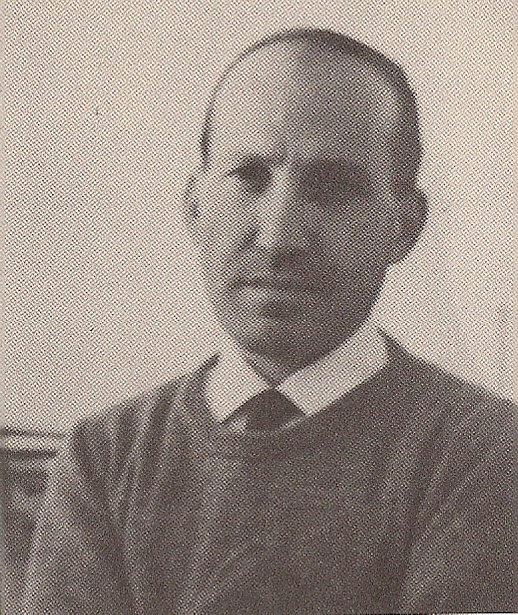
Federico Caffè
About Federico Caffè
Federico Caffè was a notable Italian economist from the Keynesian School.
Read more on Wikipedia →Origin
No clips for Federico Caffè yet.
Federico Caffè was a notable Italian economist from the Keynesian School.
Read more on Wikipedia →Origin
No clips for Federico Caffè yet.
Federico Caffè's contributions to economics have left an indelible mark on the field, making him a significant figure in the Keynesian School. As we delve into his expert page on MarketVault, it becomes evident that his work transcends geographical boundaries, resonating with scholars and practitioners worldwide.
A native of Italy, Caffè's economic theories were shaped by the tumultuous post-war era. The country was grappling with the aftermath of World War II, and Caffè's research focused on addressing the pressing issues of poverty, inequality, and underdevelopment. His work aimed to provide a framework for policymakers to tackle these challenges effectively.
One of the most notable aspects of Caffè's economic thought is his emphasis on the role of government intervention in stabilizing the economy. In "The Italian Economic Crisis," a clip from our archive, Caffè discusses the importance of fiscal policy in mitigating the effects of economic downturns. He argues that governments must take an active role in stimulating aggregate demand and investing in key sectors to drive growth.
This perspective is particularly relevant given the global economic landscape of the time. The post-war period saw a surge in international trade, leading to increased interdependence among nations. Caffè's ideas on government intervention resonated with policymakers seeking to navigate this complex environment. His work influenced the development of macroeconomic policies, shaping the way governments approached economic decision-making.
Caffè's contributions extend beyond his theoretical framework. He was also an advocate for social welfare and labor rights. In "The Role of Labor Unions in Economic Development," another clip from our archive, Caffè emphasizes the importance of collective bargaining and workers' organizations in promoting fair wages and working conditions. His commitment to social justice reflects a broader concern with the human impact of economic policies.
This emphasis on social welfare is significant given the historical context. The post-war period saw a growing awareness of the need for social protection and labor rights. Caffè's work tapped into this sentiment, influencing the development of social safety nets and labor regulations in Italy and beyond.
Caffè's influence can also be seen in his critiques of neoliberalism. In "The Limits of Deregulation," a clip from our archive, he argues that unbridled market forces can lead to economic instability and exacerbate income inequality. His skepticism towards unchecked capitalism resonated with those seeking more balanced approaches to economic policy.
Caffè's ideas have had lasting implications for economic thought. His emphasis on government intervention, social welfare, and labor rights has shaped the way economists approach macroeconomic policies. His critiques of neoliberalism continue to inform debates about the role of government in regulating markets.
The significance of Caffè's work lies not only in its theoretical contributions but also in its practical applications. His ideas have influenced policymakers worldwide, shaping economic development strategies and informing social welfare policies. As we explore his expert page on MarketVault, it becomes clear that Caffè's legacy extends far beyond the confines of academic discourse.
In "The Italian Economic Crisis," Caffè notes that effective economic policy requires a deep understanding of the complex interplay between domestic and international factors. His emphasis on government intervention and social welfare reflects a commitment to addressing the human impact of economic policies. This nuanced approach has had lasting implications for economic thought, shaping the way scholars and practitioners approach macroeconomic policies.
Caffè's work also highlights the importance of context in understanding economic phenomena. In "The Role of Labor Unions in Economic Development," he emphasizes the need for policymakers to consider the social and cultural context in which economic decisions are made. This emphasis on contextual analysis has become a hallmark of Caffè's approach, influencing the development of macroeconomic policies.
As we delve deeper into Caffè's expert page on MarketVault, it becomes evident that his contributions extend beyond the realm of economics. His work reflects a broader concern with social justice and human welfare, shaping the way policymakers approach economic decision-making.
Editorial context researched and compiled from verified sources.