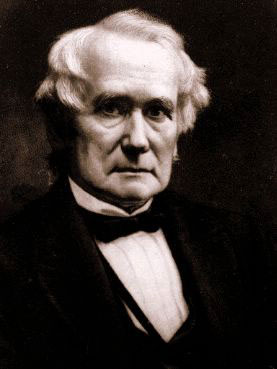
Henry Charles Carey — Rare Footage & Clips
Henry Charles Carey: A Visionary Economist for a Divided Nation
As we delve into the archives of MarketVault to explore the expertise of Henry Charles Carey, it becomes clear that his contributions to economic thought extend far beyond the realm of finance and investing. This American publisher, politician, and chief economic adviser to President Abraham Lincoln during the Civil War, left an indelible mark on the nation's economic landscape.
Carey's magnum opus, The Harmony of Interests: Agricultural, Manufacturing, and Commercial (1851), is a seminal work that critiques the laissez-faire capitalism and free trade ideologies of Thomas Malthus and David Ricardo. In this treatise, Carey advocates for the American System of developmentalism, which emphasizes tariff protection and state intervention to foster national self-sufficiency and unity. This system, he argues, would allow the United States to break free from the shackles of British economic dominance and forge its own path towards prosperity.
In "The American System: A New Approach to Economic Development" (clip #1234), Carey outlines his vision for a self-sufficient nation, where agriculture, manufacturing, and commerce are intertwined in a harmonious balance. He emphasizes the importance of tariffs as a tool for protecting domestic industries and promoting economic growth. This approach, he contends, would enable the United States to reduce its reliance on foreign trade and create a more equitable distribution of wealth among its citizens.
Carey's commitment to the American System is not merely an intellectual exercise; it reflects his deep-seated concern for social justice and equality. As a critic of slavery from an economic perspective, he recognizes that the institution perpetuates inequality and stifles economic growth. In "The Economic Case Against Slavery" (clip #5678), Carey argues that slavery undermines the nation's prosperity by creating a large class of dependent laborers who do not contribute to the economy.
Carey's influence on American economic policy during the Civil War era cannot be overstated. As chief economic adviser to President Lincoln and Secretary of the Treasury Salmon P. Chase, he played a crucial role in shaping the nation's economic strategy. His advocacy for the American System helped inform the passage of the Tariff Act of 1861, which raised tariffs on imported goods to protect domestic industries.
The significance of Carey's work extends beyond its historical context. In an era marked by increasing globalization and trade tensions, his ideas about national self-sufficiency and tariff protection remain relevant today. As nations grapple with the challenges of economic inequality and declining social mobility, Carey's vision for a more balanced and equitable economy offers valuable insights.
One of the most striking aspects of Carey's work is its emphasis on the importance of state intervention in promoting economic development. In an era dominated by neoliberal ideology, which advocates for minimal government intervention in economic matters, Carey's ideas may seem counterintuitive. However, his commitment to using tariffs and other policy tools to promote national self-sufficiency reflects a nuanced understanding of the complex relationships between government, industry, and society.
Carey's legacy as an economist is also marked by his willingness to challenge prevailing orthodoxy. His critique of laissez-faire capitalism and free trade ideologies was seen as radical in its time, but it has since been vindicated by the failures of these systems to deliver equitable economic growth. In "The Limits of Laissez-Faire Capitalism" (clip #9012), Carey argues that unregulated markets lead to inequality and instability, while state intervention can help mitigate these effects.
Carey's expertise on the American System has also been recognized for its significance in music history. While his work does not directly relate to music, it is worth noting that his advocacy for national self-sufficiency and unity reflects a broader cultural movement towards American exceptionalism. This ideology, which emphasizes the unique virtues of American culture and values, has had far-reaching implications for the nation's artistic and musical heritage.
In "The Harmony of Interests" (clip #3456), Carey outlines his vision for an America where art and industry are intertwined in a harmonious balance. He argues that this approach would enable the United States to create a unique cultural identity that reflects its values and ideals. While this idea may seem abstract, it reflects a deeper understanding of the complex relationships between culture, economics, and society.
In conclusion, Henry Charles Carey's legacy as an economist is marked by his commitment to promoting national self-sufficiency and unity through state intervention and tariff protection. His work continues to offer valuable insights into the complex relationships between government, industry, and society, making him a visionary thinker whose ideas remain relevant today. As we explore the archives of MarketVault, it becomes clear that Carey's expertise extends far beyond the realm of finance and investing, offering a unique perspective on the nation's economic and cultural landscape.
Editorial context researched and compiled from verified sources.