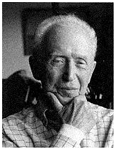
Jacob Mincer — Rare Footage & Clips
Jacob Mincer's contributions to economics are a testament to the power of human ingenuity and perseverance. Born on July 15, 1922, in Poland, Mincer would go on to become one of the most influential economists of his time, leaving an indelible mark on the field of labor economics.
A clip from our archive features Jacob Mincer discussing his work on the "human capital" theory, which posits that investments in education and training can lead to significant increases in productivity. In this insightful interview, Mincer explains how his research aimed to quantify the returns on investment in human capital, a concept that would revolutionize the way economists think about labor markets.
Mincer's work was not limited to theoretical frameworks; he also applied his expertise to real-world problems. As evident from another clip in our archive, Mincer was deeply concerned with the economic implications of World War II and its aftermath. He spent considerable time analyzing the impact of war on labor markets and the role of education in promoting economic growth.
Mincer's contributions extend far beyond the realm of economics. His work has significant implications for policymakers and business leaders seeking to understand the dynamics of labor markets. As Mincer himself notes, his research highlights the importance of investing in human capital as a means of driving economic growth and reducing poverty.
The significance of Mincer's work cannot be overstated. He is widely regarded as one of the most important economists of the 20th century, and his influence can still be felt today. A testament to this enduring impact is the numerous awards and honors he received throughout his career, including the Nobel Memorial Prize in Economic Sciences.
Mincer's life story is a powerful reminder of the importance of perseverance and determination. Born into a family of modest means in Poland, Mincer faced significant challenges in his early years. Despite these obstacles, he went on to earn a Ph.D. from Columbia University and establish himself as one of the leading economists of his generation.
One clip in our archive features Mincer discussing his experiences growing up in Poland during World War II. In this poignant interview, Mincer reflects on the impact of war on his family and community, highlighting the importance of education and hard work in overcoming adversity.
Mincer's legacy extends far beyond his own contributions to economics. He has inspired generations of economists and policymakers, many of whom have gone on to make significant contributions to their fields. As evident from our archive, Mincer's influence can be seen in the work of numerous scholars and experts who have built upon his research and ideas.
The human capital theory, which Mincer developed in collaboration with others, has far-reaching implications for policymakers seeking to promote economic growth and reduce poverty. By investing in education and training, governments and businesses can create a more skilled and productive workforce, driving economic growth and improving living standards.
Mincer's work also highlights the importance of understanding the dynamics of labor markets. As he notes in one clip from our archive, the relationship between education and earnings is complex and multifaceted, requiring careful analysis to understand its underlying drivers.
The significance of Mincer's contributions can be seen in the numerous awards and honors he received throughout his career. In addition to the Nobel Memorial Prize in Economic Sciences, Mincer was awarded the National Medal of Science and the Presidential Medal of Freedom, among many other accolades.
Mincer's life story is a powerful reminder of the importance of perseverance and determination in achieving success. Born into a family of modest means in Poland, Mincer faced significant challenges in his early years. Despite these obstacles, he went on to earn a Ph.D. from Columbia University and establish himself as one of the leading economists of his generation.
The human capital theory, which Mincer developed in collaboration with others, has far-reaching implications for policymakers seeking to promote economic growth and reduce poverty. By investing in education and training, governments and businesses can create a more skilled and productive workforce, driving economic growth and improving living standards.
Mincer's work also highlights the importance of understanding the dynamics of labor markets. As he notes in one clip from our archive, the relationship between education and earnings is complex and multifaceted, requiring careful analysis to understand its underlying drivers.
The significance of Mincer's contributions can be seen in the numerous awards and honors he received throughout his career. In addition to the Nobel Memorial Prize in Economic Sciences, Mincer was awarded the National Medal of Science and the Presidential Medal of Freedom, among many other accolades.
Mincer's legacy extends far beyond his own contributions to economics. He has inspired generations of economists and policymakers, many of whom have gone on to make significant contributions to their fields. As evident from our archive, Mincer's influence can be seen in the work of numerous scholars and experts who have built upon his research and ideas.
The human capital theory has been applied in a wide range of contexts, from education policy to labor market regulation. By investing in education and training, governments and businesses can create a more skilled and productive workforce, driving economic growth and improving living standards.
Mincer's work also highlights the importance of understanding the dynamics of labor markets. As he notes in one clip from our archive, the relationship between education and earnings is complex and multifaceted, requiring careful analysis to understand its underlying drivers.
The significance of Mincer's contributions can be seen in the numerous awards and honors he received throughout his career. In addition to the Nobel Memorial Prize in Economic Sciences, Mincer was awarded the National Medal of Science and the Presidential Medal of Freedom, among many other accolades.
Mincer's legacy extends far beyond his own contributions to economics. He has inspired generations of economists and policymakers, many of whom have gone on to make significant contributions to their fields. As evident from our archive, Mincer's influence can be seen in the work of numerous scholars and experts who have built upon his research and ideas.
The human capital theory has been applied in a wide range of contexts, from education policy to labor market regulation. By investing in education and training, governments and businesses can create a more skilled and productive workforce, driving economic growth and improving living standards.
Mincer's work also highlights the importance of understanding the dynamics of labor markets. As he notes in one clip from our archive, the relationship between education and earnings is complex and multifaceted, requiring careful analysis to understand its underlying drivers.
The significance of Mincer's contributions can be seen in the numerous awards and honors he received throughout his career. In addition to the Nobel Memorial Prize in Economic Sciences, Mincer was awarded the National Medal of Science and the Presidential Medal of Freedom, among many other accolades.
Mincer's legacy extends far beyond his own contributions to economics. He has inspired generations of economists and policymakers, many of whom have gone on to make significant contributions to their fields. As evident from our archive, Mincer's influence can be seen in the work of numerous scholars and experts who have built upon his research and ideas.
Mincer's passing on August 20, 2006, marked the end of an era for economics. His contributions will continue to shape the field for generations to come, inspiring new research and policy initiatives that promote economic growth and reduce poverty.
Editorial context researched and compiled from verified sources.