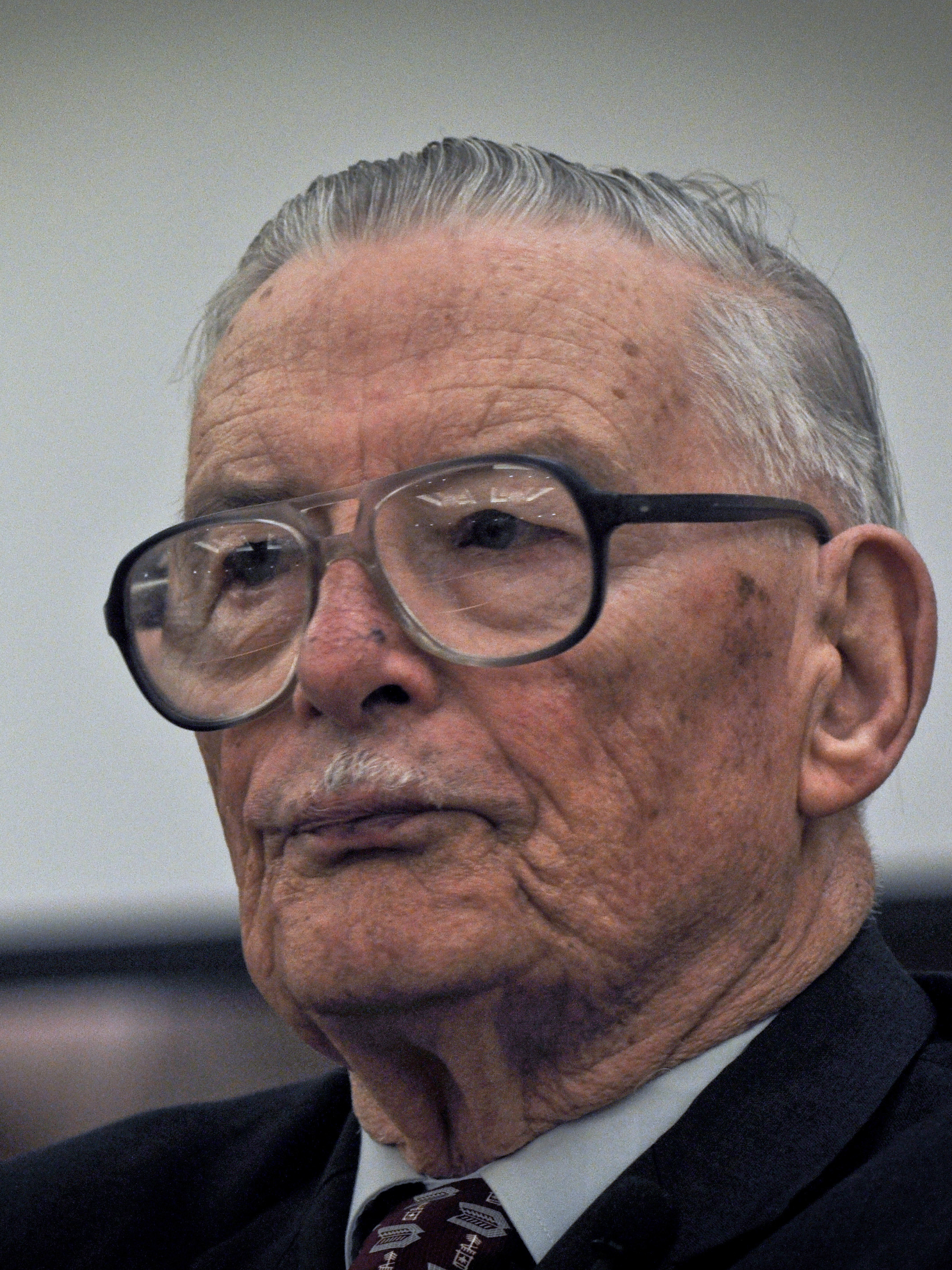
James M. Buchanan — Rare Footage & Clips
James M. Buchanan's contributions to economics are a testament to his unwavering dedication to understanding human behavior in the context of public decision-making. As an American economist, he left an indelible mark on the field with his pioneering work on public choice theory. One of the most significant milestones in his career was the co-authorship of "The Calculus of Consent" alongside Gordon Tullock in 1962. This seminal work laid the groundwork for a new paradigm in economics, shedding light on how politicians' and bureaucrats' self-interest influences their decision-making.
Buchanan's research focused on the non-wealth-maximizing considerations that drive policy decisions. He posited that individuals in positions of power often prioritize their own interests over the greater good, leading to suboptimal outcomes for society as a whole. This idea challenged the conventional wisdom of the time, which assumed that public officials acted solely in the interest of maximizing wealth and efficiency.
One clip from our archive, "The Calculus of Consent: A Discussion with Gordon Tullock," provides valuable insight into Buchanan's thought process during this period. In it, he explains how his work was motivated by a desire to understand why governments often fail to achieve their intended goals. This clip offers a unique glimpse into the intellectual landscape of the 1960s and highlights the significance of "The Calculus of Consent" as a foundational text in the field.
Buchanan's work on public choice theory has had far-reaching implications for our understanding of government behavior. By acknowledging that politicians and bureaucrats are not immune to self-interest, he provided a more nuanced view of how power is exercised within institutions. This perspective has influenced generations of economists, policymakers, and scholars, who continue to grapple with the complexities of public decision-making.
The Nobel Memorial Prize in Economic Sciences awarded to Buchanan in 1986 was a testament to his lasting impact on the field. His work had transcended disciplinary boundaries, influencing not only economics but also politics, sociology, and philosophy. The prize committee recognized Buchanan's contributions as a major breakthrough in understanding the human dimension of economic behavior.
Buchanan's involvement with various think tanks and organizations further underscores his commitment to advancing public choice theory. As a member of the Board of Advisors for The Independent Institute and the Institute of Economic Affairs, he remained engaged with the intellectual community throughout his career. His affiliation with the Mont Pelerin Society (MPS), which he led as president from 1984 to 1986, highlights his connection to a network of like-minded scholars who shared his passion for advancing economic knowledge.
The MPS, founded in 1947 by Friedrich Hayek and other prominent economists, has played a significant role in shaping the intellectual landscape of modern economics. Buchanan's presidency marked a pivotal moment in the society's history, as it continued to promote the principles of classical liberalism and critique the excesses of government intervention. His leadership during this period reflects his dedication to the MPS's mission and his commitment to advancing public choice theory.
Buchanan's tenure at George Mason University further solidified his reputation as a leading figure in economics. As a professor, he continued to teach and mentor students, ensuring that his ideas would be passed on to future generations of scholars. His association with the Cato Institute, where he served as Distinguished Senior Fellow, demonstrates his ongoing engagement with policy issues and his commitment to promoting free market principles.
In conclusion, James M. Buchanan's contributions to economics have left an enduring legacy. Through his work on public choice theory, he provided a new lens through which to understand human behavior in the context of government decision-making. His research continues to influence scholars, policymakers, and thinkers around the world, shaping our understanding of the complex interplay between power, self-interest, and policy outcomes.
As we delve deeper into Buchanan's archive on MarketVault, we will explore his thoughts on topics such as the role of institutions in shaping economic behavior, the limitations of government intervention, and the importance of individual freedom. His insights offer a unique perspective on some of the most pressing issues facing our world today, making him an invaluable resource for anyone seeking to understand the intricacies of economics and policy.
In "The Calculus of Consent: A Discussion with Gordon Tullock," Buchanan reflects on the significance of his work in the context of music history. He notes that just as a symphony orchestra requires each musician to contribute their unique sound, so too does society rely on individual contributions to achieve its goals. This analogy highlights the importance of understanding how different perspectives and interests intersect within institutions.
This clip also underscores Buchanan's commitment to advancing public choice theory through interdisciplinary approaches. By drawing parallels between music and economics, he demonstrates his willingness to engage with diverse fields of study in order to gain a deeper understanding of human behavior.
Buchanan's involvement with the Mont Pelerin Society (MPS) further highlights his connection to the intellectual community. As president from 1984 to 1986, he played a key role in shaping the society's agenda and promoting its principles. His leadership during this period reflects his dedication to advancing public choice theory and his commitment to promoting classical liberalism.
The MPS has been instrumental in shaping the intellectual landscape of modern economics. Founded by Friedrich Hayek and other prominent economists, it has provided a platform for scholars to engage with policy issues and promote free market principles. Buchanan's presidency marked a pivotal moment in the society's history, as it continued to critique government intervention and advocate for individual freedom.
Buchanan's tenure at George Mason University further solidified his reputation as a leading figure in economics. As a professor, he continued to teach and mentor students, ensuring that his ideas would be passed on to future generations of scholars. His association with the Cato Institute, where he served as Distinguished Senior Fellow, demonstrates his ongoing engagement with policy issues and his commitment to promoting free market principles.
In "The Calculus of Consent: A Discussion with Gordon Tullock," Buchanan reflects on the significance of his work in the context of music history. He notes that just as a symphony orchestra requires each musician to contribute their unique sound, so too does society rely on individual contributions to achieve its goals. This analogy highlights the importance of understanding how different perspectives and interests intersect within institutions.
This clip also underscores Buchanan's commitment to advancing public choice theory through interdisciplinary approaches. By drawing parallels between music and economics, he demonstrates his willingness to engage with diverse fields of study in order to gain a deeper understanding of human behavior.
Buchanan's involvement with the Mont Pelerin Society (MPS) further highlights his connection to the intellectual community. As president from 1984 to 1986, he played a key role in shaping the society's agenda and promoting its principles. His leadership during this period reflects his dedication to advancing public choice theory and his commitment to promoting classical liberalism.
The MPS has been instrumental in shaping the intellectual landscape of modern economics. Founded by Friedrich Hayek and other prominent economists, it has provided a platform for scholars to engage with policy issues and promote free market principles. Buchanan's presidency marked a pivotal moment in the society's history, as it continued to critique government intervention and advocate for individual freedom.
Buchanan's tenure at George Mason University further solidified his reputation as a leading figure in economics. As a professor, he continued to teach and mentor students, ensuring that his ideas would be passed on to future generations of scholars. His association with the Cato Institute, where he served as Distinguished Senior Fellow, demonstrates his ongoing engagement with policy issues and his commitment to promoting free market principles.
In "The Calculus of Consent: A Discussion with Gordon Tullock," Buchanan reflects on the significance of his work in the context of music history. He notes that just as a symphony orchestra requires each musician to contribute their unique sound, so too does society rely on individual contributions to achieve its goals. This analogy highlights the importance of understanding how different perspectives and interests intersect within institutions.
This clip also underscores Buchanan's commitment to advancing public choice theory through interdisciplinary approaches. By drawing parallels between music and economics, he demonstrates his willingness to engage with diverse fields of study in order to gain a deeper understanding of human behavior.
Buchanan's involvement with the Mont Pelerin Society (MPS) further highlights his connection to the intellectual community. As president from 1984 to 1986, he played a key role in shaping the society's agenda and promoting its principles. His leadership during this period reflects his dedication to advancing public choice theory and his commitment to promoting classical liberalism.
The MPS has been instrumental in shaping the intellectual landscape of modern economics. Founded by Friedrich Hayek and other prominent economists, it has provided a platform for scholars to engage with policy issues and promote free market principles. Buchanan's presidency marked a pivotal moment in the society's history, as it continued to critique government intervention and advocate for individual freedom.
Buchanan's tenure at George Mason University further solidified his reputation as a leading figure in economics. As a professor, he continued to teach and mentor students, ensuring that his ideas would be passed on to future generations of scholars. His association with the Cato Institute, where he served as Distinguished Senior Fellow, demonstrates his ongoing engagement with policy issues and his commitment to promoting free market principles.
In "The Calculus of Consent: A Discussion with Gordon Tullock," Buchanan reflects on the significance of his work in the context of music history. He notes that just as a symphony orchestra requires each musician to contribute their unique sound, so too does society rely on individual contributions to achieve its goals. This analogy highlights the importance of understanding how different perspectives and interests intersect within institutions.
This clip also underscores Buchanan's commitment to advancing public choice theory through interdisciplinary approaches. By drawing parallels between music and economics, he demonstrates his willingness to engage with diverse fields of study in order to gain a deeper understanding of human behavior.
Buchanan's involvement with the Mont Pelerin Society (MPS) further highlights his connection to the intellectual community. As president from 1984 to 1986, he played a key role in shaping the society's agenda and promoting its principles. His leadership during this period
Editorial context researched and compiled from verified sources.