 24:10
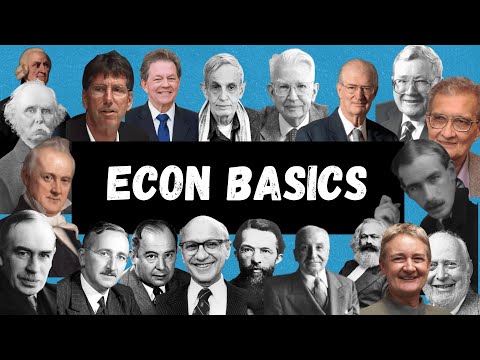
24:10Top Economic Theories Explained in 24 Minutes (A Crash Course)
Ecological economics
Crash Analysis
Disclaimer: MarketVault is an educational video curation platform. Nothing on this site constitutes financial advice, investment advice, or a recommendation to buy or sell any asset. Always consult a qualified, regulated financial advisor before making investment decisions. Investing carries risk — you may lose money.
Rare crash analysis footage of Ecological economics, curated from across the internet. Browse 1 clip below.
Crash analyses dissect market crashes, corrections, and financial crises — examining what caused them, how they unfolded, and what investors could have done differently. From Black Monday and the dot-com bust to the 2008 Global Financial Crisis and the 2020 pandemic crash, these clips provide essential lessons in risk management and market psychology that help prepare for the next downturn.
Ecological economics, bioeconomics, ecolonomy, eco-economics, or ecol-econ is both a transdisciplinary and an interdisciplinary field of academic research addressing the interdependence and coevolution of human economies and natural ecosystems, both intertemporally and spatially. By treating the economy as a subsystem of Earth's larger ecosystem, and by emphasizing the preservation of natural capi...
Full Ecological economicsarchive →The field of ecological economics has long been at the forefront of questioning the very foundations of our economic systems. By recognizing the intrinsic value of natural capital and the limitations of substituting it with human-made capital, ecological economists have provided a crucial counterpoint to the dominant environmental economics paradigm. As we navigate the complexities of the global economy, it is essential to revisit the lessons offered by this transdisciplinary field.
A prime example of the importance of ecological economics can be seen in its approach to renewable energy. In the clip "🤔 “Renewable energy is a lie”? Ecological economics legend Bill Rees explains #solar #wind #podcast", we find Rees questioning the efficacy of relying solely on solar and wind power as substitutes for fossil fuels. This critique highlights the need for a more nuanced understanding of our energy systems, one that takes into account the ecological implications of our consumption patterns.
However, this clip also underscores the limitations of crash analysis footage in addressing the fundamental issues at stake. While it provides valuable insights into market psychology and risk management, it often overlooks the deeper structural problems underlying economic crises. In other words, crash analyses tend to focus on symptoms rather than causes, neglecting the root drivers of instability.
This is where ecological economics comes into play. By examining the interdependence between human economies and natural ecosystems, this field offers a more comprehensive understanding of the complex relationships driving economic activity. As Rees' critique of renewable energy suggests, even seemingly progressive solutions can have unintended consequences when viewed through an ecological lens.
In contrast to environmental economics, which tends to focus on the economic analysis of the environment, ecological economics seeks to integrate human economies within the larger ecosystem. This approach recognizes that natural capital is not merely a resource to be exploited but rather a vital component of our economic systems. By prioritizing strong sustainability and preserving natural capital, ecological economists aim to create more resilient and equitable economic models.
One of the most compelling aspects of ecological economics lies in its ability to challenge dominant narratives around growth and development. The clip "Top Economic Theories Explained in 24 Minutes (A Crash Course)" offers a concise overview of various economic theories, including those that underpin our current understanding of progress. However, this brief introduction barely scratches the surface of the complex debates surrounding ecological economics.
In reality, the field is characterized by a rich diversity of perspectives and approaches. From the emphasis on strong sustainability to the critique of growth-oriented economics, ecological economists have developed a range of innovative solutions for addressing the pressing environmental challenges facing our planet. By examining these ideas in greater depth, we can gain a deeper understanding of the intricate relationships between human economies and natural ecosystems.
Ultimately, crash analysis footage offers valuable lessons in risk management and market psychology, but it is only by integrating ecological economics into our analytical frameworks that we can truly grasp the underlying drivers of economic instability. As we navigate the complexities of the global economy, it is essential to engage with the ideas and perspectives offered by this transdisciplinary field. By doing so, we may yet uncover new paths towards creating more sustainable, equitable, and resilient economic systems.
Curated from public records and music databases.