 18:37
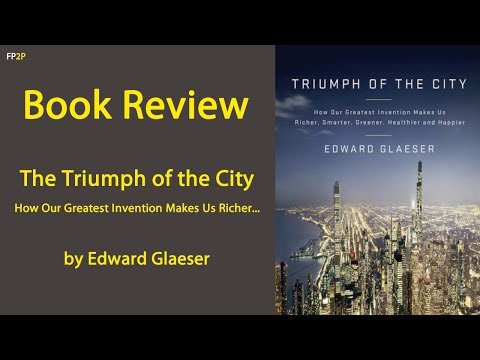
18:37Book Review: Triumph of the City by Edward Glaeser.
Edward Glaeser
2020sTool ReviewBook Summary
Disclaimer: MarketVault is an educational video curation platform. Nothing on this site constitutes financial advice, investment advice, or a recommendation to buy or sell any asset. Always consult a qualified, regulated financial advisor before making investment decisions. Investing carries risk — you may lose money.
Rare book summary footage of Edward Glaeser, curated from across the internet. Browse 2 clips below.
Book summaries distil the key insights from the most influential finance and investing books into focused video breakdowns. From classics like The Intelligent Investor and A Random Walk Down Wall Street to modern titles on behavioural finance and quantitative strategies, these clips capture the essential ideas without requiring you to read 400 pages.
Edward Ludwig Glaeser (born May 1, 1967) is an American economist and the Fred and Eleanor Glimp Professor of Economics at Harvard University. He directs the Cities Research Programme at the International Growth Centre. Born in New York City, Glaeser was educated at the Collegiate School and Princeton University, where he received his AB in economics in 1988. After receiving a PhD in economics fro...
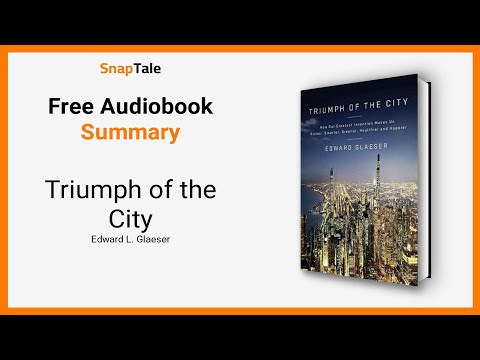
Full Edward Glaeserarchive →The Urban Renaissance and the Future of Prosperity Edward Glaeser's seminal work, "Triumph of the City," has left an indelible mark on the field of economics. As a leading expert in urban studies, Glaeser presents a compelling case for the transformative power of cities in driving economic growth and innovation. In this editorial, we will delve into the key insights from his book, as captured in two insightful clips: "Book Review: Triumph of the City by Edward Glaeser" and "Triumph of the City by Edward L. Glaeser: 9 Minute Summary."
One of the primary arguments made by Glaeser is that cities are the engines of economic growth. He contends that it is not the size of a country's population or its natural resources that determines its prosperity, but rather the density and diversity of its urban centers. In "Book Review: Triumph of the City by Edward Glaeser," we see Glaeser himself discussing the importance of cities in driving innovation and entrepreneurship. He notes that cities provide a unique environment for creative destruction, where new ideas can emerge and old ones are discarded. This process, he argues, is essential for economic growth and prosperity.
Glaeser's thesis is not without its challenges, however. Critics have argued that his focus on the benefits of urbanization overlooks the significant drawbacks, such as congestion, pollution, and social inequality. In "Triumph of the City by Edward L. Glaeser: 9 Minute Summary," we see Glaeser addressing these concerns directly. He acknowledges that cities can be challenging to live in, but argues that their benefits far outweigh their costs. By providing a platform for human interaction and collaboration, cities enable individuals to access knowledge, skills, and resources that would otherwise be unavailable.
One of the key strengths of Glaeser's work is his ability to distill complex economic concepts into accessible language. In both clips, we see him using clear and concise examples to illustrate the principles underlying urban economics. For instance, he uses the example of New York City's subway system to demonstrate how cities can create efficient transportation networks that facilitate economic activity.
Glaeser's work also has significant implications for policymakers seeking to promote economic growth and development. In "Book Review: Triumph of the City by Edward Glaeser," we see him discussing the importance of zoning regulations in shaping urban landscapes. He argues that overly restrictive zoning laws can stifle innovation and entrepreneurship, while more flexible approaches can unlock new opportunities for growth.
In conclusion, Edward Glaeser's "Triumph of the City" is a landmark work that has reshaped our understanding of the role of cities in driving economic prosperity. Through his insightful analysis, we see the transformative power of urbanization and the importance of creating environments that foster innovation and entrepreneurship. As policymakers and business leaders continue to grapple with the challenges of economic growth and development, Glaeser's work offers a valuable framework for understanding the complex relationships between cities, economies, and societies.
Glaeser's ideas have far-reaching implications for investors and financial professionals as well. By recognizing the importance of urbanization in driving economic growth, investors can better understand the opportunities and challenges presented by cities around the world. In "Triumph of the City by Edward L. Glaeser: 9 Minute Summary," we see Glaeser discussing the potential for urbanization to drive investment returns, particularly in emerging markets.
Ultimately, Glaeser's work serves as a reminder that economic growth and prosperity are not solely the result of technological innovation or government policy, but also depend on the complex interplay between human creativity, social interaction, and physical infrastructure. By understanding the role of cities in driving this process, we can better navigate the challenges and opportunities presented by an increasingly urbanized world.
The significance of Glaeser's work extends beyond the realm of economics as well. His ideas have implications for policymakers seeking to promote sustainable development, reduce poverty, and improve living standards. By recognizing the importance of cities in driving economic growth, we can better address these pressing global challenges.
As we continue to navigate the complexities of the modern economy, Glaeser's work offers a valuable framework for understanding the relationships between cities, economies, and societies. Through his insightful analysis, we see the transformative power of urbanization and the importance of creating environments that foster innovation and entrepreneurship. As policymakers, business leaders, and investors continue to grapple with the challenges of economic growth and development, Glaeser's work will remain an essential resource for navigating the complexities of the modern economy.
Curated from public records and music databases.