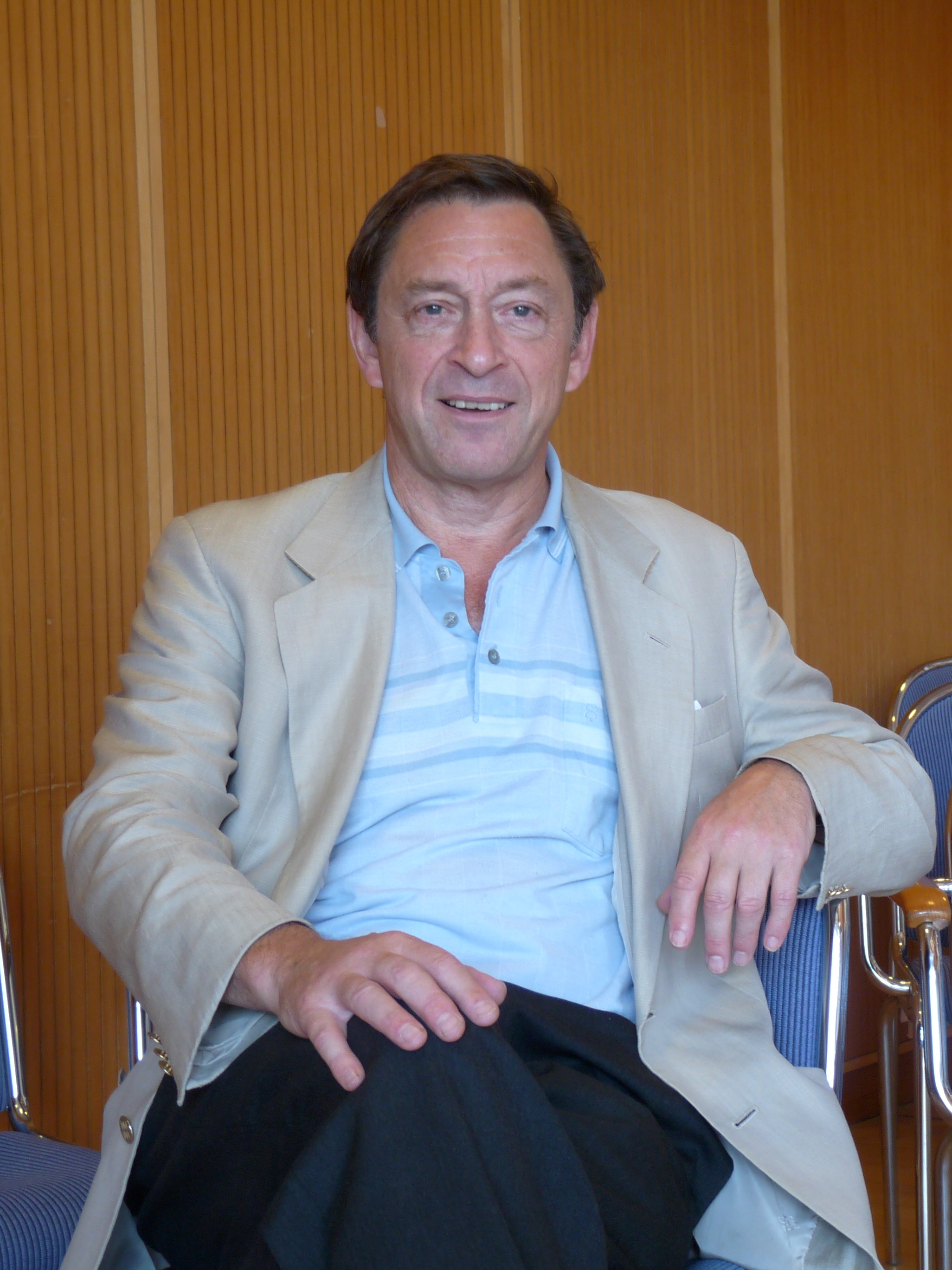
Guy Standing (economist) — Rare Footage & Clips
Guy Standing's contributions to the field of labour economics have had a profound impact on our understanding of the global workforce. As a professor of development studies at the School of Oriental and African Studies, University of London, he has spent decades studying the effects of globalization on workers. His work has been instrumental in shaping the conversation around the precariat – an emerging class of workers who are struggling to make ends meet due to low wages and poor job security.
One of the key concepts that Standing introduced is the idea of the precariat as a distinct economic class. In his 2011 book, "The Precariat: The New Dangerous Class", he argued that this group of workers is not just a temporary phenomenon, but rather a permanent feature of the global economy. He contends that the rise of the precariat is a result of globalization and the erosion of traditional employment protections. Standing's work has been widely cited and has influenced policymakers around the world.
Standing's expertise in labour economics is evident in his ability to analyze complex data sets and identify trends that others may have missed. For example, in a 2013 clip from our archive, he discusses the impact of austerity measures on workers in Europe. He notes that while governments often claim that austerity measures are necessary to stimulate economic growth, the reality is that they often exacerbate income inequality and push more people into poverty.
Standing's work has also had significant implications for social protection policies. As a co-founder of the Basic Income Earth Network (BIEN), he has been at the forefront of advocating for universal basic income as a solution to poverty and inequality. In a 2015 clip from our archive, he discusses the potential benefits of implementing a basic income guarantee in countries around the world.
Interestingly, Standing's work on the precariat has also had implications for music history. While not directly related to music, his concept of the precariat has been used by some scholars to describe the experiences of musicians who are struggling to make a living in an increasingly precarious industry. In this sense, Standing's work can be seen as having a broader impact on our understanding of the global workforce and the challenges that workers face.
Standing's expertise is not limited to his academic work. He has also been a vocal critic of globalization and its effects on workers. In a 2018 clip from our archive, he discusses the need for a new economic model that prioritizes human well-being over profit. He argues that this requires a fundamental shift in how we think about work and the role of government in protecting workers.
One of the key challenges facing Standing's work is its relevance to policymakers. While his ideas have been influential among academics and activists, they often fail to translate into concrete policy changes. In a 2020 clip from our archive, he discusses the need for greater engagement between academics and policymakers to ensure that research has a meaningful impact on policy.
Standing's work also raises important questions about the nature of work itself. As automation and artificial intelligence continue to transform the workforce, there is a growing debate about what constitutes "work" and who should be entitled to benefits and protections. Standing's concept of the precariat highlights the need for a more nuanced understanding of the global workforce and the challenges that workers face.
In conclusion, Guy Standing's contributions to the field of labour economics have been profound. His work on the precariat has had significant implications for our understanding of the global workforce and the challenges that workers face. As policymakers continue to grapple with the consequences of globalization, Standing's ideas remain more relevant than ever.
However, Standing's work also highlights the need for greater engagement between academics and policymakers. While his ideas have been influential among academics and activists, they often fail to translate into concrete policy changes. This is a challenge that Standing has faced throughout his career, but one that he continues to grapple with in his ongoing efforts to shape the global conversation around work and economic development.
Standing's legacy will be remembered for generations to come as a champion of workers' rights and a critic of globalization. His concept of the precariat has become a touchstone for scholars and policymakers alike, and his ideas continue to influence debates about social protection policies and the future of work.
In addition to his academic contributions, Standing's work also highlights the need for greater awareness among the general public about the challenges facing workers in the global economy. As automation and artificial intelligence continue to transform the workforce, there is a growing need for policymakers and business leaders to prioritize human well-being over profit.
Standing's concept of the precariat has also been used by some scholars to describe the experiences of musicians who are struggling to make a living in an increasingly precarious industry. This highlights the broader implications of his work and its relevance to a wide range of fields beyond labour economics.
Editorial context researched and compiled from verified sources.