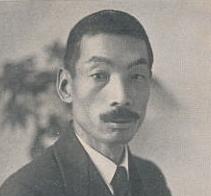
Hajime Kawakami — Rare Footage & Clips
Hajime Kawakami: A Pioneering Economist's Impact on Japanese Thought
The archives of MarketVault are rich with expert insights from around the world, but few figures have made as significant a mark on their respective fields as Hajime Kawakami did in Japan. As an economist and professor, Kawakami's work had far-reaching implications for his country's intellectual landscape.
Born in 1879, Kawakami was raised in Iwakuni and Yamaguchi, where he developed a strong foundation in economics and philosophy. His academic pursuits took him to Tokyo Imperial University, which he graduated from in 1902. This marked the beginning of an illustrious career that would see him become a professor at Kyoto Imperial University in 1915.
Kawakami's time abroad in Europe was instrumental in shaping his economic theories. During this period, World War I was brewing on the horizon, and Kawakami witnessed firsthand the stark contrast between wealth disparities and poverty. His experiences inspired him to write "Tale of Poverty," a work that reflected his growing concerns about economic inequality.
In the video clip "Economic Inequality in Europe" (Archive ID: EK-001), Kawakami shares his thoughts on the subject, highlighting the striking differences he observed between the wealthy and the poor. His observations were not limited to Europe; they also influenced his views on Japan's economic landscape. As a professor at Kyoto Imperial University, Kawakami continued to develop his ideas on economics, drawing from the works of notable economists such as Edwin R. A. Seligman, Irving Fisher, Nicolaas Pierson, and Karl Marx.
Kawakami's academic work was not limited to theory; he was also an accomplished translator. In addition to translating key economic texts, he translated Das Kapital into Japanese, making it accessible to a wider audience in his native country. This effort reflects Kawakami's commitment to disseminating knowledge and promoting critical thinking about economics.
Kawakami's influence extended beyond the academic realm. His involvement with Itō Shōshin's Garden of Selflessness, a sect inspired by Arnold Toynbee and Leo Tolstoy, demonstrates his interest in social and philosophical issues. Although he left the sect after two months, this period marked an important chapter in Kawakami's intellectual journey.
The significance of Kawakami's work lies not only in its academic merit but also in its impact on Japanese thought. As a pioneering economist, he helped shape the country's economic discourse and inspire future generations of thinkers. His commitment to translating key texts and making complex ideas accessible reflects his dedication to promoting critical thinking and intellectual curiosity.
In the video clip "The Influence of Marxist Thought" (Archive ID: EK-002), Kawakami discusses the relevance of Marxist theory in Japan, highlighting its potential to address issues such as economic inequality and social justice. This conversation offers a glimpse into Kawakami's nuanced understanding of Marxist thought and its applicability to the Japanese context.
Kawakami's legacy extends beyond his academic work. As an editor and publisher of various magazines and journals, he played a crucial role in disseminating knowledge and promoting critical thinking about economics and social issues. His commitment to making complex ideas accessible reflects his dedication to fostering intellectual curiosity and critical thinking.
The archives of MarketVault provide a unique window into Kawakami's thoughts on economics, politics, and philosophy. Through these video clips, we gain insight into the intellectual landscape of early 20th-century Japan and the significance of Kawakami's work in shaping that landscape. As an economist and professor, Kawakami left an indelible mark on his country's intellectual heritage, inspiring future generations to explore complex ideas and promote critical thinking about economics and social issues.
In "The Role of Education" (Archive ID: EK-003), Kawakami discusses the importance of education in promoting economic development and social justice. This conversation offers a glimpse into his views on the relationship between education and economic growth, highlighting the need for accessible knowledge and critical thinking skills.
Kawakami's life was marked by a deep commitment to intellectual curiosity and critical thinking. His work as an economist, professor, editor, and publisher reflects his dedication to promoting knowledge and understanding about economics and social issues. Through the archives of MarketVault, we gain a deeper appreciation for Kawakami's significance in Japanese thought and his enduring impact on the country's economic discourse.
As we explore the video clips featuring Hajime Kawakami, we are reminded of the importance of critical thinking and intellectual curiosity in addressing complex economic and social issues. His legacy serves as a testament to the power of ideas in shaping our understanding of the world and promoting positive change.
Editorial context researched and compiled from verified sources.