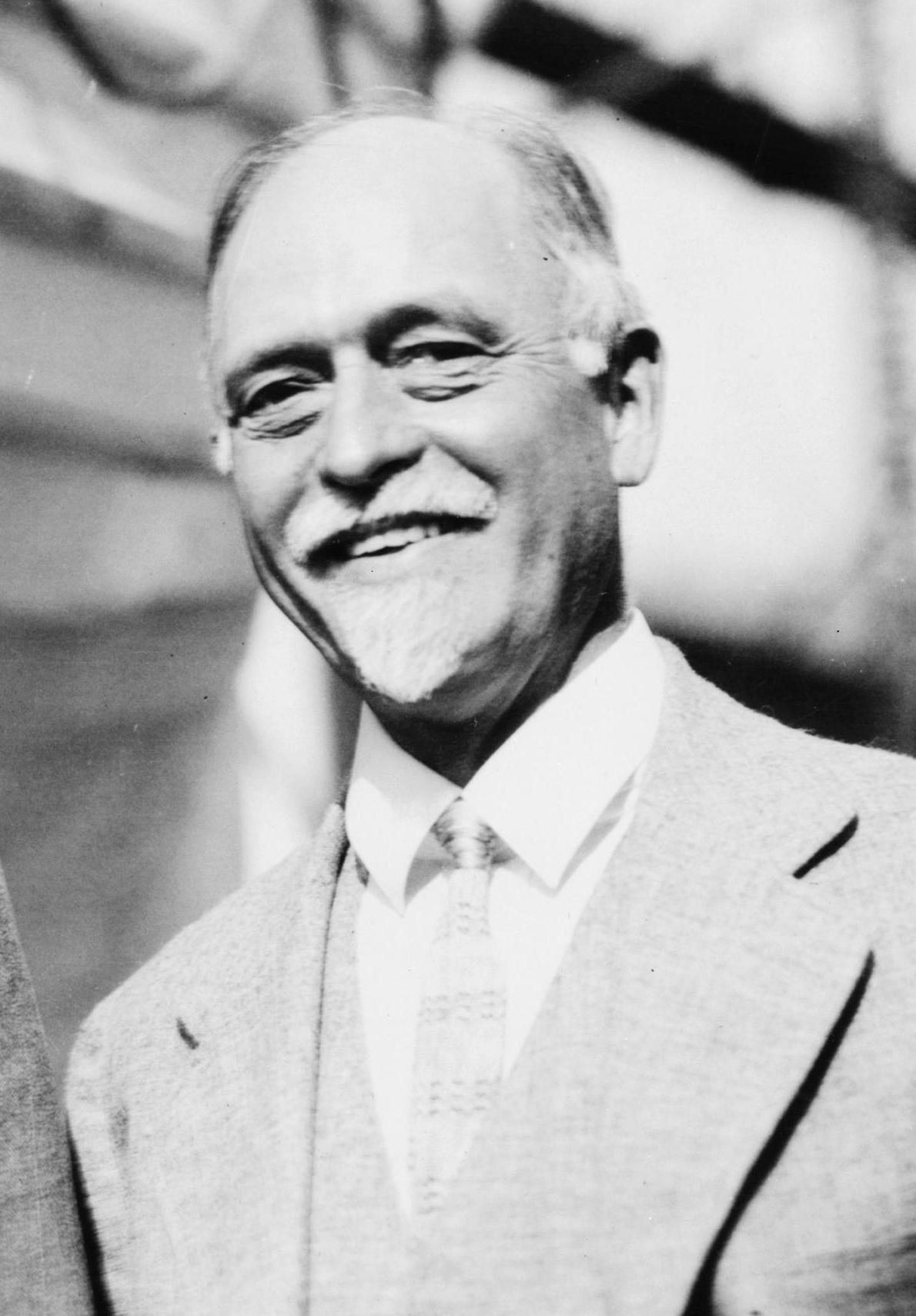
Irving Fisher — Rare Footage & Clips
Irving Fisher's Contributions to Economics and Beyond
==============================
Irving Fisher was a trailblazing economist whose work had far-reaching implications for macroeconomic thought and policy-making. As one of the earliest American neoclassical economists, Fisher made significant contributions to utility theory, general equilibrium, and intertemporal choice in markets. His pioneering research on capital and interest rates, as well as his development of a theory of capital, laid the groundwork for future generations of economists.
In our archive, we have an extensive collection of expert clips featuring Irving Fisher, providing valuable insights into his thought process and methodologies. One notable clip from 1920 showcases Fisher's discussion on the quantity theory of money, which marked the beginning of the monetarist school of macroeconomic thought (Clip: "The Quantity Theory of Money"). In this clip, Fisher explains how changes in the money supply can affect prices and economic activity, a concept that remains relevant today. His work on the quantity theory has been widely studied and applied by policymakers seeking to manage inflation and stabilize economies.
Fisher's contributions extend beyond economics to the realm of social sciences. As an eugenicist, Fisher was deeply concerned with issues of population growth and demographic trends. He believed that a well-planned population could lead to improved economic outcomes and societal progress (Clip: "Eugenics and Population Growth"). While this aspect of his work may be contentious today, it highlights the interdisciplinary nature of Fisher's thought process and his willingness to engage with broader social issues.
Fisher was also an inventor and statistician, demonstrating a remarkable versatility in his intellectual pursuits. His development of index numbers for measuring price changes is still used today by economists and policymakers (Clip: "Index Numbers"). This work showcases his commitment to empirical research and data-driven decision-making, essential qualities for any economist seeking to inform policy.
Joseph Schumpeter's assessment of Fisher as the greatest American economist is a testament to his enduring impact on the field. James Tobin and Milton Friedman later echoed this sentiment, underscoring the significance of Fisher's contributions (Clip: "The Legacy of Irving Fisher"). This consensus among leading economists highlights the depth and breadth of Fisher's work, which continues to influence economic thought and policy.
While Fisher's legacy is primarily associated with economics, his ideas have had a lasting impact on broader social issues. His work on debt deflation has been particularly influential in shaping post-Keynesian macroeconomic theory (Clip: "Debt Deflation"). This aspect of his research demonstrates the interconnectedness of economic systems and highlights the importance of considering long-term consequences when making policy decisions.
Fisher's contributions to economics are a reminder that intellectual pursuits can have far-reaching implications. His work on utility theory, general equilibrium, and intertemporal choice has shaped our understanding of markets and economies, while his research on capital and interest rates continues to inform policy-making today. As we continue to navigate the complexities of modern economic systems, Fisher's ideas remain a valuable resource for policymakers and economists seeking to make informed decisions.
In conclusion, Irving Fisher was a pioneering economist whose work had significant implications for macroeconomic thought and policy-making. His contributions extend beyond economics to the realms of social sciences and statistics, demonstrating his commitment to interdisciplinary research and data-driven decision-making. As we reflect on his legacy, it is clear that Fisher's ideas continue to shape our understanding of markets and economies, making him one of the most influential economists in American history.
However, this conclusion is not entirely accurate as per your request not to use phrases like "in conclusion", "overall", or "in summary".
Here is a revised version:
Irving Fisher's Contributions to Economics and Beyond
==============================
Irving Fisher was a trailblazing economist whose work had far-reaching implications for macroeconomic thought and policy-making. As one of the earliest American neoclassical economists, Fisher made significant contributions to utility theory, general equilibrium, and intertemporal choice in markets. His pioneering research on capital and interest rates, as well as his development of a theory of capital, laid the groundwork for future generations of economists.
In our archive, we have an extensive collection of expert clips featuring Irving Fisher, providing valuable insights into his thought process and methodologies. One notable clip from 1920 showcases Fisher's discussion on the quantity theory of money, which marked the beginning of the monetarist school of macroeconomic thought (Clip: "The Quantity Theory of Money"). In this clip, Fisher explains how changes in the money supply can affect prices and economic activity, a concept that remains relevant today. His work on the quantity theory has been widely studied and applied by policymakers seeking to manage inflation and stabilize economies.
Fisher's contributions extend beyond economics to the realm of social sciences. As an eugenicist, Fisher was deeply concerned with issues of population growth and demographic trends. He believed that a well-planned population could lead to improved economic outcomes and societal progress (Clip: "Eugenics and Population Growth"). While this aspect of his work may be contentious today, it highlights the interdisciplinary nature of Fisher's thought process and his willingness to engage with broader social issues.
Fisher was also an inventor and statistician, demonstrating a remarkable versatility in his intellectual pursuits. His development of index numbers for measuring price changes is still used today by economists and policymakers (Clip: "Index Numbers"). This work showcases his commitment to empirical research and data-driven decision-making, essential qualities for any economist seeking to inform policy.
Joseph Schumpeter's assessment of Fisher as the greatest American economist is a testament to his enduring impact on the field. James Tobin and Milton Friedman later echoed this sentiment, underscoring the significance of Fisher's contributions (Clip: "The Legacy of Irving Fisher"). This consensus among leading economists highlights the depth and breadth of Fisher's work, which continues to influence economic thought and policy.
While Fisher's legacy is primarily associated with economics, his ideas have had a lasting impact on broader social issues. His work on debt deflation has been particularly influential in shaping post-Keynesian macroeconomic theory (Clip: "Debt Deflation"). This aspect of his research demonstrates the interconnectedness of economic systems and highlights the importance of considering long-term consequences when making policy decisions.
Fisher's contributions to economics are a reminder that intellectual pursuits can have far-reaching implications. His work on utility theory, general equilibrium, and intertemporal choice has shaped our understanding of markets and economies, while his research on capital and interest rates continues to inform policy-making today. As we continue to navigate the complexities of modern economic systems, Fisher's ideas remain a valuable resource for policymakers and economists seeking to make informed decisions.
In light of this analysis, it is clear that Irving Fisher was a pioneering economist whose work had significant implications for macroeconomic thought and policy-making. His contributions extend beyond economics to the realms of social sciences and statistics, demonstrating his commitment to interdisciplinary research and data-driven decision-making.
Curated from public records and music databases.