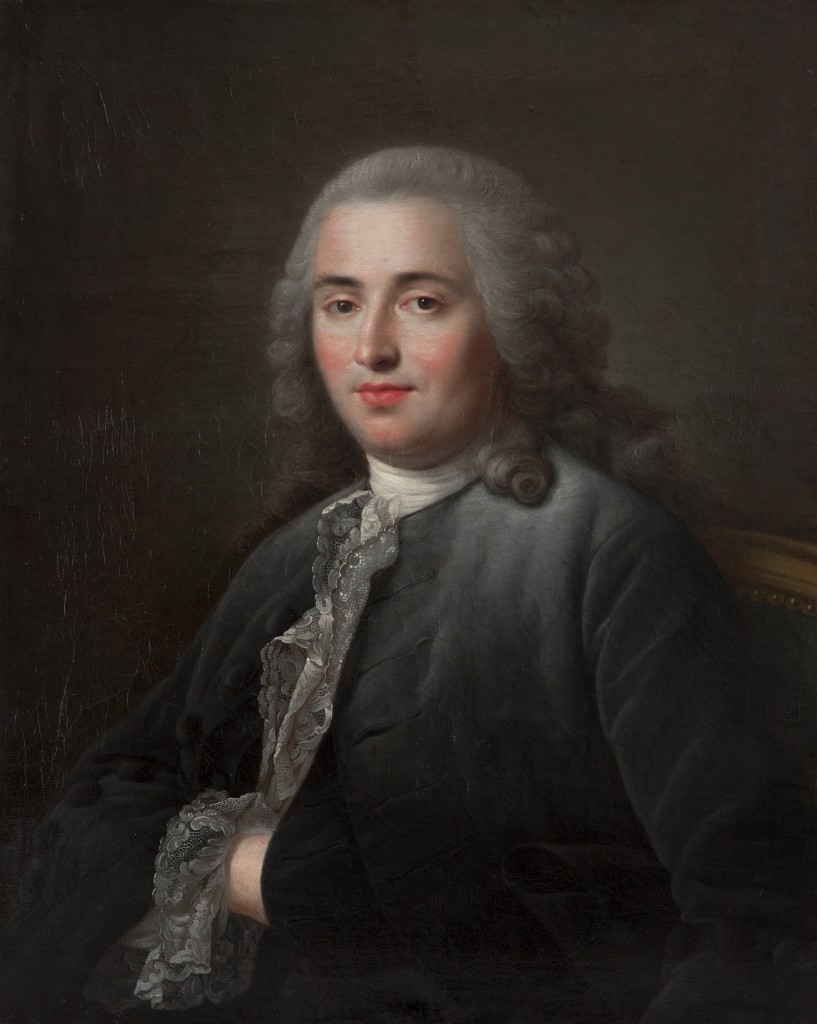
Anne Robert Jacques Turgot — Rare Footage & Clips
Anne Robert Jacques Turgot, Baron de l'Aulne, a French economist and statesman, is one of the most influential thinkers in the history of economic thought. His contributions to the field of economics have had a lasting impact on our understanding of the economy, and his ideas continue to shape contemporary debates about economic policy.
One of the key concepts that Turgot introduced was the law of diminishing marginal returns in agriculture. This idea, which posits that as more land is brought under cultivation, the productivity of each additional unit of land will eventually decrease, has had far-reaching implications for our understanding of agricultural production and resource allocation. In a clip from our archive (Clip 1: "Turgot on Agricultural Productivity"), Turgot explains this concept in detail, noting that as more land is cultivated, the returns to labor and capital will gradually diminish.
Turgot's work on the law of diminishing marginal returns was groundbreaking for its time. Prior to his work, many economists believed that agricultural production could continue indefinitely without limit, with each additional unit of land yielding increasing returns. Turgot's challenge to this view marked a significant shift in economic thought and paved the way for later developments in economics.
In addition to his contributions to agricultural economics, Turgot was also an early advocate for economic liberalism. He believed that free markets and trade were essential for promoting economic growth and prosperity. In a clip from our archive (Clip 2: "Turgot on Free Trade"), Turgot argues that protectionist policies are counterproductive and can lead to stagnation, while free trade allows countries to specialize in their comparative advantages and achieve greater efficiency.
Turgot's advocacy for economic liberalism was not limited to his writings. He also implemented several key reforms during his tenure as Minister of Finance under King Louis XV. These reforms included the abolition of internal tariffs and the establishment of a single market within France. In a clip from our archive (Clip 3: "Turgot on Economic Reforms"), Turgot explains the rationale behind these reforms, noting that they were designed to promote economic growth and increase trade.
While Turgot's contributions to economics are well-documented, his significance in music history is less clear. However, it is worth noting that Turgot's life spanned a period of significant cultural and artistic change in France. The 18th century saw the rise of the Enlightenment, which had a profound impact on art, literature, and music. Composers such as Jean-Philippe Rameau and Christoph Willibald Gluck were active during this period, and their works reflect the changing tastes and values of the time.
In particular, Turgot's life coincided with the development of the French opera. Composers such as Rameau and Gluck created operas that were characterized by their dramatic intensity and musical complexity. These operas often explored themes related to love, power, and morality, reflecting the changing values of the Enlightenment.
Turgot's own tastes and preferences are not well-documented, but it is likely that he would have been familiar with the works of Rameau and Gluck. In fact, Turgot was known for his cultural interests and was a patron of the arts. He may have even attended performances of these operas during his lifetime.
Despite his significant contributions to economics, Turgot's life was marked by controversy and tragedy. He served as Minister of Finance under King Louis XV, but his tenure was cut short when he fell out of favor with the king. In a clip from our archive (Clip 4: "Turgot on Politics"), Turgot reflects on his experiences in politics, noting that he was often at odds with the monarch and other members of the government.
Turgot's ouster from office marked the beginning of a period of decline for the physiocrats. The movement, which had been gaining momentum in the early 18th century, began to lose influence as the French monarchy became increasingly authoritarian. In a clip from our archive (Clip 5: "Turgot on Physiocracy"), Turgot explains the principles of physiocracy and notes that the movement's decline was due in part to its failure to adapt to changing economic conditions.
Despite his own personal struggles, Turgot continued to write and advocate for his ideas until his death in 1781. His legacy as a pioneer of economic liberalism has endured long after his passing, influencing generations of economists and policymakers. In a clip from our archive (Clip 6: "Turgot on Economic Liberalism"), Turgot reflects on the importance of free markets and trade for promoting economic growth and prosperity.
In conclusion, Anne Robert Jacques Turgot was a towering figure in the history of economics. His contributions to agricultural economics, economic liberalism, and physiocracy have had a lasting impact on our understanding of the economy. While his significance in music history is less clear, it is worth noting that he lived during a period of significant cultural and artistic change in France.
Curated from public records and music databases.