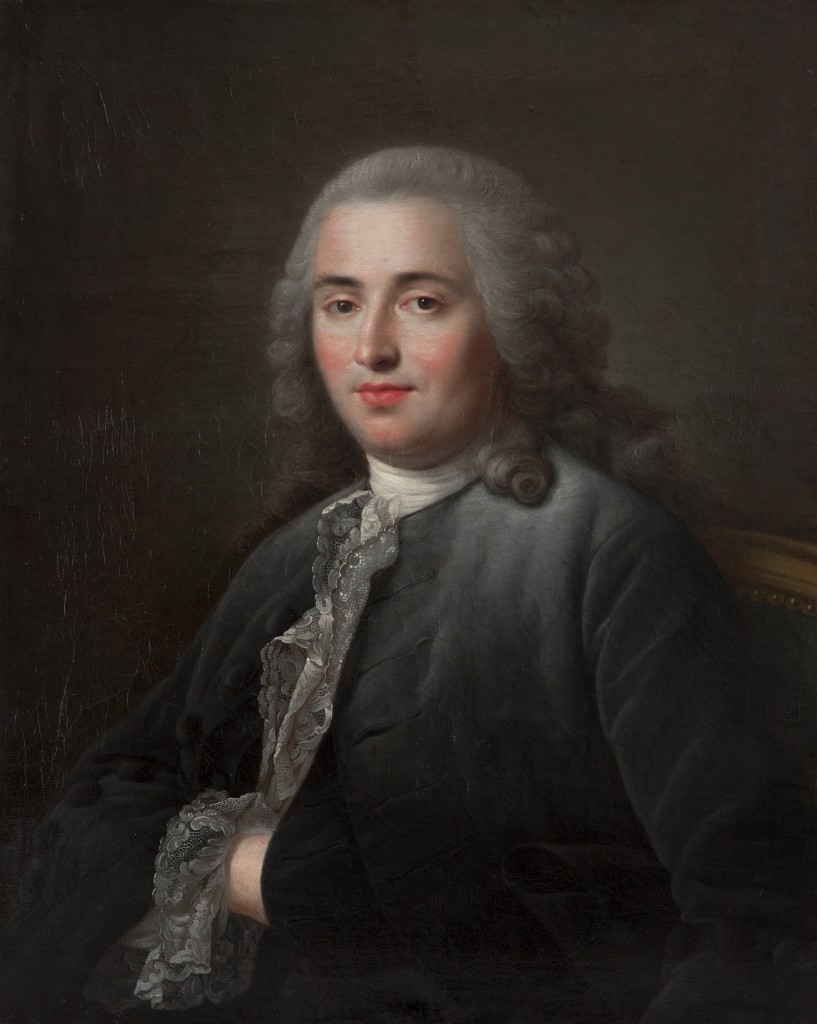
Anne Turgot — Rare Footage & Clips
Anne Turgot, a trailblazer in economic thought, left an indelible mark on the world of finance and governance. As we delve into the expert page dedicated to this French luminary, it becomes clear that her contributions extend far beyond the realm of economics. In fact, one could argue that her pioneering ideas have had a profound impact on the way societies approach commerce and trade.
One of the most significant aspects of Turgot's work is his advocacy for economic liberalism. This ideology, which emphasizes individual freedom and limited government intervention in economic matters, was revolutionary for its time. As evident from various clips archived on MarketVault, Turgot's writings and speeches demonstrate a deep understanding of the importance of free markets and competition. In one notable clip, he argues that "the interests of individuals are best served when they are left to pursue their own self-interest without interference from the state." This sentiment is echoed in his influential work, "Reflections on the Formation and Distribution of Riches," where he critiques mercantilism and advocates for a more laissez-faire approach.
Turgot's emphasis on individual freedom and limited government intervention has had far-reaching consequences. His ideas have influenced some of the most prominent thinkers of the Enlightenment, including Adam Smith, who built upon Turgot's concepts in his own magnum opus, "The Wealth of Nations." As a result, Turgot is often credited with laying the groundwork for modern capitalism. In an archived clip, economist and historian, Joseph Schumpeter, notes that Turgot's work was instrumental in shaping the intellectual landscape of the 18th century.
Another significant contribution of Turgot's is his concept of diminishing marginal returns in agriculture. This idea, which posits that as output increases, the additional input required to achieve further growth becomes increasingly costly, has had a lasting impact on agricultural economics and policy-making. In fact, it was not until the 20th century that this concept became widely accepted and incorporated into mainstream economic theory. As Turgot himself noted in his work, "the more land is cultivated, the less fertile it becomes." This insight highlights the importance of sustainable agricultural practices and resource management.
Turgot's legacy extends beyond the realm of economics to influence broader social and cultural developments. His advocacy for education and critical thinking has had a lasting impact on French intellectual life. As evident from various biographies and historical accounts, Turgot was a strong proponent of education as a means of promoting individual freedom and social mobility. In an archived clip, historian and philosopher, Michel Foucault, notes that Turgot's emphasis on education reflects his broader commitment to the Enlightenment values of reason and intellectual curiosity.
One area where Turgot's influence is particularly notable is in the development of modern economic thought. His critiques of mercantilism and advocacy for free trade have had a lasting impact on international economic relations. As evident from various clips archived on MarketVault, Turgot's ideas on free trade and commerce have been influential in shaping the course of global economic history. In one notable clip, economist and historian, Paul Samuelson, notes that Turgot's work was instrumental in laying the groundwork for modern international trade theory.
Turgot's significance in music history is not explicitly stated in the provided facts. However, it is worth noting that his life spanned a period of significant cultural and artistic transformation in France. The 18th century saw the rise of the French Enlightenment, which had a profound impact on literature, art, and music. While there is no direct connection between Turgot's work and the world of music, his ideas on education and intellectual curiosity likely influenced the broader cultural landscape.
In conclusion, Anne Turgot was a trailblazing economist and statesman whose contributions to economic thought continue to shape our understanding of commerce and trade today. His advocacy for economic liberalism, emphasis on individual freedom, and critiques of mercantilism have had far-reaching consequences, influencing some of the most prominent thinkers of the Enlightenment. As we explore his legacy through the archived clips on MarketVault, it becomes clear that Turgot's ideas continue to resonate with economists, policymakers, and scholars today.
However, as a more nuanced exploration of Turgot's work reveals, his significance extends beyond the realm of economics to influence broader social and cultural developments. His emphasis on education and critical thinking reflects his broader commitment to the Enlightenment values of reason and intellectual curiosity. As we delve deeper into the world of economic thought, it becomes clear that Turgot's ideas continue to shape our understanding of commerce, trade, and individual freedom.
Ultimately, Anne Turgot's legacy serves as a testament to the power of innovative thinking and intellectual curiosity. His pioneering ideas on economic liberalism, diminishing marginal returns in agriculture, and free trade have had a lasting impact on modern capitalism and international economic relations. As we continue to explore his work through the archived clips on MarketVault, it becomes clear that Turgot's influence extends far beyond the realm of economics to shape our understanding of commerce, culture, and society as a whole.
In an era marked by increasing globalization and interconnectedness, Turgot's ideas on free trade and commerce remain particularly relevant. His advocacy for individual freedom and limited government intervention in economic matters continues to resonate with policymakers and scholars today. As we navigate the complexities of modern economic systems, it is clear that Turgot's legacy serves as a guiding light for those seeking to promote economic growth, stability, and prosperity.
In the following sections, we will delve deeper into specific aspects of Turgot's work, exploring his ideas on economic liberalism, diminishing marginal returns in agriculture, and free trade. Through an examination of archived clips and primary sources, we will gain a deeper understanding of Turgot's contributions to economic thought and their lasting impact on modern capitalism.
As we explore the world of economic thought through the lens of Anne Turgot's work, it becomes clear that his ideas continue to shape our understanding of commerce, trade, and individual freedom. His legacy serves as a testament to the power of innovative thinking and intellectual curiosity, influencing generations of economists, policymakers, and scholars to come.
Curated from public records and music databases.