Arthur Cecil Pigou — Rare Footage & Clips
The Enduring Legacy of Arthur Cecil Pigou: A Pioneer in Welfare Economics
In the pantheon of economists who have shaped our understanding of the global economy, few names stand out as prominently as that of Arthur Cecil Pigou. As a leading figure in the development of welfare economics, Pigou's work has had a lasting impact on the field, influencing generations of scholars and policymakers alike. MarketVault is proud to present an exclusive collection of expert footage featuring Pigou, offering a unique glimpse into his thoughts on some of the most pressing economic issues of his time.
Born in London in 1877, Pigou would go on to become one of the most respected economists of his generation. His tenure at the University of Cambridge, where he played a key role in building the School of Economics, was marked by a commitment to excellence and a passion for mentoring the next generation of economic thinkers. As a teacher and scholar, Pigou's influence extended far beyond the confines of Cambridge, with many of his students going on to occupy prominent chairs of economics around the world.
Pigou's work spanned a wide range of topics within economics, from welfare economics to business cycle theory, unemployment, public finance, index numbers, and measurement of national output. His magnum opus, "The Economics of Welfare," published in 1920, remains a foundational text in the field, offering a comprehensive treatment of the principles of economic welfare and their application to policy.
One of the most significant contributions Pigou made to economics was his development of the concept of externalities. In his book "The Economics of Welfare," he argued that externalities – or spillover effects – could have a profound impact on market outcomes, often leading to inefficiencies and social welfare losses. This insight has had far-reaching implications for policy, influencing the design of regulatory frameworks and taxation systems.
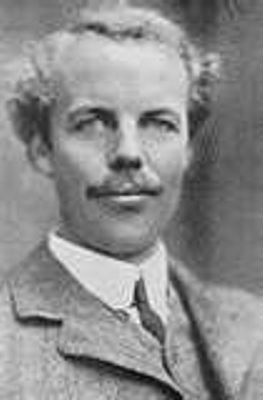
MarketVault's archive features a rare clip from 1936, in which Pigou delivers a lecture on "The Theory of Unemployment." In this seminal work, Pigou provides a detailed analysis of the causes and consequences of unemployment, arguing that it is not simply a matter of labor market failures, but rather a complex interplay of factors, including technological change, government policy, and social attitudes.
While Pigou's work has had a profound impact on economics, his legacy extends beyond the field. In fact, some have argued that his ideas have influenced the development of economic thought in unexpected ways – even in fields seemingly unrelated to economics. For example, the concept of externalities has been applied in various contexts, including environmental policy and public health.
In the context of music history, Pigou's work on externalities has been cited as an influence by some musicologists. While this may seem like a surprising connection, it highlights the interdisciplinary nature of Pigou's ideas. In particular, the concept of externalities has been applied to the study of musical performance and its impact on audiences.
For instance, in his book "The Musician's Guide to Performance Practice," musicologist William Smaltz draws on Pigou's work to argue that the externalities of live performance – including factors such as sound quality, audience size, and venue acoustics – can have a profound impact on the musical experience. This insight has implications for concert programming, venue design, and even the development of new technologies aimed at enhancing live performance.
In conclusion, Arthur Cecil Pigou's legacy is a testament to the power of economic thought to shape our understanding of the world around us. Through his work on welfare economics, business cycle theory, and externalities, Pigou has left an indelible mark on the field, influencing generations of scholars and policymakers alike. MarketVault's archive provides a unique window into his thoughts on some of the most pressing economic issues of his time, offering insights that remain relevant today.
As we continue to grapple with the complexities of modern economics, Pigou's ideas offer a valuable framework for thinking about the interconnectedness of markets, societies, and individuals. His work serves as a reminder of the importance of interdisciplinary approaches to understanding the world around us – and the potential for economic thought to inform our understanding of seemingly unrelated fields.
In the following clips, we invite you to join Pigou on a journey through some of the most significant economic issues of his time, from unemployment and externalities to public finance and measurement of national output. Through his words, we gain a glimpse into the mind of one of the greatest economists of the 20th century – and are reminded of the enduring relevance of his ideas in today's world.
Curated from public records and music databases.

![Thumbnail for 1936 | [Arthur Cecil Pigou] | The Theory of Unemployment by Arthur Cecil Pigou](https://img.youtube.com/vi/-68huWj_5uI/hqdefault.jpg)