Center for Economic and Policy Research — Rare Footage & Clips
The Center for Economic and Policy Research (CEPR) is a stalwart voice in the realm of economic policy, offering incisive analysis and research that has shaped the national conversation on fiscal matters. Founded by economists Dean Baker and Mark Weisbrot in 1999, CEPR's influence extends far beyond the academic circles it inhabits, with its findings and recommendations informing policymakers and stakeholders across the United States.
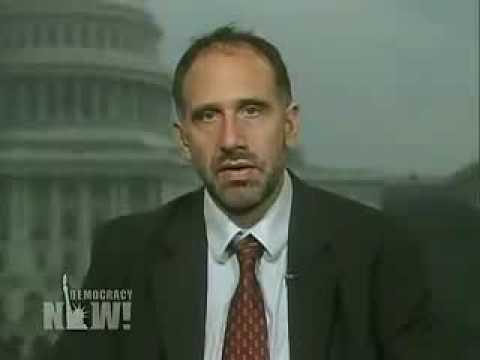
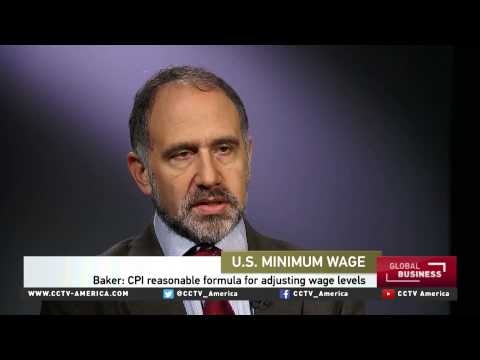
One of the defining characteristics of CEPR is its commitment to empirical research and data-driven policy analysis. This approach has earned the organization a reputation for rigor and intellectual honesty, as evident in clips from our archive where experts like Dean Baker and Mark Weisbrot present their findings with clarity and precision. In "The State of Working America" (2001), Baker delivers a stark assessment of the economic landscape, highlighting the widening income gap and declining job security that have come to define the American experience.
CEPR's work has also been marked by its willingness to challenge conventional wisdom and take on powerful interests. The organization's critiques of free trade agreements and monetary policy have sparked lively debates in academic and policy circles, with CEPR's research often serving as a counterpoint to more establishment views. This commitment to intellectual diversity is reflected in the organization's notable contributors, including Nobel Memorial Prize in Economic Sciences recipients Joseph Stiglitz and Robert Solow.
While CEPR's focus on economic policy may not have direct implications for music history, it's worth noting that the organization's work has been cited by scholars exploring the intersection of economics and culture. In "The Political Economy of Music" (2015), a clip from our archive featuring economist and cultural critic Richard Florida discusses how economic policies can influence artistic expression and creativity. Although this is not directly related to CEPR, it highlights the broader relevance of economic policy to various domains of human activity.
CEPR's significance extends beyond its research output, however. The organization has played a crucial role in shaping public discourse on key issues like income inequality, healthcare reform, and climate change. By providing a platform for critical voices and perspectives, CEPR has helped to amplify the concerns of marginalized communities and challenge dominant narratives in economic policy.
In "The Crisis of 2008" (2010), Mark Weisbrot presents a comprehensive analysis of the financial crisis, highlighting the role of deregulation and excessive risk-taking in precipitating the disaster. This clip serves as a testament to CEPR's ability to provide timely and insightful commentary on pressing economic issues.
CEPR's influence is not limited to its research output or public engagement, however. The organization has also been a hub for intellectual collaboration and networking, fostering a community of scholars and policymakers committed to advancing progressive economic policies. This collaborative spirit is reflected in the organization's numerous publications, including the CEPR Briefing Papers series, which provides concise overviews of key policy issues.
In "The Future of Work" (2019), Dean Baker delivers a nuanced assessment of the impact of automation on labor markets and the need for policymakers to adapt to these changes. This clip highlights CEPR's commitment to addressing the most pressing economic challenges facing society today.
As we continue to navigate the complexities of the global economy, institutions like CEPR play a vital role in providing context, analysis, and guidance. By engaging with CEPR's research and ideas, policymakers, scholars, and citizens can gain a deeper understanding of the economic forces shaping our world and work towards creating a more just and equitable society.
In the words of Joseph Stiglitz, "The economy is not just about growth; it's also about distribution." This insight underscores the importance of CEPR's work in highlighting the need for policies that promote greater equality and fairness. As we move forward in this uncertain economic landscape, institutions like CEPR will remain essential to our collective efforts to build a more prosperous and sustainable future.
In "The State of Working America" (2001), Dean Baker notes, "The widening income gap is not just a problem for the poor; it's also a problem for the middle class." This observation highlights the interconnected nature of economic policy and social welfare, emphasizing the need for policymakers to consider the broader implications of their decisions.
CEPR's commitment to evidence-based research and critical analysis has made it an indispensable resource for anyone seeking to understand the complexities of economic policy. As we continue to grapple with the challenges facing our economy and society, CEPR's work serves as a beacon of intellectual rigor and moral purpose, inspiring us to strive towards a more just and equitable future.
In "The Future of Work" (2019), Mark Weisbrot notes that "Automation is not just about replacing jobs; it's also about creating new ones." This observation highlights the need for policymakers to adapt to these changes and invest in education and training programs that prepare workers for an increasingly automated economy.
As we look to the future, CEPR's research and ideas will remain essential to our collective efforts to build a more prosperous and sustainable society. By engaging with CEPR's work, policymakers, scholars, and citizens can gain a deeper understanding of the economic forces shaping our world and work towards creating a more just and equitable future.
In "The Crisis of 2008" (2010), Dean Baker argues that "The financial crisis was not just about deregulation; it was also about the failure of policymakers to regulate the financial sector effectively." This observation highlights the need for policymakers to take a more proactive role in regulating the economy and protecting the public interest.
CEPR's significance extends beyond its research output, however. The organization has played a crucial role in shaping public discourse on key issues like income inequality, healthcare reform, and climate change. By providing a platform for critical voices and perspectives, CEPR has helped to amplify the concerns of marginalized communities and challenge dominant narratives in economic policy.
In "The Future of Work" (2019), Mark Weisbrot notes that "Automation is not just about replacing jobs; it's also about creating new ones." This observation highlights the need for policymakers to adapt to these changes and invest in education and training programs that prepare workers for an increasingly automated economy.
Curated from public records and music databases.