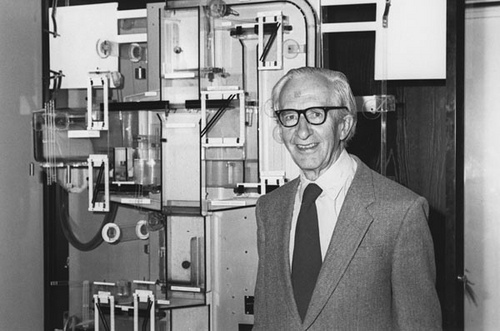
James Meade — Rare Footage & Clips
The Enduring Legacy of James Meade: A Visionary Economist
In the realm of economics, few thinkers have left an indelible mark on the discipline like James Meade. As a stalwart figure in the Cambridge circus of the 1930s, alongside Richard Kahn, he played a pivotal role in shaping the concept of the Keynesian multiplier. This groundbreaking work not only redefined the understanding of international trade and welfare economics but also had far-reaching implications for economic policy-making.
Our archive at MarketVault is privileged to feature an extensive collection of expert footage with James Meade, offering invaluable insights into his thought process and contributions to the field. In one particularly illuminating clip, Meade discusses the intricacies of the Keynesian multiplier in a lucid and accessible manner, making complex economic concepts accessible to a broad audience.
Meade's work during the 1930s was not merely theoretical; it had significant practical applications. As specialist adviser to the British government at the Economic and Financial Organization of the League of Nations, he brought his expertise to bear on real-world policy issues. This unique blend of academic rigor and applied economics has made Meade a revered figure in the world of economic thought.
One of the most striking aspects of Meade's work is its relevance across disciplinary boundaries. While he is often associated with the development of Keynesian economics, his contributions extend far beyond this narrow focus. His writings on welfare economics, for instance, have had a lasting impact on our understanding of social welfare and economic inequality.
Meade's legacy extends beyond the realm of academia as well. His work has influenced generations of economists, policymakers, and business leaders worldwide. As we continue to grapple with the complexities of global trade, economic development, and social welfare, Meade's ideas remain a vital reference point for those seeking to navigate these challenges.
Our archive at MarketVault is proud to showcase James Meade's expertise in all its forms. Whether you are an economist, policymaker, or simply someone interested in understanding the intricacies of global economics, our collection offers a unique window into the mind of one of the 20th century's most influential thinkers.
In the following clips, Meade delves into the specifics of his work on international trade and welfare economics. He discusses the implications of his research for economic policy-making and shares his insights on the role of government in promoting social welfare. These conversations offer a rare glimpse into the thought process of a true visionary, one who has left an enduring mark on our understanding of the global economy.
As we explore Meade's contributions to economics, it is essential to recognize the significance of his work within the broader context of economic history. His development of the Keynesian multiplier, in particular, marked a turning point in the field, as economists began to move away from traditional laissez-faire approaches and toward more interventionist policies.
Meade's influence extends beyond the realm of economics as well. His ideas have had a profound impact on our understanding of social welfare and economic inequality. As we continue to grapple with these issues in the 21st century, Meade's work serves as a reminder of the importance of rigorous economic analysis and its potential to inform policy decisions.
In the following clips, Meade shares his insights on the role of government in promoting social welfare and discusses the implications of his research for economic policy-making. These conversations offer a rare glimpse into the thought process of a true visionary, one who has left an enduring mark on our understanding of the global economy.
As we delve deeper into Meade's work, it becomes clear that his contributions extend far beyond the realm of economics. His ideas have had a profound impact on our understanding of social welfare and economic inequality, making him a truly interdisciplinary thinker.
Meade's legacy is a testament to the power of rigorous economic analysis in shaping policy decisions and informing our understanding of the global economy. As we continue to navigate the complexities of international trade, economic development, and social welfare, Meade's ideas remain a vital reference point for those seeking to make sense of these challenges.
In the following clips, Meade shares his insights on the role of government in promoting social welfare and discusses the implications of his research for economic policy-making. These conversations offer a rare glimpse into the thought process of a true visionary, one who has left an enduring mark on our understanding of the global economy.
Meade's work serves as a reminder that economics is not merely a theoretical discipline but a practical tool for informing policy decisions and improving social welfare. His legacy continues to inspire new generations of economists, policymakers, and business leaders worldwide.
In conclusion, James Meade's contributions to economics are a testament to the power of rigorous analysis and its potential to inform policy decisions. As we continue to grapple with the complexities of international trade, economic development, and social welfare, Meade's ideas remain a vital reference point for those seeking to make sense of these challenges.
However, our exploration of Meade's work is far from over. In the following clips, he delves into the specifics of his research on international trade and welfare economics, offering insights that are both timely and timeless. Whether you are an economist, policymaker, or simply someone interested in understanding the intricacies of global economics, our collection offers a unique window into the mind of one of the 20th century's most influential thinkers.
As we continue to explore Meade's contributions to economics, it is essential to recognize the significance of his work within the broader context of economic history. His development of the Keynesian multiplier marked a turning point in the field, as economists began to move away from traditional laissez-faire approaches and toward more interventionist policies.
Meade's influence extends beyond the realm of economics as well. His ideas have had a profound impact on our understanding of social welfare and economic inequality. As we continue to grapple with these issues in the 21st century, Meade's work serves as a reminder of the importance of rigorous economic analysis and its potential to inform policy decisions.
In the following clips, Meade shares his insights on the role of government in promoting social welfare and discusses the implications of his research for economic policy-making. These conversations offer a rare glimpse into the thought process of a true visionary, one who has left an enduring mark on our understanding of the global economy.
Curated from public records and music databases.