0 views
Share this clip
S4E16: Jérémy L'Hour, Econometrics and Machine Learning, Capital Fund Management and CREST
Know someone who'd love this clip?
Share it with friends and fellow fans.
Share this clip
Disclaimer: MarketVault is an educational video curation platform. Nothing on this site constitutes financial advice, investment advice, or a recommendation to buy or sell any asset. Always consult a qualified, regulated financial advisor before making investment decisions. Investing carries risk — you may lose money.
Know someone who'd love this clip?
Share it with friends and fellow fans.
Welcome welcome one and all! This is the newest episode of the The Mixtape with Scott where we talk to living economists, ask them what they wanted to be when they were little, learn what and how they did become, are becoming, what they became as an adult, and this week too, the road less traveled. This week’s guest is named Jérémy L’Hour. I first learned about Jeremy because of a JASA (https://economics.mit.edu/sites/default/files/publications/A%20Penalized%20Synthetic%20Control%20Estimator%20for%20Disagg.pdf) on synthetic control he wrote with Alberto Abadie (https://economics.mit.edu/sites/default/files/publications/A%20Penalized%20Synthetic%20Control%20Estimator%20for%20Disagg.pdf) a few years ago entitled “A Penalized Synthetic Control Estimator for Disaggregated Data”. I then learned that Jérémy had studied with Xavier D’Haultfoueuille (https://faculty.crest.fr/xdhaultfoeuille/) , the econometrician and coauthor to the famed difference-in-differences estimator in the (https://www.aeaweb.org/articles?id=10.1257/aer.20181169) AER (https://www.aeaweb.org/articles?id=10.1257/aer.20181169) that helped launch a thousand ships on difference-in-differences with differential timing. I reached out to see if we might talk as Jérémy has a story that I have not had a chance to hear about. Jérémy is the author of Machine Learning for Econometrics (https://sites.google.com/site/jeremylhour/book-eng) with Christophe Galliac which is forthcoming at Oxford University Press. And of course he is the author of the JASA on synthetic control with Abadie. But interestingly, he is not an academic. Rather, he works for a hedge fund called Capital Fund Management (https://www.cfm.fr) . Which was another reason I wanted to talk to him. The last many years, we’ve seen more and more talented economists go into industry rather than academia, but mostly I interview economists in tech. I haven’t interviewed anyone who is at a hedge fund before, and I thought that that might be an interesting guest. There’s always a lot of uncertainty in the job market, but maybe now more than ever, and hearing about more options in the private sector would be useful to people all over the world. So thank you again everyone for supporting the substack and the podcast. I appreciate it immensely as it helps me to do what I love which is listening to people’s stories. I hope you enjoy this interview as much as I did. Scott's Mixtape Substack is a reader-supported publication. To receive new posts and support my work, consider becoming a free or paid subscriber. Get full access to Scott's Mixtape Substack at causalinf.substack.com/subscribe (https://causalinf.substack.com/subscribe?utm_medium=podcast&utm_campaign=CTA_4)
Econometrics is an application of statistical methods to economic data in order to give empirical content to economic relationships. More precisely, it is "the quantitative analysis of actual economic phenomena based on the concurrent development of theory and observation, related by appropriate methods of inference." An introductory economics textbook describes econometrics as allowing economists "to sift through mountains of data to extract simple relationships." Jan Tinbergen is one of the tw...
More about Econometrics→Added
[Econometrics](/artist/econometrics) Meets Finance: A Conversation with Jérémy L'Hour
In a rare convergence of academic rigor and financial expertise, this 1:14:52 clip presents an engaging conversation between Scott, host of "The Mixtape," and Jérémy L'Hour, an econometrician turned hedge fund professional. The discussion is notable not only for its unique blend of theoretical foundations and practical applications but also for shedding light on the increasingly popular trend of economists transitioning into industry roles.
L'Hour's background in econometrics, as evident from his work with synthetic control estimators and machine learning for econometrics, provides a solid foundation for exploring the intersection of economic theory and financial practice. His experience working at Capital Fund Management, a hedge fund, adds a layer of depth to the conversation, highlighting the growing interest among economists in applying their skills in non-academic settings.
The clip's format, which combines expert interview, book summary, and podcast-style discussion, offers an intimate look into L'Hour's journey from academia to finance. Scott's engaging approach allows L'Hour to share his story, providing valuable insights into the motivations behind this career shift and the opportunities that have arisen as a result.
One of the most intriguing aspects of this conversation is its exploration of the "road less traveled" – the path taken by economists like L'Hour who choose to pursue careers in industry rather than academia. This trend has been gaining momentum in recent years, with many talented economists opting for roles in tech and finance. L'Hour's experience serves as a compelling example of how econometric skills can be applied in innovative ways beyond traditional academic settings.
The clip also touches on the forthcoming book "Machine Learning for Econometrics" co-authored by L'Hour and Christophe Galliac, which promises to bring together theoretical foundations and practical applications in machine learning. This development is particularly noteworthy, given the increasing importance of machine learning in finance and economics.
Throughout the conversation, Scott's questions encourage L'Hour to share his perspectives on the evolving landscape of economic research and its applications. The discussion ranges from the use of synthetic control estimators to the integration of econometric methods with machine learning techniques. This clip offers a unique opportunity for viewers to gain insights into the work of an expert in econometrics and finance, as well as the broader implications of this intersection for the field.
In conclusion, this 1:14:52 clip presents a fascinating conversation that bridges the gap between theoretical economics and practical financial expertise. L'Hour's story serves as a compelling example of how economists can apply their skills in innovative ways, contributing to the growing trend of industry-academia collaboration. The discussion is engaging, informative, and thought-provoking, making it an essential watch for anyone interested in the intersection of econometrics and finance.
Curated from public records and music databases.
 1:34
1:34Econometrics
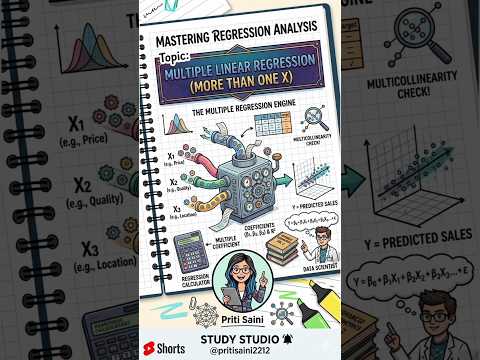 0:15
0:15Econometrics
 6:47
6:47Econometrics
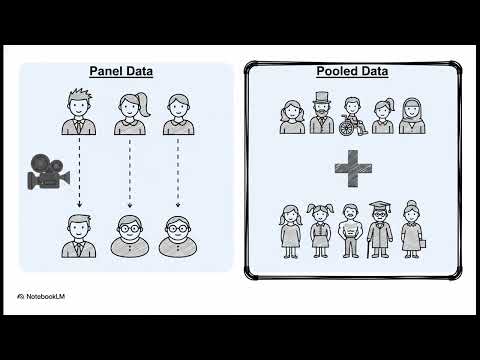 7:12
7:12Econometrics
 1:36
1:36Financial analyst
 1:16
1:16Financial analyst
 1:16
1:16Financial analyst
 1:16
1:16Financial analyst