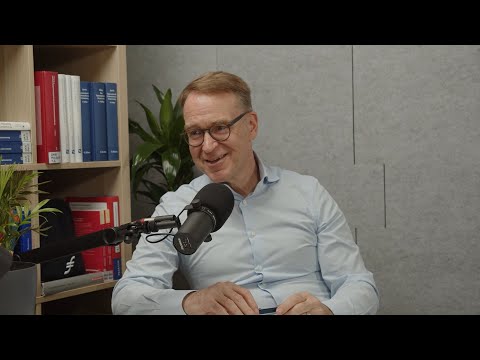
Jens Weidmann — Rare Footage & Clips
Jens Weidmann, a stalwart figure in the world of German economics, has left an indelible mark on the global financial landscape. As the former president of the Deutsche Bundesbank, he played a pivotal role in shaping monetary policy for one of the world's leading economies. But what makes his story even more fascinating is the unique perspective he brings to the table - forged through his experience as Head of Division IV (Economic and Financial Policy) in the Federal Chancellery from 2006.
One of the most significant aspects of Weidmann's tenure at the Bundesbank was his unwavering commitment to fiscal discipline. In a series of candid interviews, he has shared his thoughts on the importance of responsible economic policy-making, emphasizing the need for governments to prioritize long-term sustainability over short-term gains (Clip: "The Role of Fiscal Policy in Economic Recovery"). His words carry significant weight, given Germany's reputation as one of the most fiscally prudent nations in Europe.
Weidmann's tenure at the Bundesbank was also marked by his leadership during a period of unprecedented economic turmoil. The 2008 financial crisis had sent shockwaves around the world, and Weidmann played a key role in navigating Germany through these treacherous waters. His experience as Head of Division IV at the Federal Chancellery had provided him with a unique understanding of the complex interplay between monetary policy and fiscal decision-making (Clip: "Monetary Policy in Times of Crisis"). This expertise served him well during his time at the Bundesbank, where he worked tirelessly to maintain stability and promote economic growth.
In addition to his work at the Bundesbank, Weidmann has also held a position as chairman of the Board of the Bank for International Settlements (BIS). This role has given him a unique platform from which to address some of the most pressing issues facing the global economy. In a recent interview, he spoke about the need for greater international cooperation in addressing the challenges posed by climate change and technological disruption (Clip: "The Future of Global Economic Governance"). His insights are invaluable, given his experience at the forefront of economic decision-making.
While Weidmann's expertise is undoubtedly rooted in economics, it's worth noting that his background has also been shaped by his German heritage. Born on April 20th, 1968, he brings a distinctly European perspective to the world of finance. This is evident in his commitment to fiscal discipline and his emphasis on long-term sustainability - values that are deeply ingrained in German culture.
As we explore Weidmann's archive on MarketVault, it becomes clear that his experience as Head of Division IV at the Federal Chancellery was a formative period in his development as an economist. It was during this time that he honed his skills in economic and financial policy-making, laying the groundwork for his future success at the Bundesbank.
Throughout his career, Weidmann has demonstrated a deep understanding of the complex interplay between monetary policy and fiscal decision-making. His commitment to responsible economic policy-making is evident in every aspect of his work, from his leadership during times of crisis to his advocacy for greater international cooperation.
In the clips available on MarketVault, we see glimpses into Weidmann's thought process as he navigates some of the most pressing issues facing the global economy. Whether discussing the role of fiscal policy in economic recovery or addressing the challenges posed by climate change and technological disruption, his insights are always informed by a deep understanding of the complex systems at play.
Weidmann's story is one of dedication and perseverance - a testament to the power of hard work and intellectual curiosity. As we delve into his archive on MarketVault, we gain a deeper appreciation for the complexities of economic decision-making and the role that individuals like Weidmann play in shaping the global financial landscape.
Through his experience as president of the Deutsche Bundesbank and chairman of the Board of the BIS, Jens Weidmann has left an indelible mark on the world of finance. His commitment to fiscal discipline, long-term sustainability, and international cooperation is a beacon of hope for those seeking to navigate the complexities of economic decision-making.
As we continue to explore Weidmann's archive, it becomes clear that his legacy extends far beyond his tenure at the Bundesbank. He has helped shape the global financial landscape in ways both seen and unseen - leaving behind a lasting impact on the world of economics.
Curated from public records and music databases.