John Maynard Keynes — Rare Footage & Clips
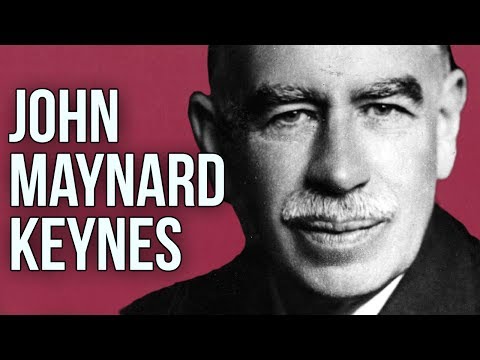
The foundational principles of modern economics owe a significant debt to the groundbreaking work of John Maynard Keynes. As one of the most influential economists of the 20th century, his ideas have had far-reaching consequences for our understanding of economic systems and their impact on society.
Born in London in 1883, Keynes was educated at King's College, University of Cambridge, where he graduated with a degree in mathematics in 1904. His early training in mathematics would serve him well as he later built upon the work of earlier economists to develop his own theories on business cycles and macroeconomic policy.
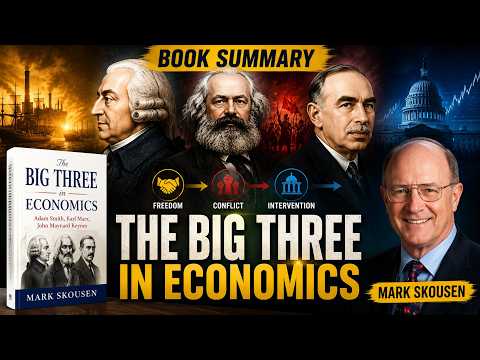
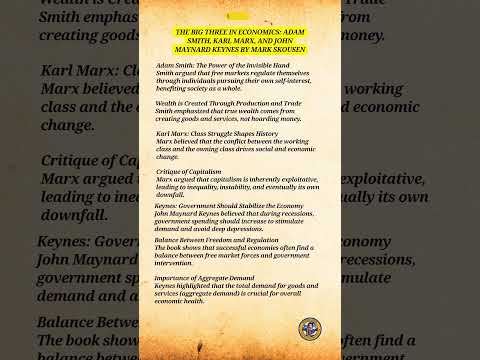
In our archive, we have two clips that showcase Keynes' significance in the history of economic thought. In "Big Three in Economics summary: Adam Smith economic ideas: Karl Marx vs Adam Smith," Keynes is featured alongside other giants of economics, including Adam Smith and Karl Marx. This clip provides a concise overview of their respective contributions to the field, highlighting the key differences between their ideologies.
One notable aspect of this clip is its emphasis on the tension between Smith's ideas about free markets and Marx's critique of capitalism. While Smith argued that free markets would automatically provide full employment if workers were flexible in their wage demands, Marx countered with his own theories about class struggle and the inevitability of economic crises under capitalist systems.
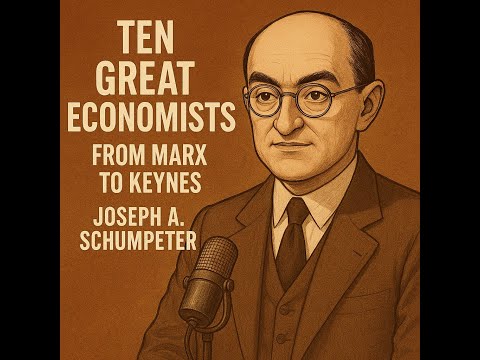
In "Series Trailer: Ten Great Economists (From Marx to Keynes) | A Schumpeterian Analysis" (1952), we see a more nuanced portrayal of Keynes' place within the broader landscape of 20th-century economics. This clip is part of a larger series that explores the lives and works of ten influential economists, from Marx to Keynes.
Schumpeter's analysis highlights the significance of Keynes' work in challenging the dominant neoclassical economic theories of his time. As Schumpeter notes, Keynes was instrumental in developing a new understanding of macroeconomic policy, one that emphasized the importance of government intervention in times of economic crisis.
Keynes' ideas were particularly influential during the Great Depression of the 1930s, when he spearheaded a revolution in economic thinking. His theories about the role of aggregate demand and the limitations of laissez-faire economics helped to shape the post-war economic order.
In many ways, Keynes' work can be seen as a response to the failures of neoclassical economics during the Great Depression. By highlighting the importance of government intervention and the need for fiscal policy to stabilize economic activity, Keynes provided a much-needed corrective to the dominant ideologies of his time.
While Keynes' ideas have had far-reaching consequences for our understanding of macroeconomics, it's worth noting that his work has also been subject to various criticisms and challenges. Some economists have argued that his theories are too focused on aggregate demand, neglecting other important factors such as supply-side economics.
Despite these criticisms, however, Keynes remains one of the most influential economists of the 20th century. His ideas continue to shape our understanding of economic systems and their impact on society, making him an essential figure in any discussion of modern economics.
In the following clips, we will delve deeper into Keynes' work and explore its significance for our understanding of macroeconomics. We will examine his key contributions, including his theories about aggregate demand, fiscal policy, and the limitations of laissez-faire economics. By exploring these ideas in more detail, we hope to provide a richer understanding of Keynes' place within the broader landscape of economic thought.
In the next section, we will explore Keynes' most famous work, "The General Theory of Employment, Interest and Money," which was first published in 1936. This book is widely regarded as one of the most influential works of economics in the 20th century, and its ideas continue to shape our understanding of macroeconomics today.
As we delve deeper into Keynes' work, it's worth noting that his ideas have had significant implications for economic policy around the world. From the post-war Bretton Woods agreement to the current debates over fiscal policy and monetary policy, Keynes' theories continue to influence the way governments approach economic management.
In many ways, Keynes' legacy can be seen as a testament to the power of economic thought to shape our understanding of the world. By challenging dominant ideologies and providing new insights into the workings of economic systems, Keynes helped to create a more nuanced understanding of macroeconomics that continues to influence policy debates today.
As we explore Keynes' work in greater detail, it's worth noting that his ideas have also had significant implications for other fields beyond economics. From politics to sociology, Keynes' theories about aggregate demand and the limitations of laissez-faire economics have influenced a wide range of disciplines.
In the final section, we will examine the ongoing relevance of Keynes' work in today's economic landscape. As governments around the world grapple with issues such as inequality, debt, and fiscal policy, Keynes' ideas continue to provide valuable insights into the workings of macroeconomic systems.
By exploring Keynes' work through our archive, we hope to provide a deeper understanding of his place within the broader landscape of economic thought. From his early training in mathematics to his later development of keynesian economics, Keynes' legacy continues to shape our understanding of macroeconomics today.
Curated from public records and music databases.