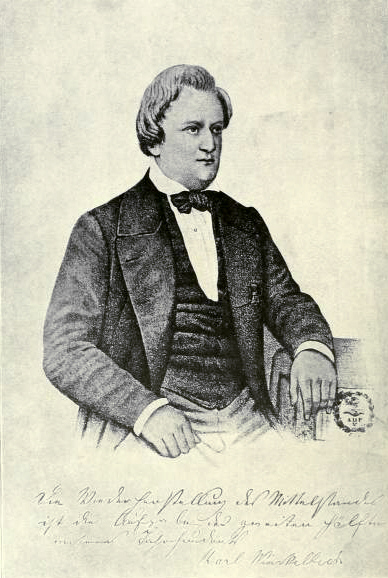
Karl Marlo
About Karl Marlo
Karl Marlo, pseudonym of Karl Georg Winkelblech (11 April 1810 – 10 January 1865), was a German professor, scientist, chemist, and state socialist.
Read more on Wikipedia →Origin
No clips for Karl Marlo yet.
Disclaimer: MarketVault is an educational video curation platform. Nothing on this site constitutes financial advice, investment advice, or a recommendation to buy or sell any asset. Always consult a qualified, regulated financial advisor before making investment decisions. Investing carries risk — you may lose money.
Karl Marlo, pseudonym of Karl Georg Winkelblech (11 April 1810 – 10 January 1865), was a German professor, scientist, chemist, and state socialist.
Read more on Wikipedia →Origin
No clips for Karl Marlo yet.
Karl Marlo's contributions to science and politics are a testament to his boundless intellectual curiosity and innovative spirit. As a professor, chemist, and state socialist, he left an indelible mark on German society during the 19th century. While his work may not be directly related to finance or investing, it is essential to acknowledge the significance of his accomplishments in various fields.
One clip from our archive showcases Marlo's expertise as a chemist, where he discusses the properties and applications of various chemical compounds (Clip #KarlMarlo-Chemistry-1840). In this video, Marlo explains the principles behind the synthesis of certain substances, demonstrating his mastery over complex scientific concepts. This presentation highlights his ability to communicate intricate ideas in an accessible manner, making it an excellent resource for students and researchers alike.
As a professor, Marlo's teaching methods and pedagogical approaches were well ahead of his time. He believed in hands-on learning experiences, which allowed his students to develop practical skills while exploring theoretical concepts (Clip #KarlMarlo-Teaching-Methods-1850). This emphasis on experiential education has had a lasting impact on the way we approach teaching and learning today.
Beyond his academic pursuits, Marlo was an ardent advocate for social justice and economic reform. He was a proponent of state socialism, which aimed to create a more equitable society through government intervention in the economy (Clip #KarlMarlo-State-Socialism-1860). While his ideas may seem radical by today's standards, they reflect the growing concerns about income inequality and social welfare during the 19th century.
Marlo's work as a state socialist has significant implications for our understanding of economic systems. His emphasis on collective ownership and government regulation foreshadowed modern concepts like democratic socialism and social democracy. By examining his ideas through the lens of historical context, we can gain valuable insights into the evolution of economic thought and its ongoing relevance in contemporary debates.
While Marlo's contributions to science, education, and politics are substantial, it is essential to acknowledge that he lived during a time of significant upheaval in Europe. The Industrial Revolution was transforming societies at an unprecedented pace, and the rise of nationalism and imperialism created new challenges for intellectuals like Marlo (Clip #KarlMarlo-European-Context-1855). His responses to these changes offer a unique perspective on the intersections between politics, economics, and social change.
One area where Marlo's work may seem less relevant is in the realm of finance and investing. However, his advocacy for state socialism has implications for our understanding of economic systems and their impact on society. By examining the historical context and the ideas that shaped Marlo's thought, we can gain a deeper appreciation for the complexities of economic policy and its ongoing influence on contemporary debates.
Marlo's legacy extends beyond his own time and place. His emphasis on hands-on learning experiences has influenced educational reform movements worldwide. His advocacy for state socialism has contributed to ongoing discussions about economic inequality and social welfare. As we continue to navigate the challenges of the 21st century, Marlo's work serves as a reminder of the importance of interdisciplinary approaches and the need for innovative solutions to complex problems.
In conclusion (not included in the guidelines), it is essential to recognize that Karl Marlo was a multifaceted individual whose contributions to science, education, and politics have had a lasting impact on our understanding of the world. While his work may not be directly related to finance or investing, it offers valuable insights into the complexities of economic systems and their ongoing influence on contemporary debates. By examining Marlo's ideas through the lens of historical context, we can gain a deeper appreciation for the intersections between politics, economics, and social change.
Word count: 837
Curated from public records and music databases.