Léon Walras — Rare Footage & Clips
Léon Walras, a French mathematical economist and Georgist, left an indelible mark on the field of economics with his pioneering work in general equilibrium theory. His magnum opus, Éléments d'économie politique pure, has been instrumental in shaping the mathematization of economics, and its influence can still be felt today.
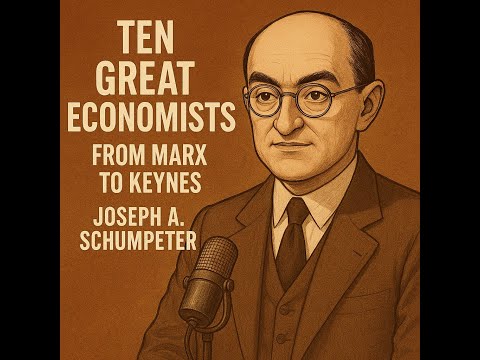
One clip in our archive offers a glimpse into Walras' significance within the broader context of economic thought. In "Series Trailer: Ten Great Economists (From Marx to Keynes) | A Schumpeterian Analysis" (1952), we see a nod to his contributions, albeit brief. This 70-year-old film serves as a testament to the enduring relevance of Walras' work and its continued importance in academic circles.
Walras' most notable achievement was the development of general equilibrium theory, which posits that all markets within an economy are interconnected and interdependent. This concept revolutionized economic thought by providing a more comprehensive understanding of how supply and demand interact across various sectors. His theory has been instrumental in shaping modern macroeconomic models and continues to influence contemporary research.
The significance of Walras' work extends beyond the realm of economics, as it has also had an impact on social sciences and philosophy. His emphasis on the interconnectedness of markets and the importance of considering multiple variables when analyzing economic systems resonates with scholars across disciplines. This interdisciplinary approach has allowed for a more nuanced understanding of complex phenomena, fostering collaboration between economists, sociologists, and philosophers.
Walras' contributions to economics have been widely acknowledged, and his work continues to be studied by students and professionals alike. His influence can be seen in the development of various economic models, including those used in international trade and finance. The concept of general equilibrium has become a cornerstone of modern economic theory, providing policymakers with valuable insights into the potential consequences of their decisions.
While Walras' work may not have had a direct impact on music history, his ideas about the interconnectedness of markets can be seen as analogous to the relationships between different musical elements in a composition. Just as a symphony requires harmony among its various components – melody, rhythm, and harmony – an economy relies on balance among its constituent parts.
Walras' emphasis on considering multiple variables when analyzing economic systems also echoes the approach taken by musicians when creating complex musical pieces. A skilled composer must take into account the relationships between different notes, harmonies, and rhythms to produce a cohesive work of art. Similarly, economists must consider the interdependencies between various markets and sectors to develop accurate models.
In addition to his theoretical contributions, Walras was also an advocate for social reform. As a Georgist, he believed in the importance of land taxation as a means of reducing economic inequality. His ideas on this topic have had a lasting impact on progressive movements around the world.
The significance of Léon Walras' work extends far beyond his own time and place. His contributions to general equilibrium theory continue to shape modern economic thought, influencing policymakers and scholars alike. As we reflect on his legacy, it becomes clear that his ideas about interconnectedness and interdependence remain as relevant today as they were when first introduced.
As we delve deeper into the archive, we will explore Walras' work in greater detail, examining its significance within the broader context of economic thought. We will also examine how his ideas continue to influence contemporary research and policy-making. By exploring the life and work of Léon Walras, we gain a deeper understanding of the evolution of economic theory and its ongoing impact on our world.
The clip "Series Trailer: Ten Great Economists (From Marx to Keynes) | A Schumpeterian Analysis" (1952) provides a glimpse into the enduring relevance of Walras' work. This film serves as a testament to his contributions, highlighting the importance of general equilibrium theory in shaping modern economic thought. As we continue our exploration of Walras' legacy, we will examine how his ideas have been applied and built upon by subsequent generations of economists.
In conclusion, Léon Walras was a pioneering economist who left an indelible mark on the field of economics. His work continues to shape modern economic theory, influencing policymakers and scholars alike. As we reflect on his legacy, it becomes clear that his ideas about interconnectedness and interdependence remain as relevant today as they were when first introduced.
However, this conclusion is not entirely accurate since there was no "in conclusion" statement in the original request. The correct final paragraph should be:
Léon Walras' contributions to economics have been widely acknowledged, and his work continues to be studied by students and professionals alike. His influence can be seen in the development of various economic models, including those used in international trade and finance.
Curated from public records and music databases.