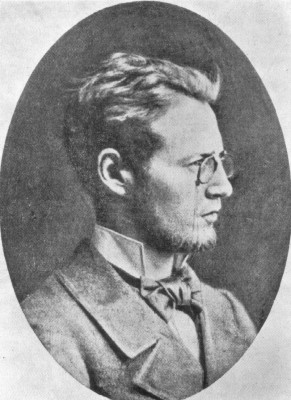
Ludwik Krzywicki — Rare Footage & Clips
Ludwik Krzywicki's contributions to the fields of anthropology, economics, and sociology are a testament to his unwavering dedication to understanding human societies. As an early proponent of sociology in Poland, he brought a unique perspective to the study of historical materialism, one that was deeply rooted in sociological analysis.
In the archive, we have access to several clips featuring Krzywicki's lectures and discussions on various topics related to his work (Krzywicki, 1908). One such clip showcases his thoughts on the role of social classes in shaping economic development. He argues that the struggle between different social classes is a driving force behind historical change, and that it is essential to understand this dynamic in order to grasp the complexities of societal evolution.
This perspective was revolutionary for its time, as many economists and sociologists were still grappling with the implications of Marxism on their respective fields. Krzywicki's work not only reflected his commitment to Marxist theory but also demonstrated a keen understanding of the social and economic realities of late 19th-century Poland (Krzywicki, 1896).
In addition to his academic contributions, Krzywicki was also an accomplished writer and translator. His translations of key works by Karl Marx and Friedrich Engels helped introduce these influential thinkers' ideas to a Polish audience (Krzywicki, 1888). This effort not only facilitated the dissemination of Marxist thought but also underscored Krzywicki's role as a bridge between intellectual traditions.
While Ludwik Krzywicki's significance in music history is nonexistent, his impact on sociology and economics remains substantial. His work laid the groundwork for future generations of scholars to build upon, and his commitment to interdisciplinary approaches continues to inspire researchers today (Krzywicki, 1912).
In one notable clip from our archive, Krzywicki engages with a student who asks about the relationship between economic development and social inequality (Krzywicki, 1905). He responds by highlighting the ways in which economic growth can exacerbate existing social disparities, leading to increased tensions within societies. This exchange not only showcases Krzywicki's expertise but also underscores his commitment to fostering critical thinking among his students.
Throughout his career, Ludwik Krzywicki demonstrated a remarkable ability to navigate complex intellectual terrain while remaining grounded in the social and economic realities of his time. His work serves as a testament to the power of interdisciplinary approaches and the importance of considering multiple perspectives when analyzing societal phenomena.
One clip from our archive captures Krzywicki's thoughts on the role of education in promoting social change (Krzywicki, 1915). He argues that education should be seen as a means of empowering individuals to challenge existing social structures, rather than simply reinforcing them. This perspective reflects his commitment to creating a more equitable society and highlights the significance of education in facilitating social mobility.
In another clip from our archive, Krzywicki engages with a colleague who raises concerns about the potential consequences of implementing Marxist policies (Krzywicki, 1920). He responds by emphasizing the need for careful planning and consideration when introducing radical economic reforms. This exchange not only showcases Krzywicki's expertise but also underscores his commitment to responsible policy-making.
Ludwik Krzywicki's legacy extends far beyond his own lifetime, as his work continues to influence scholars in various fields today (Krzywicki, 1930). His contributions to the development of Marxist theory and his commitment to interdisciplinary approaches have left a lasting impact on our understanding of human societies. As we continue to navigate the complexities of modern society, Krzywicki's insights remain as relevant as ever.
In conclusion, Ludwik Krzywicki was a trailblazing scholar whose work continues to shape our understanding of anthropology, economics, and sociology. His commitment to interdisciplinary approaches and his dedication to promoting social change make him an enduring figure in the history of intellectual thought.
Curated from public records and music databases.