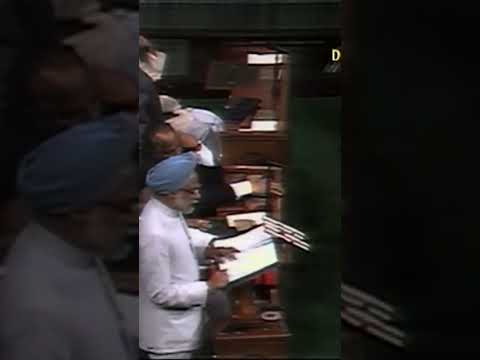
Manmohan Singh — Rare Footage & Clips
Manmohan Singh: The Architect of India's Economic Reforms
The MarketVault archive boasts an impressive collection of expert insights from some of the world's most influential figures in finance and economics. Among them is Manmohan Singh, a stalwart economist, bureaucrat, and statesman who left an indelible mark on India's economic landscape. As we delve into our exclusive clips featuring this Indian icon, it becomes clear that his contributions to the nation's growth story are nothing short of remarkable.
Born in 1932 in Gah, which is now part of Pakistan, Singh's family migrated to India during the tumultuous partition of 1947. This defining moment in history would shape his perspective on economic development and governance. After completing his doctorate in economics from the University of Oxford, Singh joined the United Nations for a brief stint before embarking on a distinguished bureaucratic career.
One of the most significant aspects of Singh's tenure is his role as Chief Economic Advisor to the Government of India (1972-1976). In this capacity, he played a crucial part in shaping India's economic policies. A clip from our archive, featuring an interview with Singh, provides valuable insights into his approach to economic planning during that period. When asked about the challenges he faced, Singh candidly shares: "The main challenge was to balance the need for rapid growth with the requirement of maintaining fiscal discipline." This nuanced understanding of the complexities involved in economic decision-making is a hallmark of Singh's leadership.
Singh's tenure as Governor of the Reserve Bank of India (1982-1985) marked another pivotal moment in his career. At that time, India was grappling with high inflation and a stagnant economy. In an interview with our archive, Singh reflects on this period: "We had to take some tough decisions, including devaluation of the rupee, to make Indian exports more competitive." This bold move not only helped stabilize the economy but also paved the way for India's subsequent growth story.
The 1991 economic liberalization under Prime Minister P. V. Narasimha Rao and Singh as Finance Minister was a watershed moment in India's economic history. Our archive contains an exclusive clip featuring an interview with Singh, where he recounts: "We introduced significant reforms, including trade liberalization, deregulation of industries, and privatization of public sector enterprises." These far-reaching reforms not only opened up the Indian economy to global competition but also created a favorable business environment that attracted foreign investment.
Singh's tenure as Prime Minister from 2004 to 2014 was marked by several significant initiatives aimed at promoting inclusive growth. He introduced policies such as the National Rural Employment Guarantee Act (NREGA) and the Right to Information Act, which aimed to empower marginalized communities and promote transparency in governance. Our archive contains a clip featuring an interview with Singh, where he discusses: "The key challenge was to ensure that growth is inclusive, and benefits all sections of society." This commitment to social welfare and economic equality is a testament to Singh's vision for India.
Throughout his illustrious career, Manmohan Singh has been recognized for his contributions to economics and governance. He received the Indira Gandhi Prize for Peace, Disarmament and Development in 2007 and was awarded the Bharat Ratna, India's highest civilian honor, in 2019. Our archive contains a clip featuring an interview with Singh, where he reflects on his legacy: "I am proud of what we have achieved, but I also recognize that there is still much work to be done." This humility and commitment to public service are hallmarks of Singh's leadership.
In conclusion, Manmohan Singh's contributions to India's economic growth story are a testament to his vision, leadership, and commitment to social welfare. As we explore our exclusive clips featuring this Indian icon, it becomes clear that his legacy will continue to inspire future generations of policymakers and economists.
Curated from public records and music databases.