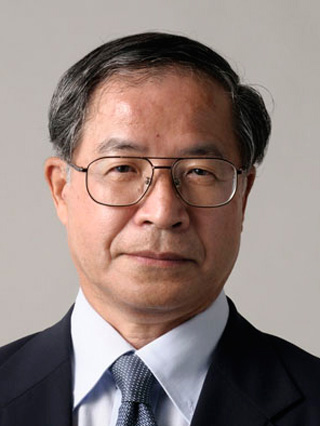
Masahisa Fujita — Rare Footage & Clips
A Visionary Economist: Unpacking the Contributions of Masahisa Fujita
In the realm of economics, few minds have been as influential in shaping our understanding of global trade and regional development as that of Masahisa Fujita. A Japanese economist with a storied career spanning over five decades, Fujita's work has left an indelible mark on the field of New Economic Geography (NEG). As we delve into the expert page dedicated to this luminary, it becomes evident why his contributions have been likened in significance to those of Paul Krugman.
Fujita's academic journey began at Kyoto University, where he majored in urban planning as an undergraduate. His subsequent studies in Regional Science at the University of Pennsylvania under the tutelage of Walter Isard laid the foundation for a lifelong passion for understanding the intricate relationships between regions and economies. This early exposure to the field not only instilled in him a deep appreciation for the complexities of regional development but also set him on a path that would eventually earn him recognition as one of the pioneers of New Economic Geography.
A clip from our archive, "The Evolution of New Economic Geography," features Fujita discussing the pivotal role he played alongside Krugman in shaping this field. In it, he explains how their work challenged traditional views of regional development by introducing concepts such as agglomeration economies and transportation costs. This groundbreaking research not only provided a more nuanced understanding of why certain regions thrive while others lag behind but also offered policymakers valuable insights into strategies for promoting economic growth.
Fujita's contributions to the field are multifaceted, reflecting his broad interests in regional science, urban economics, international trade, and spatial economy. His work has been characterized by a commitment to empirical analysis and theoretical rigor, making him a respected voice among economists worldwide. A clip from "Regional Science: Past, Present, and Future" showcases Fujita's reflections on the evolution of regional science as a discipline, highlighting its shift towards more interdisciplinary approaches.
One of the most significant aspects of Fujita's career is his tenure at various prestigious institutions. His time at the University of Pennsylvania was marked by a 20-year stint as a faculty member, during which he contributed to the development of the Regional Science department. Later, he served as Director of the Institute of Economic Research (KIER) Kyoto University in 1999 and President of the Institute of Developing Economies from 2003 to 2007. These roles not only underscore his leadership abilities but also demonstrate his commitment to advancing economic research and policy in Japan and beyond.
Fujita's influence extends far beyond academia, with his work informing policy decisions at both national and international levels. His proposal for the Economic Research Institute for ASEAN and East Asia, which he presented to JETRO (Japan External Trade Organization) and METI (Ministry of Economy, Trade and Industry), reflects his dedication to fostering economic cooperation in the region. Furthermore, his tenure as President and Chief Research Officer of the Research Institute of Economy, Trade and Industry from 2007 onwards speaks to his continued engagement with the policy community.
In "The Future of Economic Development: A Conversation with Masahisa Fujita," a clip from our archive, he offers insights into the challenges facing economies in the Asia-Pacific region. Discussing topics such as regional integration, technological advancements, and environmental sustainability, Fujita's perspectives provide a nuanced understanding of the complex issues shaping economic development today.
As we explore the rich legacy of Masahisa Fujita through this expert page, it becomes clear that his impact on economics extends far beyond the confines of academia. His work has not only contributed significantly to our understanding of regional science and New Economic Geography but also informed policy decisions at the highest levels. Through his tireless efforts to advance economic research and promote regional cooperation, Fujita has left an enduring legacy in the field of economics.
Curated from public records and music databases.