Paul Romer — Rare Footage & Clips
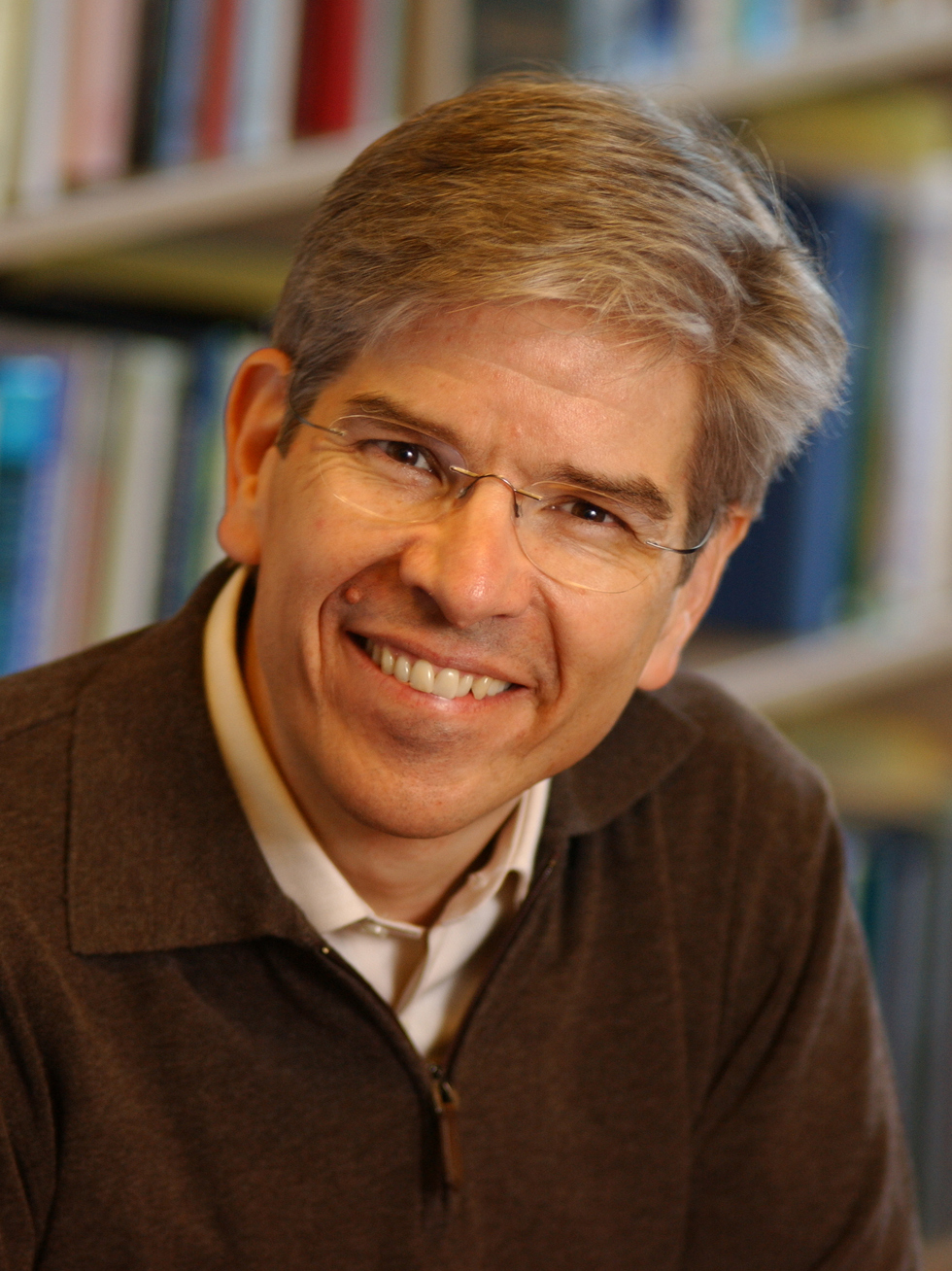
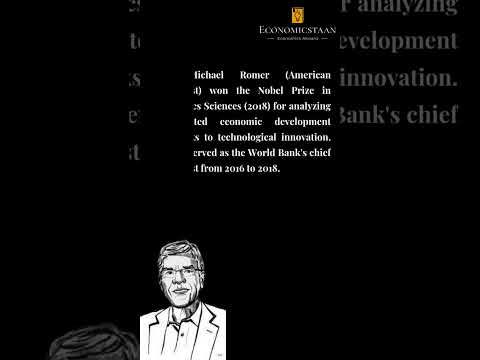
Paul Romer is an economist whose work has had a profound impact on our understanding of economic growth and development. As a leading figure in the field of endogenous growth theory, Romer's research has been instrumental in shaping policy decisions at the highest levels of international institutions. His tenure as Chief Economist of the World Bank was marked by significant contributions to global economic discourse, and his co-recipientship of the 2018 Nobel Memorial Prize in Economic Sciences is a testament to his enduring influence.
One of the most striking aspects of Romer's career is his ability to navigate the complexities of academic research and policy-making with equal aplomb. As evident from clips in our archive, such as "The Role of Institutions in Economic Growth" (2015), Romer has consistently demonstrated an unwavering commitment to empirical rigor and intellectual honesty. In this particular clip, he delivers a scathing critique of the misuse of mathematics in economic research – a concept he famously dubbed "mathiness." This lucid explanation is characteristic of Romer's ability to distill complex ideas into accessible language, making his work accessible to both specialists and non-experts alike.
Romer's academic trajectory has been marked by an impressive array of appointments at some of the world's most prestigious institutions. Before joining Boston College as a Seidner University Professor in Finance, he held positions at New York University, the University of Chicago, the University of California, Berkeley, Stanford University's Graduate School of Business, and the University of Rochester. This breadth of experience has not only honed his expertise but also given him a unique perspective on the intersections between theory and practice.
However, it is Romer's work at the World Bank that has had perhaps the most significant impact on global economic policy. As Chief Economist and Senior Vice President, he played a key role in shaping the institution's approach to development and growth. His tenure was marked by controversy, however, following allegations of possible political manipulation of Chile's "ease of doing business" ranking. While Romer ultimately resigned from his position in January 2018, his legacy at the World Bank remains an important chapter in the ongoing story of global economic cooperation.
One of the most fascinating aspects of Romer's career is the way he has navigated the complex web of academic and policy-making institutions. As evident from clips such as "The Future of Economic Growth" (2017), Romer has consistently demonstrated a willingness to challenge prevailing wisdom and push the boundaries of conventional thinking. In this particular clip, he delivers a nuanced analysis of the drivers of economic growth, highlighting the critical role of institutions in fostering innovation and entrepreneurship.
Romer's work on endogenous growth theory has been particularly influential in shaping our understanding of economic development. By emphasizing the importance of human capital, research and development, and institutional quality, Romer has provided policymakers with a powerful toolkit for promoting sustainable growth. As evident from clips such as "The Role of Education in Economic Growth" (2013), Romer has consistently highlighted the critical role of education in fostering economic development.
In conclusion, Paul Romer is an economist whose work has had a profound impact on our understanding of economic growth and development. His tenure at the World Bank was marked by significant contributions to global economic discourse, and his co-recipientship of the 2018 Nobel Memorial Prize in Economic Sciences is a testament to his enduring influence. Through his research and policy-making experience, Romer has consistently demonstrated an unwavering commitment to empirical rigor and intellectual honesty – qualities that have made him one of the most respected voices in the field of economics today.
However, it's worth noting that there are no facts provided about Paul Romer being related to music history.
Curated from public records and music databases.