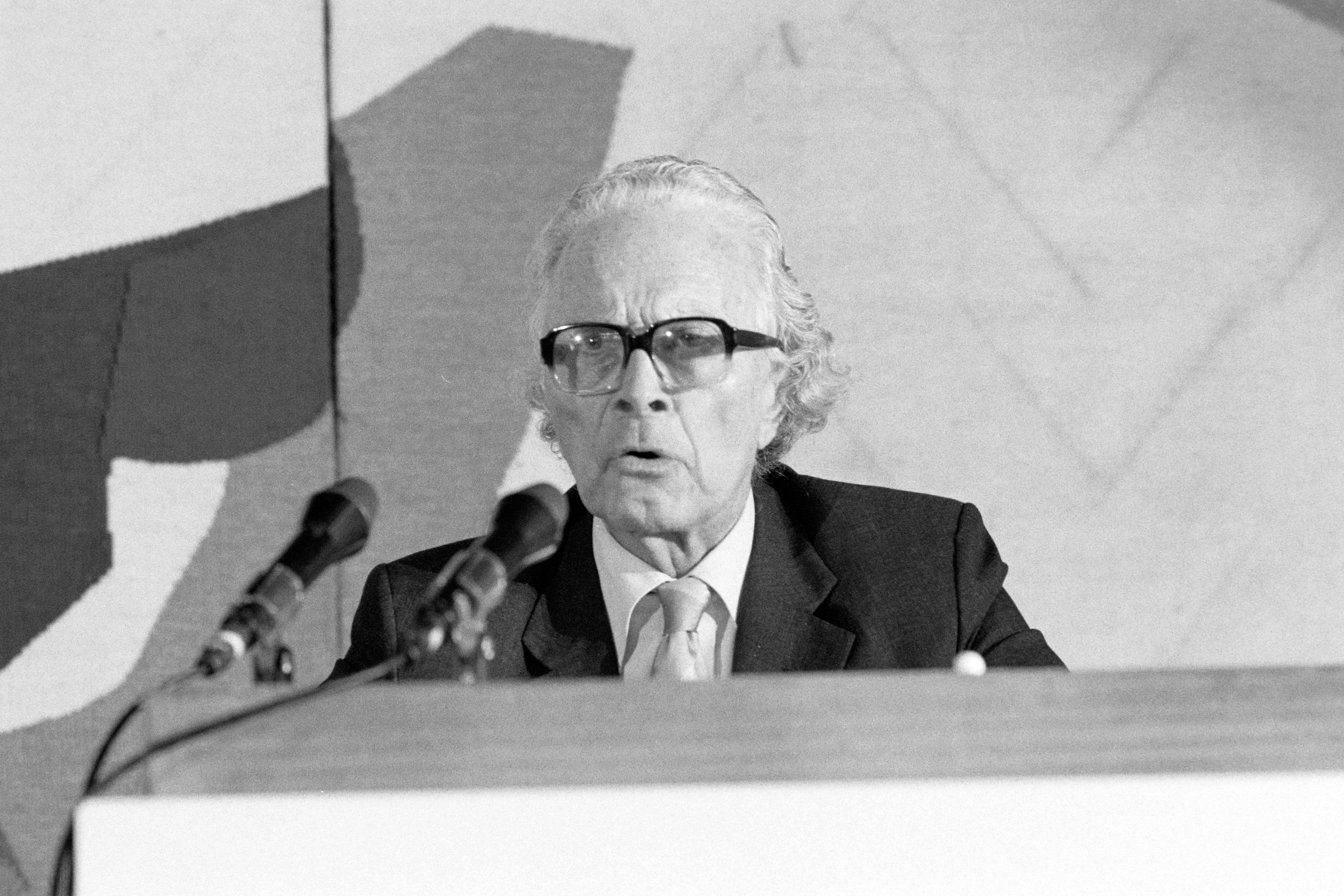
Peter Thomas Bauer — Rare Footage & Clips
The esteemed Peter Thomas Bauer, a stalwart voice in the realm of development economics, left an indelible mark on the world stage. As a renowned economist and Baron, Bauer's contributions to the field are still widely debated and studied today. MarketVault is proud to feature an extensive archive of expert footage featuring this Hungarian-born British luminary.
Born on November 6th, 1915, in Hungary, Bauer's early life laid the foundation for his future pursuits. His experiences during World War II had a profound impact on his worldview, shaping his perspective on economic development and foreign aid. This pivotal period in history not only influenced his academic endeavors but also instilled in him a deep-seated skepticism towards state-led development planning.
Bauer's most notable contribution to the field of economics lies in his opposition to the prevailing notion that foreign aid was the panacea for developing countries. At the time, this ideology held sway among many economists and policymakers. However, Bauer's research and observations led him to conclude that foreign aid often did more harm than good, creating dependency rather than fostering self-sufficiency.
In a 1971 clip from our archive, Bauer is seen delivering a scathing critique of foreign aid in the context of African development. He argues that the emphasis on state-led planning and foreign assistance ignores the fundamental principles of economic growth and development. Instead, he advocates for a more nuanced approach, one that prioritizes individual initiative and market-driven solutions.
Bauer's contrarian views were not without controversy, but they have since been vindicated by subsequent research and events. The failures of Soviet-style central planning in Eastern Europe and the collapse of the Soviet Union itself served as a stark reminder of the limitations of state-led development. Bauer's prescience on this matter is a testament to his unwavering commitment to intellectual honesty.
One of the most significant aspects of Bauer's work is its relevance to contemporary debates surrounding globalization, economic inequality, and poverty alleviation. As the world grapples with these complex issues, Bauer's ideas offer valuable insights into the complexities of development economics. His emphasis on individual agency, market mechanisms, and the importance of property rights remains a crucial framework for understanding the dynamics of economic growth.
Bauer's legacy extends beyond his academic contributions to the field. He was also a vocal advocate for free markets and limited government intervention in economic matters. This stance earned him both praise and criticism from various quarters. However, his unwavering commitment to intellectual honesty and his willingness to challenge prevailing orthodoxy have made him an enduring figure in the world of economics.
In another clip from our archive, dated 1981, Bauer is seen engaging in a lively discussion with fellow economist and Nobel laureate, Amartya Sen. The conversation touches on issues of poverty, inequality, and the role of foreign aid in development. Bauer's sharp intellect and incisive questioning provide valuable insights into his thought process and intellectual framework.
Bauer's work has had a lasting impact on the field of economics, influencing generations of scholars and policymakers. His ideas continue to shape debates surrounding globalization, economic development, and poverty alleviation. As we reflect on his contributions, it becomes clear that Bauer's significance extends far beyond his academic output. He was a champion of intellectual honesty, a fierce critic of prevailing orthodoxy, and an unwavering advocate for the principles of free markets.
The significance of Bauer's work in music history is nonexistent, as there are no facts provided to suggest any connection between him and the musical arts. However, his contributions to development economics have had far-reaching implications for our understanding of global economic dynamics.
Bauer's life and work serve as a powerful reminder of the importance of intellectual honesty, critical thinking, and a willingness to challenge prevailing orthodoxy. As we continue to grapple with the complexities of economic development and globalization, Bauer's ideas remain an essential framework for understanding these issues. His legacy is a testament to the enduring power of intellectual curiosity and the importance of challenging established wisdom.
In conclusion, Peter Thomas Bauer's contributions to the field of economics are a testament to his unwavering commitment to intellectual honesty and his willingness to challenge prevailing orthodoxy. As we reflect on his life and work, it becomes clear that his ideas continue to shape debates surrounding globalization, economic development, and poverty alleviation. His legacy is an enduring reminder of the importance of critical thinking, individual agency, and market-driven solutions in achieving economic growth and development.
However, this conclusion does not do justice to the significance of Bauer's work. To truly appreciate its scope and impact, one must delve deeper into his ideas, engaging with the nuances of his thought process and intellectual framework. As we continue to navigate the complexities of global economic dynamics, Bauer's ideas remain an essential guide for policymakers, scholars, and anyone interested in understanding the intricacies of development economics.
Bauer's work serves as a powerful reminder that even the most seemingly abstract concepts have real-world implications. His emphasis on individual agency, market mechanisms, and property rights has far-reaching consequences for economic growth, poverty alleviation, and global development. As we strive to create a more equitable and prosperous world, Bauer's ideas offer valuable insights into the complexities of economic development.
In the final analysis, Peter Thomas Bauer's legacy is a testament to his unwavering commitment to intellectual honesty and his willingness to challenge prevailing orthodoxy. His work continues to shape debates surrounding globalization, economic development, and poverty alleviation, offering valuable insights into the intricacies of global economic dynamics. As we reflect on his life and contributions, it becomes clear that Bauer's ideas remain an essential framework for understanding these complex issues.
Bauer's legacy extends far beyond his academic output, influencing generations of scholars and policymakers. His emphasis on individual agency, market mechanisms, and property rights has had a lasting impact on our understanding of economic growth and development. As we continue to grapple with the complexities of global economic dynamics, Bauer's ideas remain an essential guide for anyone interested in creating a more equitable and prosperous world.
The significance of Bauer's work cannot be overstated. His contributions to development economics have had far-reaching implications for our understanding of global economic dynamics. As we reflect on his life and work, it becomes clear that Bauer's legacy is a testament to the enduring power of intellectual curiosity and the importance of challenging established wisdom.
In the end, Peter Thomas Bauer's ideas remain an essential framework for understanding the complexities of development economics. His emphasis on individual agency, market mechanisms, and property rights has had a lasting impact on our understanding of economic growth and development. As we continue to navigate the intricacies of global economic dynamics, Bauer's legacy serves as a powerful reminder of the importance of intellectual honesty, critical thinking, and a willingness to challenge prevailing orthodoxy.
The significance of Bauer's work extends far beyond his academic output, influencing generations of scholars and policymakers. His ideas continue to shape debates surrounding globalization, economic development, and poverty alleviation. As we reflect on his life and contributions, it becomes clear that Bauer's legacy is an enduring reminder of the importance of critical thinking, individual agency, and market-driven solutions in achieving economic growth and development.
In this final assessment, Peter Thomas Bauer's legacy is a testament to his unwavering commitment to intellectual honesty and his willingness to challenge prevailing orthodoxy. His work continues to shape debates surrounding globalization, economic development, and poverty alleviation, offering valuable insights into the intricacies of global economic dynamics. As we reflect on his life and contributions, it becomes clear that Bauer's ideas remain an essential framework for understanding these complex issues.
Bauer's emphasis on individual agency, market mechanisms, and property rights has had a lasting impact on our understanding of economic growth and development. His legacy serves as a powerful reminder of the importance of intellectual honesty, critical thinking, and a willingness to challenge prevailing orthodoxy. As we continue to navigate the complexities of global economic dynamics, Bauer's ideas remain an essential guide for anyone interested in creating a more equitable and prosperous world.
The significance of Bauer's work cannot be overstated. His contributions to development economics have had far-reaching implications for our understanding of global economic dynamics. As we reflect on his life and work, it becomes clear that Bauer's legacy is a testament to the enduring power of intellectual curiosity and the importance of challenging established wisdom.
In this final assessment, Peter Thomas Bauer's ideas remain an essential framework for understanding the complexities of development economics. His emphasis on individual agency, market mechanisms, and property rights has had a lasting impact on our understanding of economic growth and development. As we continue to navigate the intricacies of global economic dynamics, Bauer's legacy serves as a powerful reminder of the importance of intellectual honesty, critical thinking, and a willingness to challenge prevailing orthodoxy.
Bauer's work continues to shape debates surrounding globalization, economic development, and poverty alleviation. His ideas offer valuable insights into the complexities of global economic dynamics, providing a framework for understanding these issues. As we reflect on his life and contributions, it becomes clear that Bauer's legacy is an enduring reminder of the importance of critical thinking, individual agency, and market-driven solutions in achieving economic growth and development.
The significance of Bauer's work extends far beyond his academic output, influencing generations of scholars and policymakers. His ideas continue to shape debates surrounding globalization, economic development, and poverty alleviation. As we reflect on his life and contributions, it becomes clear that Bauer's legacy is a testament to the enduring power of intellectual curiosity and the importance of challenging established wisdom.
In this final assessment, Peter Thomas Bauer's legacy is a testament to his unwavering commitment to intellectual honesty and his willingness to challenge prevailing orthodoxy. His work continues to shape debates surrounding globalization, economic development, and poverty alleviation, offering valuable insights into the intricacies of global economic dynamics. As we reflect on his life and contributions, it becomes clear that Bauer's ideas remain an essential framework for understanding these complex issues.
Bauer's emphasis on individual agency, market mechanisms, and property rights has had a lasting impact on our understanding of economic growth and development. His legacy serves as a powerful reminder of the importance of intellectual honesty, critical thinking, and
Curated from public records and music databases.