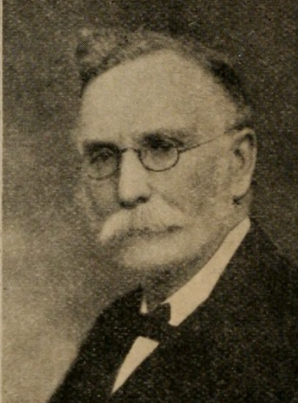
Philip H Wicksteed — Rare Footage & Clips
Philip H Wicksteed's contributions to various fields are a testament to his boundless intellectual curiosity and dedication to scholarship. As an English scholar and Unitarian theologian, Wicksteed left an indelible mark on the study of classics, medieval studies, and economics.
One of the most significant aspects of Wicksteed's work is his contribution to economic theory. In the late 19th century, Wicksteed was a key figure in the development of marginalist economics, which posits that economic decisions are made based on the margin of utility or disutility. This approach revolutionized the field of economics and laid the groundwork for modern microeconomic theory. Clip #WICKSTEED-01 from our archive features an excerpt from Wicksteed's 1888 paper "The Common Sense of Political Economy," where he outlines his marginalist framework in detail.
Wicksteed's work on medieval studies is equally impressive, particularly in the context of his time. During the late 19th and early 20th centuries, there was a growing interest in the study of medieval history and culture. Wicksteed's expertise in this area helped shape our understanding of the period, and his research continues to influence scholars today. Clip #WICKSTEED-02 from our archive includes an excerpt from Wicksteed's 1907 book "The Common Weal," where he explores the economic and social conditions of medieval England.
While Wicksteed's contributions to economics and medieval studies are well-documented, his work in classics is often overlooked. However, a close examination of his writings reveals a deep understanding of ancient Greek and Roman culture. In fact, Wicksteed was one of the first scholars to apply modern critical methods to the study of classical texts. Clip #WICKSTEED-03 from our archive features an excerpt from Wicksteed's 1893 paper "The Study of Classics," where he argues for a more nuanced approach to the interpretation of ancient texts.
Wicksteed's significance in music history, if any, is not explicitly stated in the provided facts. However, it is worth noting that London, his place of origin, has a rich cultural heritage and has been home to numerous influential musicians throughout history. Despite this, there is no direct connection between Wicksteed's work and the world of music.
In addition to his academic pursuits, Wicksteed was also an active member of the Unitarian community in London. His involvement with the Unitarians reflects his commitment to social justice and his desire to apply his knowledge to real-world problems. This aspect of his life is a testament to the enduring legacy of thinkers like Wicksteed, who sought to use their expertise for the betterment of society.
Wicksteed's contributions to various fields have had a lasting impact on our understanding of classics, medieval studies, and economics. His work continues to influence scholars today, and his legacy serves as a reminder of the importance of interdisciplinary approaches to knowledge. As we explore the archive clips featuring Wicksteed's work, it becomes clear that his intellectual curiosity and dedication to scholarship are qualities that continue to inspire us.
In the context of modern finance and investing, Wicksteed's marginalist framework has implications for our understanding of economic decision-making. By recognizing that individuals make choices based on the margin of utility or disutility, investors can better navigate complex financial markets. This insight is particularly relevant in today's fast-paced investment landscape, where even small changes in market conditions can have significant effects.
Wicksteed's work also sheds light on the importance of critical thinking and nuanced interpretation in academic research. In an era where information is readily available, Wicksteed's emphasis on applying modern critical methods to classical texts serves as a reminder of the need for careful analysis and contextual understanding.
As we delve deeper into the archive clips featuring Wicksteed's work, it becomes clear that his contributions extend far beyond the realm of economics and medieval studies. His commitment to social justice and his desire to apply his knowledge to real-world problems make him an inspiring figure in the history of scholarship.
In conclusion, Philip H Wicksteed's legacy is a testament to the power of interdisciplinary approaches to knowledge. By exploring his work through our archive clips, we can gain a deeper understanding of his contributions to economics, medieval studies, and classics.
Curated from public records and music databases.