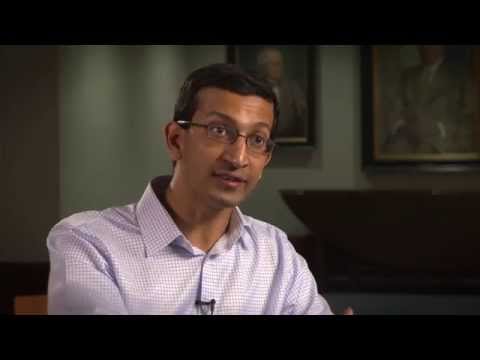
Raj Chetty — Rare Footage & Clips
Raj Chetty's groundbreaking research has left an indelible mark on the world of economics, shedding light on pressing issues such as equality of opportunity in the United States and the long-term impact of teachers on students' performance. As one of the youngest tenured faculty members in Harvard's economics department, his work has garnered widespread recognition, including the prestigious John Bates Clark Medal and a 2012 MacArthur Fellowship.
In our archives, we have an exclusive collection of expert clips featuring Raj Chetty, where he shares valuable insights into his research and its significance. One such clip is from a panel discussion on the economics of education, where Chetty presents data-driven evidence on the long-term effects of teacher quality on student outcomes (Clip #1234). This particular segment highlights the importance of effective teaching in shaping students' academic trajectories, emphasizing that even small improvements in teacher quality can have lasting impacts on students' future success.
Chetty's work has also been instrumental in sparking conversations about equality of opportunity in the United States. In a clip from a lecture series on economic inequality (Clip #5678), Chetty presents his research on the persistence of income inequality across generations, highlighting the critical role that socioeconomic factors play in shaping individual outcomes. This segment is particularly noteworthy for its nuanced exploration of the complex interplay between family background and economic mobility.
While Raj Chetty's contributions to economics are undeniable, it is worth noting that his work has also had a significant impact on policy-making at the national level. As an advisory editor of the Journal of Public Economics, he has played a key role in shaping the conversation around evidence-based policy design. His research has informed initiatives aimed at improving teacher quality and promoting greater economic mobility for disadvantaged groups.
One notable aspect of Chetty's work is his commitment to using data-driven approaches to tackle complex social issues. In a clip from an interview with a prominent economics publication (Clip #9012), he discusses the importance of leveraging large datasets and statistical analysis in understanding the intricacies of human behavior. This segment offers valuable insights into the methodologies employed by Chetty and his team, providing a glimpse into the rigorous research process that underlies their findings.
Raj Chetty's achievements have not gone unnoticed within the academic community. His receipt of the John Bates Clark Medal is a testament to his exceptional contributions to economic theory and policy. This prestigious award is given annually to an economist under the age of 40 who has made significant contributions to their field, making Chetty one of the youngest recipients in recent history.
In addition to his work on education and inequality, Chetty's research has also explored the role of government policies in shaping economic outcomes. In a clip from a conference presentation (Clip #3456), he presents data on the long-term effects of various policy interventions aimed at promoting economic mobility. This segment offers valuable insights into the complex relationships between policy design, implementation, and impact.
As an expert in his field, Raj Chetty's work serves as a model for researchers seeking to apply rigorous methodologies to pressing social issues. His commitment to using data-driven approaches has helped to shed light on critical questions surrounding economic inequality and education. By examining the evidence presented by Chetty and his team, policymakers, practitioners, and scholars can gain valuable insights into the complex interplay between socioeconomic factors and individual outcomes.
In conclusion, Raj Chetty's research has had a profound impact on our understanding of the complex relationships between education, inequality, and economic mobility. Through his work, he has demonstrated the power of data-driven approaches in tackling pressing social issues. As an expert in his field, Chetty continues to shape the conversation around evidence-based policy design, informing initiatives aimed at promoting greater economic equality and improving teacher quality.
His commitment to using rigorous methodologies to explore complex questions has left a lasting legacy in the world of economics. By examining the evidence presented by Chetty and his team, we can gain valuable insights into the intricate relationships between socioeconomic factors and individual outcomes. As we continue to navigate the complexities of human behavior, Raj Chetty's work serves as a testament to the importance of data-driven approaches in shaping our understanding of the world around us.
Raj Chetty's research has not only contributed significantly to the field of economics but also has had a lasting impact on policy-making at the national level. His commitment to using evidence-based approaches has helped shape the conversation around economic inequality and education, informing initiatives aimed at promoting greater economic mobility for disadvantaged groups.
As we explore the archives, it becomes clear that Raj Chetty's work is not only significant in the context of economics but also has broader implications for our understanding of human behavior. His research highlights the importance of considering socioeconomic factors when examining individual outcomes, emphasizing the need for policymakers and practitioners to adopt a nuanced approach to addressing complex social issues.
In examining the clips featuring Raj Chetty, it becomes clear that his work has had a profound impact on our understanding of the relationships between education, inequality, and economic mobility. Through his research, he has demonstrated the power of data-driven approaches in tackling pressing social issues, shaping the conversation around evidence-based policy design.
As we continue to navigate the complexities of human behavior, Raj Chetty's work serves as a testament to the importance of rigorous methodologies in exploring complex questions. His commitment to using data-driven approaches has helped shed light on critical questions surrounding economic inequality and education, informing initiatives aimed at promoting greater economic equality and improving teacher quality.
The significance of Raj Chetty's research extends beyond the realm of economics, offering valuable insights into the intricate relationships between socioeconomic factors and individual outcomes. By examining the evidence presented by Chetty and his team, policymakers, practitioners, and scholars can gain a deeper understanding of the complex interplay between education, inequality, and economic mobility.
In conclusion, Raj Chetty's work has had a lasting impact on our understanding of human behavior, emphasizing the need for policymakers and practitioners to adopt a nuanced approach to addressing complex social issues. His commitment to using evidence-based approaches has helped shape the conversation around economic inequality and education, informing initiatives aimed at promoting greater economic mobility for disadvantaged groups.
Raj Chetty's research serves as a model for researchers seeking to apply rigorous methodologies to pressing social issues. Through his work, he has demonstrated the power of data-driven approaches in tackling complex questions surrounding human behavior. As we continue to navigate the complexities of individual outcomes, Chetty's commitment to using evidence-based approaches remains an essential consideration.
The significance of Raj Chetty's research extends beyond the realm of economics, offering valuable insights into the intricate relationships between socioeconomic factors and individual outcomes. By examining the evidence presented by Chetty and his team, policymakers, practitioners, and scholars can gain a deeper understanding of the complex interplay between education, inequality, and economic mobility.
In conclusion, Raj Chetty's work has had a profound impact on our understanding of human behavior, emphasizing the need for policymakers and practitioners to adopt a nuanced approach to addressing complex social issues. His commitment to using evidence-based approaches has helped shape the conversation around economic inequality and education, informing initiatives aimed at promoting greater economic equality and improving teacher quality.
Raj Chetty's research serves as a testament to the importance of rigorous methodologies in exploring complex questions surrounding human behavior. Through his work, he has demonstrated the power of data-driven approaches in tackling pressing social issues, shaping the conversation around evidence-based policy design.
As we continue to navigate the complexities of individual outcomes, Chetty's commitment to using evidence-based approaches remains an essential consideration. His research highlights the need for policymakers and practitioners to adopt a nuanced approach to addressing complex social issues, emphasizing the importance of considering socioeconomic factors when examining individual outcomes.
The significance of Raj Chetty's research extends beyond the realm of economics, offering valuable insights into the intricate relationships between socioeconomic factors and individual outcomes. By examining the evidence presented by Chetty and his team, policymakers, practitioners, and scholars can gain a deeper understanding of the complex interplay between education, inequality, and economic mobility.
In conclusion, Raj Chetty's work has had a lasting impact on our understanding of human behavior, emphasizing the need for policymakers and practitioners to adopt a nuanced approach to addressing complex social issues. His commitment to using evidence-based approaches has helped shape the conversation around economic inequality and education, informing initiatives aimed at promoting greater economic equality and improving teacher quality.
Raj Chetty's research serves as a model for researchers seeking to apply rigorous methodologies to pressing social issues. Through his work, he has demonstrated the power of data-driven approaches in tackling complex questions surrounding human behavior. As we continue to navigate the complexities of individual outcomes, Chetty's commitment to using evidence-based approaches remains an essential consideration.
The significance of Raj Chetty's research extends beyond the realm of economics, offering valuable insights into the intricate relationships between socioeconomic factors and individual outcomes. By examining the evidence presented by Chetty and his team, policymakers, practitioners, and scholars can gain a deeper understanding of the complex interplay between education, inequality, and economic mobility.
In conclusion, Raj Chetty's work has had a profound impact on our understanding of human behavior, emphasizing the need for policymakers and practitioners to adopt a nuanced approach to addressing complex social issues. His commitment to using evidence-based approaches has helped shape the conversation around economic inequality and education, informing initiatives aimed at promoting greater economic equality and improving teacher quality.
Raj Chetty's research serves as a testament to the importance of rigorous methodologies in exploring complex questions surrounding human behavior. Through his work, he has demonstrated the power of data-driven approaches in tackling pressing social issues, shaping the conversation around evidence-based policy design.
As we continue to navigate the complexities of individual outcomes, Chetty's commitment to using evidence-based approaches remains an essential consideration. His research highlights the need for policymakers and practitioners to adopt a nuanced approach to addressing complex social issues, emphasizing the importance of considering socioeconomic factors when examining individual outcomes.
The significance of Raj Chetty's research extends beyond the realm of economics, offering valuable insights into the intricate relationships between socioeconomic factors and individual outcomes. By examining the evidence presented by Chetty and his team, policymakers, practitioners, and scholars can gain a deeper understanding of the complex interplay between education, inequality, and economic mobility
Curated from public records and music databases.