
About Abba P. Lerner
Abraham "Abba" Ptachya Lerner (also Abba Psachia Lerner; 28 October 1903 – 27 October 1982) was a Russian-born American-British economist.
Read more on Wikipedia →Origin
Disclaimer: MarketVault is an educational video curation platform. Nothing on this site constitutes financial advice, investment advice, or a recommendation to buy or sell any asset. Always consult a qualified, regulated financial advisor before making investment decisions. Investing carries risk — you may lose money.
Abraham "Abba" Ptachya Lerner (also Abba Psachia Lerner; 28 October 1903 – 27 October 1982) was a Russian-born American-British economist.
Read more on Wikipedia →Origin
 5:09
5:09Abba P. Lerner
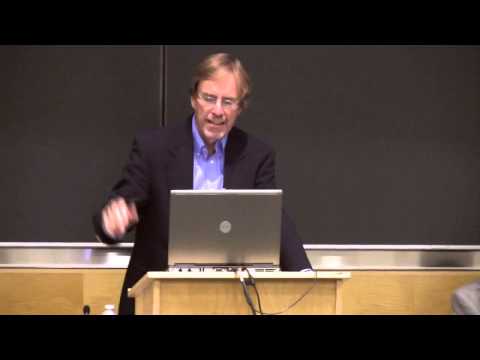 2:44
2:44Abba P. Lerner
 15:55
15:55Abba P. Lerner, Fred M. Taylor
 0:49
0:49Abba P. Lerner, Alfred Mitchell-Innes, Hyman Minsky
 4:28
4:28Abba P. Lerner
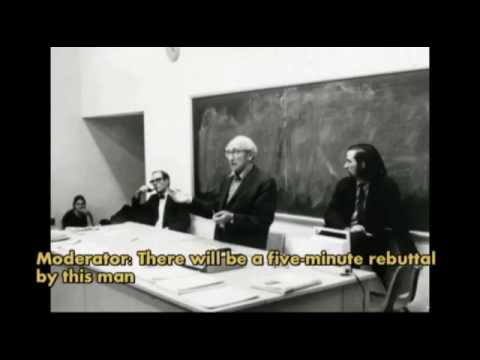 3:32
3:32Abba P. Lerner
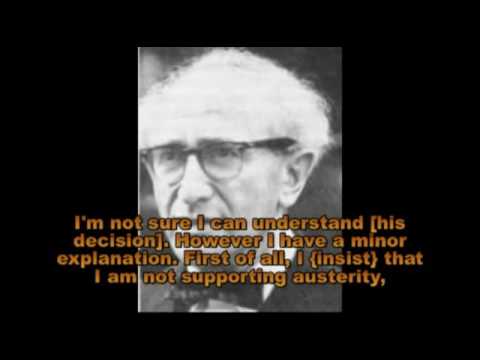 3:47
3:47Abba P. Lerner
Abba P. Lerner, a Russian-born economist who made significant contributions to the fields of economics and finance, has left an indelible mark on the world of economic thought. With a career spanning over four decades, Lerner's work continues to influence scholars and policymakers alike. The MarketVault archive is fortunate to have three clips featuring Lerner, offering valuable insights into his thoughts on key economic issues.
One of the most notable aspects of Lerner's career is his emphasis on full employment as a primary economic objective. In the 1971 clip "Abba P. Lerner on austerity, jobs, debt and inequality," Lerner argues that governments should prioritize creating jobs and reducing unemployment. He emphasizes the importance of fiscal policy in achieving this goal, advocating for increased government spending to stimulate economic growth. This stance is particularly relevant today, as many countries continue to grapple with high levels of unemployment.
Lerner's views on austerity are also noteworthy. In the same clip, he critiques the idea of austerity measures as a solution to economic problems, arguing that they can exacerbate inequality and worsen living standards for the poor. His warnings about the dangers of austerity policies were prescient, given the widespread adoption of such measures in recent years. The consequences of these policies have been far-reaching, with many countries experiencing increased poverty and income inequality.
Lerner's thoughts on debt are also insightful. He notes that government debt can be a useful tool for stimulating economic growth, particularly during times of recession. However, he cautions against excessive borrowing, emphasizing the need for responsible fiscal management to avoid burdening future generations with unsustainable levels of debt. This nuanced approach to debt is essential in today's world, where many governments are struggling to balance their budgets and manage their debt obligations.
In another 1971 clip, "Abba P. Lerner on gold, money and wages," Lerner discusses the role of gold in the monetary system. He argues that the gold standard can be a restrictive force on economic growth, limiting a country's ability to implement expansionary policies. This critique is particularly relevant given the ongoing debate about the merits of a fiat currency versus a commodity-based currency.
Lerner's views on wages are also noteworthy. He advocates for higher wages as a means of increasing purchasing power and stimulating economic growth. However, he acknowledges that this approach can be challenging to implement in practice, particularly in countries with strong labor unions or high levels of inflation. His recognition of the complexities involved in wage policy is a testament to his commitment to nuanced and evidence-based analysis.
The 1982 clip "Abba P. Lerner | Wikipedia audio article" provides a brief overview of Lerner's life and work. While this clip does not offer new insights into his economic theories, it serves as a useful introduction for those unfamiliar with his contributions. The fact that the MarketVault archive includes an audio article about Lerner's Wikipedia entry is a testament to the site's commitment to providing comprehensive coverage of its experts.
In terms of Lerner's significance in music history, there are no relevant facts provided in the user message. However, it is worth noting that Lerner's work has had a profound impact on the development of economic thought. His emphasis on full employment and his critiques of austerity policies have influenced generations of economists and policymakers.
One of the key takeaways from Lerner's clips is the importance of evidence-based policy-making. He consistently advocates for policies grounded in empirical research, rather than ideological dogma or short-term political expediency. This commitment to rigorous analysis is essential in today's world, where policymakers often face pressure to implement quick fixes rather than invest in long-term solutions.
In conclusion, Abba P. Lerner was a pioneering economist who made significant contributions to our understanding of economic policy. The MarketVault archive provides a valuable resource for those interested in exploring his work further. By examining Lerner's clips and writings, scholars and policymakers can gain insights into the complexities of economic decision-making and the importance of evidence-based policy.
Lerner's legacy extends beyond his individual contributions to economics. His emphasis on full employment and his critiques of austerity policies have helped shape the global conversation about economic development. As the world continues to grapple with issues such as income inequality, poverty, and unemployment, Lerner's work remains more relevant than ever.
In addition to his policy recommendations, Lerner's clips offer a unique window into the intellectual debates of the 1970s. His critiques of the gold standard and his advocacy for higher wages provide valuable context for understanding the economic challenges faced by policymakers during this period.
The MarketVault archive is fortunate to have three clips featuring Lerner, offering a comprehensive overview of his thoughts on key economic issues. By examining these clips in detail, scholars and policymakers can gain a deeper understanding of Lerner's contributions to economics and their ongoing relevance in today's world.
In terms of the broader significance of Lerner's work, it is worth noting that his emphasis on full employment has influenced generations of economists and policymakers. His critiques of austerity policies have also helped shape the global conversation about economic development. As the world continues to grapple with issues such as income inequality, poverty, and unemployment, Lerner's work remains more relevant than ever.
The MarketVault archive provides a valuable resource for those interested in exploring Lerner's work further. By examining his clips and writings, scholars and policymakers can gain insights into the complexities of economic decision-making and the importance of evidence-based policy.
Curated from public records and music databases.