 2:40
2:40Marx's Capital Unveiling the Contradictions of Capitalism #economics
Adam Smith, Macroeconomics, Econometrics, Free market
Tool ReviewDebate
Disclaimer: MarketVault is an educational video curation platform. Nothing on this site constitutes financial advice, investment advice, or a recommendation to buy or sell any asset. Always consult a qualified, regulated financial advisor before making investment decisions. Investing carries risk — you may lose money.
Rare debate footage of Econometrics, curated from across the internet. Browse 3 clips below.
Debates pit experts against each other on the most contested questions in finance — active vs. passive investing, growth vs. value, crypto vs. traditional assets, and whether the market is overvalued or undervalued at any given moment. These clips are valuable precisely because they present opposing viewpoints with equal rigour, helping you stress-test your own assumptions.
Econometrics is an application of statistical methods to economic data in order to give empirical content to economic relationships. More precisely, it is "the quantitative analysis of actual economic phenomena based on the concurrent development of theory and observation, related by appropriate methods of inference." An introductory economics textbook describes econometrics as allowing economists...
Full Econometricsarchive →2:40Adam Smith, Macroeconomics, Econometrics, Free market
 14:33
14:33Econometrics
 27:29
27:29Econometrics
The world of econometrics is a realm where theory meets empirical reality, where data-driven insights are pitted against theoretical frameworks in a battle of wits. It's a domain that has captivated economists and financiers for decades, with its promise of unlocking the secrets of economic behavior through the application of statistical methods.
At the heart of this discipline lies a fundamental question: can econometrics truly provide empirical content to economic relationships? Or is it merely a tool for sifting through mountains of data in search of simplistic correlations? This debate has been ongoing since the early days of econometrics, when pioneers like Jan Tinbergen and Ragnar Frisch first laid the foundations for this field. As we delve into the world of econometrics, it becomes clear that the answers to these questions are far from straightforward.
One of the key challenges facing econometricians is the issue of attainability. Can economic relationships be quantified and measured with any degree of accuracy? Or do they remain inherently elusive, resistant to empirical analysis? In a clip from "S01 E10 Attainable Econometrics and Demographic Inputs with Dennis McGill," we see one expert grappling with this very question. As he navigates the complexities of demographic inputs and econometric modeling, it becomes clear that even the most seemingly straightforward relationships can be fraught with uncertainty.
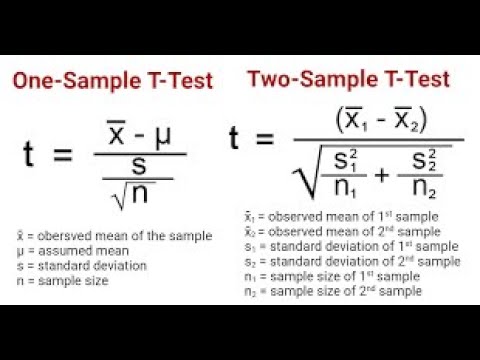
But what about the role of statistical testing in econometrics? Can hypothesis testing provide a reliable means of evaluating economic theories, or is it merely a tool for generating false positives and negatives? In another clip, "Econometrics for management / finance chapter 3 , part 3 When we use t- test to test hypothesis?", an expert tackles this very question head-on. As he explains the intricacies of the t-test and its application in econometric analysis, it becomes clear that even the most seemingly robust statistical methods can be subject to critique.
One of the defining features of econometrics is its emphasis on inference. By developing a theoretical framework and then testing it against empirical data, econometricians aim to draw conclusions about economic relationships with a high degree of confidence. But what happens when different experts approach this process from vastly different perspectives? How do they reconcile their conflicting views on the relative importance of different variables or the appropriate statistical methods to employ?
These are precisely the kinds of questions that debates in finance seek to answer. By pitting experts against each other on the most contested questions in finance, we gain a deeper understanding of the underlying assumptions and methodologies that drive econometric analysis. And it's here, in these debates, that we find some of the most valuable insights into the world of econometrics.
Through this debate footage, we see expert after expert grappling with the challenges of econometric analysis, from the intricacies of statistical testing to the complexities of demographic inputs and modeling. We witness the tensions between theory and empirical reality, as well as the ongoing debates about the relative importance of different variables and methodologies.
As we navigate these complex issues, one thing becomes clear: econometrics is not a fixed or static discipline. Rather, it's an evolving field that continues to adapt to new data, new theories, and new methodologies. And it's precisely this dynamic nature of econometrics that makes it so fascinating – and so relevant – in today's fast-changing financial landscape.
As we delve deeper into the world of econometrics, one question remains: can econometricians truly provide empirical content to economic relationships? Or is their role more nuanced, serving as a tool for generating insights rather than providing definitive answers? The debate footage on this page offers a glimpse into these ongoing discussions, and it's here that we find some of the most valuable lessons in finance.
Curated from public records and music databases.