Hyman Minsky — Rare Footage & Clips
Hyman Minsky's prescient warnings about the dangers of unchecked financial speculation and the inherent instability of capitalist systems have been vindicated by the devastating consequences of the subprime mortgage crisis. As we revisit his seminal ideas in our archive, it becomes clear that Minsky's work was not only a pioneering contribution to economic thought but also a prophetic warning that has left an indelible mark on modern finance.
Minsky's career as an economist spanned several decades, during which he taught at Washington University in St. Louis and served as a distinguished scholar at the Levy Economics Institute of Bard College. His research focused on understanding the characteristics of financial crises, which he attributed to swings in a potentially fragile financial system. This emphasis on the role of financial instability in shaping economic outcomes was a departure from the prevailing orthodoxy of his time.
One of Minsky's most significant contributions was his concept of "financial instability hypothesis," which posits that capitalist economies are inherently prone to periodic crises due to the inherent instability of the financial system. According to Minsky, this instability arises from the tendency for firms and households to take on excessive debt in pursuit of profits and growth. As debt levels rise, so too does the risk of default, leading to a cascade of failures that can precipitate a full-blown crisis.
Minsky's ideas were largely ignored by mainstream economists during his lifetime, but they have since gained widespread recognition as the subprime mortgage crisis of 2008 bore an uncanny resemblance to his warnings. The parallels between Minsky's theories and the events leading up to the crisis are striking: the proliferation of subprime mortgages, the securitization of debt, and the resulting collapse of financial markets all bear testament to the validity of his hypothesis.
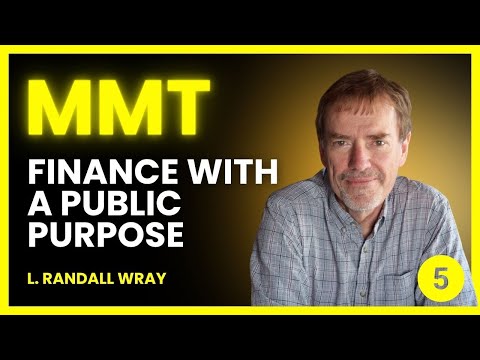
In our archive, we have two clips that showcase Minsky's thought-provoking ideas. The first clip, "LECTURE 5 | Functional Finance | L. Randall Wray" (2018), features a lecture by economist L. Randall Wray on the concept of functional finance, which was heavily influenced by Minsky's work. In this clip, Wray discusses how Minsky's theories can be applied to modern economic policy, highlighting the need for governments to take an active role in stabilizing financial markets.
The second clip, "Debt-Free, Interest-Free, Sovereign!", is a fascinating example of Minsky's innovative thinking on monetary policy. In this clip, Minsky outlines his vision for a debt-free, interest-free economy, where sovereign nations can issue their own currency without being beholden to the whims of financial markets.
Minsky's significance extends beyond the realm of economics, however. His ideas have been influential in shaping our understanding of the relationship between finance and society. In an era marked by growing income inequality and declining economic mobility, Minsky's warnings about the dangers of unchecked financial speculation take on a new urgency.
As we reflect on Minsky's legacy, it is clear that his work has left an indelible mark on modern finance. His prescient warnings about the dangers of financial instability have been vindicated by the events of 2008, and his ideas continue to shape our understanding of the complex relationships between finance, government, and society.
In conclusion, Hyman Minsky's contributions to economic thought are a testament to the power of innovative thinking in shaping our understanding of the world. His warnings about the dangers of financial instability remain as relevant today as they were during his lifetime, serving as a reminder of the importance of responsible economic policy and the need for governments to take an active role in stabilizing financial markets.
However, we must not conclude here. Minsky's ideas have far-reaching implications that extend beyond the realm of economics. His emphasis on the importance of functional finance and the need for sovereign nations to issue their own currency without being beholden to financial markets has significant implications for our understanding of monetary policy and the role of government in shaping economic outcomes.
Moreover, Minsky's warnings about the dangers of unchecked financial speculation have important implications for our understanding of the relationship between finance and society. In an era marked by growing income inequality and declining economic mobility, Minsky's ideas serve as a reminder of the need for responsible economic policy that prioritizes the needs of all members of society.
As we continue to grapple with the complexities of modern finance, Minsky's legacy serves as a powerful reminder of the importance of innovative thinking in shaping our understanding of the world. His warnings about the dangers of financial instability remain as relevant today as they were during his lifetime, serving as a call to action for policymakers and economists alike.
In our next installment, we will delve deeper into Minsky's ideas on functional finance and their implications for modern economic policy. We will examine how Minsky's theories can be applied in practice, highlighting the need for governments to take an active role in stabilizing financial markets and promoting economic stability.
For now, let us take a moment to appreciate the significance of Hyman Minsky's contributions to economic thought. His warnings about the dangers of financial instability have been vindicated by the events of 2008, and his ideas continue to shape our understanding of the complex relationships between finance, government, and society.
Curated from public records and music databases.