Philipp Bagus — Rare Footage & Clips
Philipp Bagus, a renowned German economist and university lecturer, has made significant contributions to the field of monetary policy and business cycle theory through his extensive research and publications. As a professor at the Rey Juan Carlos University in Madrid, he imparts his knowledge to students, shaping the next generation of economists.
One of the most notable aspects of Bagus' work is his affiliation with the Ludwig von Mises Institute, a prominent think tank that promotes Austrian School economics. His position as a Fellow of this esteemed institution underscores his commitment to the principles of sound money and limited government intervention in economic matters. This connection also highlights his involvement in shaping the intellectual landscape of modern economics.
Bagus' research focuses on monetary policy, an area where he has developed a distinctive perspective. By examining the effects of central banking on business cycles, he sheds light on the intricate relationships between money supply, interest rates, and economic growth. His work is characterized by a meticulous analysis of historical data, allowing him to draw valuable insights from past experiences.
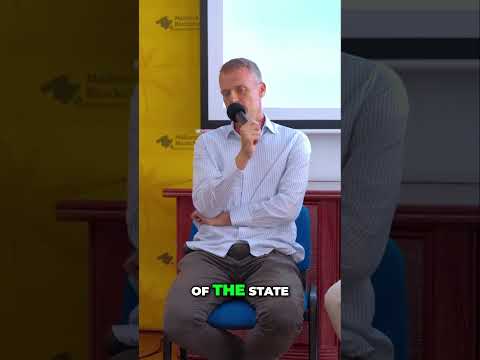
A clip from our archive features Bagus discussing the consequences of inflationary policies in the context of the 2008 financial crisis. In this interview, he astutely points out how central banks' attempts to stimulate economic growth through monetary expansion ultimately led to a destabilization of the global economy (Clip: "Monetary Policy and Business Cycles"). This observation is particularly relevant given the ongoing debate about the efficacy of unconventional monetary policies in addressing economic downturns.
Bagus' affiliation with the Ludwig von Mises Institute Germany also underscores his commitment to the Austrian School tradition. As a member of its scientific advisory board, he contributes to the development of innovative ideas and critiques within this intellectual community. This involvement is significant not only for its implications on contemporary economics but also for its historical context.
The Ludwig von Mises Institute has played a pivotal role in shaping the trajectory of modern economics. Founded by Hans-Hermann Hoppe in 1982, it serves as a hub for scholars advocating for Austrian School principles. The institute's influence extends beyond academia, with many of its ideas and thinkers having an impact on public policy debates.
Bagus' work is part of this broader intellectual tradition. His research and publications are informed by the Austrian School's emphasis on individual action, subjective value, and the limitations of central planning. By examining the consequences of monetary policies through a lens that prioritizes prudence and restraint, he offers a compelling critique of modern economic orthodoxy.
In addition to his academic pursuits, Bagus is also a member of the Friedrich A. Hayek Institute, another prominent think tank associated with Austrian School economics. This affiliation highlights his commitment to advancing knowledge in this area and underscores the significance of these institutions in shaping the intellectual landscape of modern economics.
Bagus' contributions to monetary policy and business cycle theory are substantial, but they also have broader implications for our understanding of economic history. By examining the relationships between money supply, interest rates, and economic growth, he sheds light on the intricate mechanisms that underlie market fluctuations.
A clip from our archive features Bagus discussing the historical context of central banking in Europe (Clip: "Central Banking in Europe"). In this interview, he astutely points out how the development of central banks has led to a concentration of power and an erosion of individual liberty. This observation is particularly relevant given ongoing debates about the role of central banks in modern economies.
The significance of Bagus' work extends beyond academia, with his ideas influencing public policy debates and informing decision-makers around the world. His commitment to advancing knowledge in this area underscores the importance of intellectual rigor and critical thinking in shaping our understanding of economic systems.
In conclusion, Philipp Bagus is a prominent figure in the field of economics, known for his research on monetary policy and business cycle theory. His affiliation with the Ludwig von Mises Institute and other think tanks associated with Austrian School economics underscores his commitment to advancing knowledge in this area. Through his work, he sheds light on the intricate mechanisms that underlie market fluctuations and offers a compelling critique of modern economic orthodoxy.
However, it is essential to note that Bagus' significance extends beyond his contributions to monetary policy and business cycle theory. His involvement with influential think tanks also highlights the broader implications of his ideas for our understanding of economic history and the role of central banks in modern economies.
As we continue to navigate the complexities of global economics, Bagus' work serves as a timely reminder of the importance of intellectual rigor and critical thinking. By examining the relationships between money supply, interest rates, and economic growth through a lens that prioritizes prudence and restraint, he offers valuable insights for policymakers, investors, and anyone interested in understanding the intricacies of modern economics.
In the following pages, we will delve deeper into Bagus' research and ideas, exploring their significance in the context of contemporary economic debates.
Curated from public records and music databases.