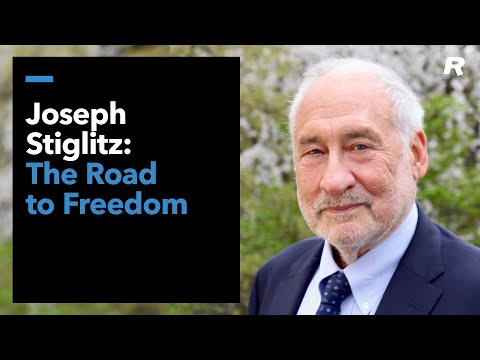
[Review] The Price of Inequality (Joseph E. Stiglitz) Summarized
The Price of Inequality (Joseph E. Stiglitz) - Amazon USA Store: https://www.amazon.com/dp/0393345068?tag=9natree-20 - Amazon Worldwide Store: https://global.buys.trade/The-Price-of-Inequality-Joseph-E-Stiglitz.html - eBay: https://www.ebay.com/sch/i.html?_nkw=The+Price+of+Inequality+Joseph+E+Stiglitz+&mkcid=1&mkrid=711-53200-19255-0&siteid=0&campid=5339060787&customid=9natree&toolid=10001&mkevt=1 - Read more: https://mybook.top/read/0393345068/ #economicinequality #rentseeking #financialregulation #middleclass #publicpolicy #democracyandlobbying #sharedprosperity #ThePriceofInequality These are takeaways from this book. Firstly, Inequality as a policy driven economic outcome, A core theme is that inequality is not simply the natural result of differences in talent or effort. Stiglitz emphasizes how laws, regulations, and institutional design determine who has bargaining power, what behaviors are rewarded, and how risks and returns are distributed. He links the widening gap to shifts such as weaker labor protections, changes in corporate governance, financial sector expansion, and tax and spending choices that favor capital over work. The book highlights that markets are not neutral machines; they are structured arenas shaped by rules on competition, disclosure, bankruptcy, intellectual property, and trade. When those rules are influenced by concentrated interests, outcomes can systematically steer income toward the top. This framing matters because it changes the solution set. If inequality is policy made, it can be policy unmade, but only through deliberate choices that rebalance incentives and strengthen fair competition. The discussion also challenges common narratives that celebrate high inequality as proof of dynamism. Instead, Stiglitz argues that a large gap can signal distorted rewards, including rents and advantages created by regulation gaps, market power, and privileged access. In this view, reducing inequality is compatible with, and often necessary for, healthier growth. Secondly, Rent seeking, market power, and the role of the financial sector, The book scrutinizes how rent seeking can raise top incomes without increasing overall productivity. Stiglitz describes rent seeking as earning returns through power, privilege, or rule manipulation rather than through creating new value. He pays particular attention to finance, where complex products, opaque risk, and expectations of public support can allow profits to be privatized while losses are socialized. The argument is not that all finance is harmful, but that an oversized or poorly regulated financial sector can drain resources from the real economy, encourage short termism, and magnify instability. Market power also features prominently, as dominant firms and concentrated industries can influence prices, wages, and entry barriers. When competition weakens, profits can rise while workers and consumers lose out. Stiglitz connects these dynamics to lobbying and regulatory capture, where the entities being regulated shape the rules that govern them. The result is a cycle: higher rents fund more political influence, which further protects the rents. This topic helps readers understand why headline growth or stock market gains can coexist with stagnant wages and fragile communities. It also clarifies why reforms often focus on transparency, competition policy, financial oversight, and limiting conflicts of interest. Thirdly, The erosion of opportunity and the weakening of the middle class, Stiglitz argues that inequality becomes self reinforcing when it limits access to the building blocks of mobility. Education, health, stable housing, and early childhood support shape lifetime outcomes, yet these are often distributed unevenly. When families have vastly different resources, children start from very different positions, and the idea of equal opportunity becomes more slogan than reality. The book links this to labor market trends that reduce bargaining power for typical workers, including declining union influence, increased job insecurity, and wage setting that does not keep pace with productivity. A weakened middle class matters not only socially but economically. Broad based purchasing power supports demand, entrepreneurship, and a stable investment climate. When income concentrates at the top, consumption can become more dependent on credit and asset bubbles, creating vulnerability. Stiglitz also highlights how unequal societies can underinvest in public goods because high income groups can purchase private substitutes, reducing shared commitment to public schools, infrastructure, and community institutions. This topic reframes the middle class as an economic engine, not just a political category. By showing the link between opportunity and macroeconomic performance, the book encourages readers to view mobility policies as growth policies. Fourthly, Politics, democracy, and the feedback loop of influence, Another important theme
Know someone who'd love this clip?
Share it with friends and fellow fans.
![Thumbnail for [Review] People, Power, and Profits (Joseph E. Stiglitz) summarized. by Joseph E. Stiglitz](https://img.youtube.com/vi/5NIOPBzFeew/hqdefault.jpg)