MarketVault
BrowseExpertsTopicsTimelineMapSubmit

Disclaimer: MarketVault is an educational video curation platform. Nothing on this site constitutes financial advice, investment advice, or a recommendation to buy or sell any asset. Always consult a qualified, regulated financial advisor before making investment decisions. Investing carries risk — you may lose money.

MarketVault

Curated financial insights from the world's top experts. Invest in your knowledge.

BrowseExpertsTopicsDecadesSubmit a ClipAboutContactEditorial PolicyArticles

© 2026 MarketVault. All footage remains the property of its original creators.

Privacy PolicyTerms of UseSupport

Developed with love as a personal project by Jamie McDonnell

ui-ux-design.comai-consultancy.company
LEIJONHUFVUD Axel FODOR Giorgio - 2010 - Lessons from the crisis - Visions — MarketVault
PreviousUse arrow keysNext
0 views
Share this clip

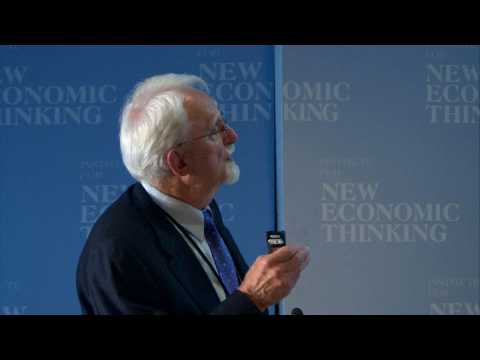
LEIJONHUFVUD Axel FODOR Giorgio - 2010 - Lessons from the crisis - Visions

Axel Leijonhufvud
2010s2010youtube

The global financial crisis and the ensuing recession have revealed the shortcomings of financial regulation and monetary policies, but also of the economic and financial theories underpinning regulatory systems. The resulting problems can be traced back to three major areas: information, instability and incentives. Rather than trying to establish fixed rules of conduct, which have already proved ineffective, it is better to understand and attempt to govern the forces influencing behaviour. http://www.festivaleconomia.it

About Axel Leijonhufvud

Axel Leijonhufvud (6 September 1933 – 2 May 2022) was a Swedish economist and professor emeritus at the University of California, Los Angeles (UCLA), and professor at the University of Trento, Italy. Leijonhufvud focused his studies on macroeconomic monetary theory. In his defining book On Keynesian Economics and the Economics of Keynes (1968) he focuses on a critique of the interpretation of Keynesian economic theory by Keynesian economists. He goes on to call the standard neoclassical synthesi...

More about Axel Leijonhufvud→

Added 1 Apr 2026


Know someone who'd love this clip?

Share it with friends and fellow fans.

Share this clip

Keep Exploring

2000s2020sAll ExpertsAll TopicsAll Decades
Browse by Format
More from 2010s

About This Footage

In 2010, renowned economist Axel Leijonhufvud shared his insights on the global financial crisis in a comprehensive lecture titled "Lessons from the Crisis - Visions." This 1:18:03 clip is an invaluable resource for anyone seeking to understand the complexities of macroeconomic monetary theory and its implications for regulatory systems.

Recorded at the Festival Economia, Leijonhufvud's presentation offers a unique perspective on the crisis, which was still unfolding in 2010. As a professor emeritus at UCLA and a respected scholar in his field, Leijonhufvud brings a wealth of knowledge to the discussion. His critique of Keynesian economic theory, as outlined in his seminal book "On Keynesian Economics and the Economics of Keynes" (1968), provides a framework for understanding the underlying causes of the crisis.

One of the key takeaways from Leijonhufvud's lecture is the importance of considering three major areas: information, instability, and incentives. He argues that traditional regulatory approaches have proven ineffective in addressing these issues, and instead proposes a more nuanced approach to governing behavior. By understanding the underlying forces driving economic activity, policymakers can develop more targeted strategies for mitigating risk and promoting stability.

Leijonhufvud's analysis is particularly relevant given the ongoing challenges facing financial regulators today. The 2008 global financial crisis highlighted the need for more effective regulatory frameworks, and Leijonhufvud's insights offer valuable lessons for policymakers seeking to prevent similar crises in the future.

The clip also provides a unique window into the thinking of a leading economist at a critical moment in time. In 2010, the full extent of the crisis was still being revealed, and Leijonhufvud's commentary offers a thoughtful and informed perspective on the key issues at play. His discussion of the limitations of traditional regulatory approaches and the need for more nuanced governance strategies remains timely today.

For anyone interested in macroeconomic monetary theory, financial regulation, or the ongoing challenges facing global economies, this clip is an essential resource. Leijonhufvud's presentation offers a rich and detailed analysis of the crisis, providing valuable insights for policymakers, academics, and investors alike. As we continue to navigate the complexities of modern finance, Leijonhufvud's "Lessons from the Crisis - Visions" serves as an important reminder of the need for ongoing critical evaluation and adaptation in our regulatory frameworks.

In particular, this clip will be of interest to those studying or working in fields such as:

Macroeconomic monetary theory Financial regulation and policy Economic history and analysis Global economic trends and challenges

Leijonhufvud's expertise and the context in which he presented his ideas make this clip a valuable addition to any library of financial and economic resources.

Curated from public records and music databases.

More from Axel Leijonhufvud

Thumbnail for Axel Leijonhufvud - Reform and Restructuring of the Financial and Non-Financial Sectors by Axel Leijonhufvud30:50

Axel Leijonhufvud - Reform and Restructuring of the Financial and Non-Financial Sectors

Axel Leijonhufvud

Sweden

More from the 2010s

View all →
Thumbnail for Gene Grossman (Princeton) - Barcelona GSE Summer Forum 2019 by Gene Grossman1:00:30

Gene Grossman (Princeton) - Barcelona GSE Summer Forum 2019

Gene Grossman

2010sCase Study
Thumbnail for Why Smart Investors Are Moving Towards Quant Investing | Ft. Bhautik Ambani48:19

Why Smart Investors Are Moving Towards Quant Investing | Ft. Bhautik Ambani

2010sDebateNews Breakdown
Thumbnail for 12.5%. Early SCHD investors are earning this on their original money. #SCHD #dividends #investing0:52

12.5%. Early SCHD investors are earning this on their original money. #SCHD #dividends #investing

2010sCase Study
Thumbnail for 21 May 🔴LIVE Trading CALL या PUT- NIFTY, BANK NIFTY & SENSEX Live Analysis | Options Trading LIVE

21 May 🔴LIVE Trading CALL या PUT- NIFTY, BANK NIFTY & SENSEX Live Analysis | Options Trading LIVE

2010sStrategy GuideBeginner Tutorial