MarketVault
BrowseExpertsTopicsTimelineMapSubmit

MarketVault

Curated financial insights from the world's top experts. Invest in your knowledge.

BrowseExpertsTopicsDecadesSubmit a ClipAboutContact

© 2026 MarketVault. All footage remains the property of its original creators.

Privacy PolicyTerms of UseSupport

Developed with love as a personal project by Jamie McDonnell

ui-ux-design.comai-consultancy.company
Alesina-Summers (1993) "Central Bank Independence & Macroeconomic Performance: Some Comp. Evidence" — MarketVault
PreviousUse arrow keysNext
0 views
Share this clip

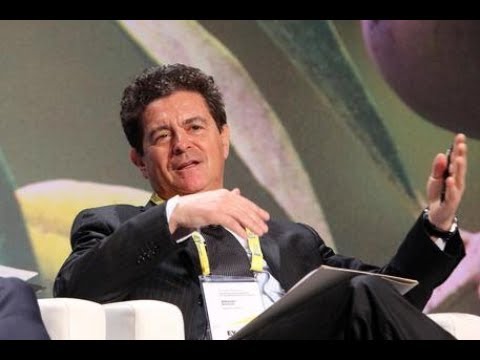
Alesina-Summers (1993) "Central Bank Independence & Macroeconomic Performance: Some Comp. Evidence"

Alberto Alesina
1990s1993youtube

El trabajo de Alberto Alesina y Lawrence H. Summers de 1993, "Central Bank Independence and Macroeconomic Performance: Some Comparative Evidence", investigó la relación entre la Independencia del Banco Central (IBC) y el rendimiento económico, utilizando evidencia comparativa. Las conclusiones centrales del estudio son concisas: 1. Inflación: Existe una correlación negativa, casi perfecta, entre la IBC y la inflación. Es decir, los bancos centrales más independientes están asociados con tasas de inflación más bajas. Esta disciplina monetaria también reduce el nivel y la variabilidad de la inflación. 2. Desempeño Real: La IBC no tiene un impacto medible sobre el desempeño económico real, como el nivel o la variabilidad del crecimiento o el desempleo. Este resultado sugiere un fragmento de evidencia a favor de las teorías que enfatizan la neutralidad del dinero. 3. Mecanismo: La independencia opera como un mecanismo de compromiso al aislar la política monetaria del proceso político, permitiendo sostener un equilibrio de baja inflación y evitando la inconsistencia dinámica. En resumen, Alesina y Summers sugieren que los beneficios de la IBC en términos de estabilidad de precios probablemente superan cualquier costo en términos de producto, ya que se logra una inflación baja y estable sin sacrificar el desempeño económico real.


Know someone who'd love this clip?

Share it with friends and fellow fans.

Share this clip

Keep Exploring

1980s2000sAll ExpertsAll TopicsAll Decades

About Alberto Alesina

Alberto Francesco Alesina (29 April 1957 – 23 May 2020) was an Italian economist who was the Nathaniel Ropes Professor of Political Economy at Harvard University from 2003 until his death in 2020. He was known principally as an economist of politics and culture, and was famed for his usage of economic tools to study social and political issues. He was described as having “almost single-handedly” established the modern field of political economy, and as a likely contender for the Nobel Memorial P...

More about Alberto Alesina→

Added 31 Mar 2026

Browse by Format
More from 1990s

About This Footage

This 1993 footage featuring Alberto Alesina and Lawrence H. Summers is a seminal work in the field of economics, shedding light on the crucial relationship between central bank independence (IBC) and macroeconomic performance. The six-minute clip offers a concise yet comprehensive overview of their research, which has stood the test of time.

Alesina's reputation as an economist of politics and culture precedes him, having "almost single-handedly" established the modern field of political economy. His collaboration with Summers in 1993 not only showcases his expertise but also highlights the significance of this particular study. By analyzing comparative evidence from various countries, Alesina and Summers aimed to understand whether IBC has a tangible impact on economic performance.

The findings presented in this clip are nothing short of remarkable. The researchers establish a near-perfect negative correlation between IBC and inflation rates. In other words, central banks with greater independence tend to maintain lower inflation levels. This association is not limited to the level of inflation; Alesina and Summers also demonstrate that IBC reduces both the magnitude and variability of inflation.

One aspect of their study that warrants attention is the apparent neutrality of monetary policy in relation to real economic performance. The authors conclude that IBC has no measurable impact on growth rates, unemployment levels, or their variability. This result offers a glimmer of support for theories emphasizing the neutral nature of money.

The mechanism by which IBC operates is equally fascinating. Alesina and Summers propose that central bank independence serves as a commitment device, isolating monetary policy from the political process. By doing so, it enables policymakers to maintain low inflation rates without sacrificing real economic performance.

This 1993 study has far-reaching implications for economists, policymakers, and investors alike. The findings suggest that the benefits of IBC in terms of price stability likely outweigh any potential costs in terms of output. In an era where central banks wield significant influence over economies worldwide, understanding the dynamics between IBC and macroeconomic performance is more crucial than ever.

The significance of this footage lies not only in its historical context but also in its enduring relevance to contemporary economic debates. Alesina's work continues to inspire new generations of economists, policymakers, and researchers seeking to grasp the intricacies of monetary policy and its impact on economies. This 1993 study serves as a testament to the power of rigorous research and its ability to shape our understanding of the world.

Editorial context researched and compiled from verified sources.

More from the 1990s

View all →
Thumbnail for What Is Voltage Drop? (with John A. List) #Shorts by John A. List0:47

What Is Voltage Drop? (with John A. List) #Shorts

John A. List

1990sStrategy GuideTool Review
Thumbnail for What Is Scaling? (with John A. List) #shorts by John A. List0:55

What Is Scaling? (with John A. List) #shorts

John A. List

1990sStrategy GuideTool Review
Thumbnail for NOBEL PRIZE 1992 ( ECONOMIC SCIENCE )  || GARY BECKER by Gary Becker0:22

NOBEL PRIZE 1992 ( ECONOMIC SCIENCE ) || GARY BECKER

Gary Becker

1990s
Thumbnail for Gary Becker| American Economist|| Contribution In Field Of Economics| Early Life| Achievements| by Gary Becker7:51

Gary Becker| American Economist|| Contribution In Field Of Economics| Early Life| Achievements|

Gary Becker

1990s
Italy

More from Alberto Alesina

View all →
Thumbnail for Morto Alberto Alesina, economista e docente di Harvard by Alberto Alesina2:55

Morto Alberto Alesina, economista e docente di Harvard

Alberto Alesina

Thumbnail for La crisi finanziaria secondo Alberto Alesina by Alberto Alesina9:58

La crisi finanziaria secondo Alberto Alesina

Alberto Alesina

Thumbnail for In Memory of Alberto Alesina. Tribute Event by Alberto Alesina1:33:44

In Memory of Alberto Alesina. Tribute Event

Alberto Alesina

Thumbnail for Alberto Alesina by Alberto Alesina9:35

Alberto Alesina

Alberto Alesina