John Muth — Rare Footage & Clips
The Pioneering Work of John Muth: A Foundational Figure in Economics
John Muth's groundbreaking work in economics has left an indelible mark on the field, shaping the way we understand economic theory and its applications. As a leading figure in the development of rational expectations, Muth's contributions have had far-reaching implications for macroeconomic policy and our understanding of market behavior.
In 1961, Muth published his seminal article "Rational Expectations and the Theory of Price Movements," which laid the foundation for the rational expectations revolution in economics. This paper, a cornerstone of modern economic thought, posited that agents' expectations are based on their understanding of economic theory rather than being driven by random fluctuations or external shocks. By asserting that expectations "are essentially the same as the predictions of the relevant economic theory," Muth introduced a new paradigm for understanding market behavior.
Muth's work in this area was not an isolated incident, but rather the culmination of his extensive research and academic career. After earning his PhD in mathematical economics from Carnegie Mellon University in 1954, Muth went on to establish himself as a prominent figure in the field. His early work, recognized with the Alexander Henderson Award in 1954, set the stage for his future contributions.
One notable aspect of Muth's career is his affiliation with several prestigious institutions. As a research associate at Carnegie Mellon from 1956 to 1959, he began to develop his expertise in mathematical economics. His subsequent appointment as an assistant professor (1959-1962) and associate professor without tenure (1962-1964) further solidified his position within the academic community.
Muth's move to Michigan State University in 1964 marked a significant turning point in his career, where he rose to become a full professor. His time at Indiana University from 1969 until his retirement in 1994 was equally notable, as it allowed him to continue developing and refining his ideas on rational expectations.
The significance of Muth's work extends beyond the realm of economics, with implications for our understanding of market behavior and policy-making. By introducing the concept of rational expectations, Muth provided a framework for analyzing how agents form their expectations and make decisions based on those expectations. This has had far-reaching consequences for macroeconomic policy, as policymakers seek to understand how markets will respond to various stimuli.
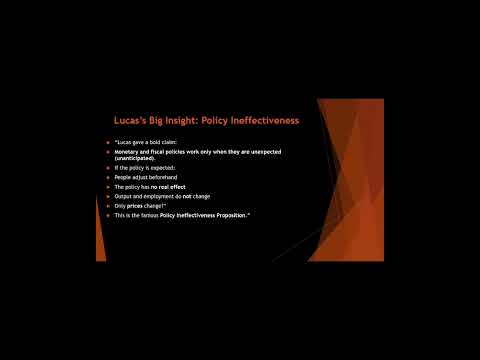
Muth's influence can also be seen in the work of other prominent economists who built upon his ideas. The rational expectations principle, initially formulated in the context of microeconomics, has since been applied to macroeconomic issues by scholars such as Robert Lucas, Jr., Finn E. Kydland, Edward C. Prescott, Neil Wallace, and Thomas J. Sargent. These economists have expanded upon Muth's original framework, exploring its implications for monetary policy, business cycles, and economic growth.
In addition to his academic contributions, Muth's work has had a lasting impact on the field of economics as a whole. His emphasis on the importance of expectations in shaping market behavior has led to a greater focus on understanding how agents form their expectations and make decisions based on those expectations. This shift in perspective has far-reaching implications for economic theory, policy-making, and our understanding of market behavior.
The legacy of John Muth's work serves as a testament to his enduring impact on the field of economics. His pioneering research on rational expectations has left an indelible mark on modern economic thought, shaping the way we understand market behavior and informing macroeconomic policy. As we continue to navigate the complexities of the global economy, Muth's contributions remain essential reading for scholars and policymakers alike.
In exploring the significance of Muth's work, it is worth noting that his ideas have had a lasting impact on various fields beyond economics. While not directly related to music or the arts, Muth's emphasis on rational expectations has parallels with other disciplines that rely heavily on understanding human behavior and decision-making processes. The implications of his work are far-reaching, influencing how we approach complex systems and make predictions about future outcomes.
In conclusion, John Muth's groundbreaking work in economics has left a lasting impact on the field. His pioneering research on rational expectations has shaped our understanding of market behavior and informed macroeconomic policy. As we continue to navigate the complexities of the global economy, Muth's contributions remain essential reading for scholars and policymakers alike.
Curated from public records and music databases.