 43:37
43:37DB Prize 2015 - Nobuhiro Kiyotaki - Workshop on Financial Crises
Nobuhiro Kiyotaki
2010s
Disclaimer: MarketVault is an educational video curation platform. Nothing on this site constitutes financial advice, investment advice, or a recommendation to buy or sell any asset. Always consult a qualified, regulated financial advisor before making investment decisions. Investing carries risk — you may lose money.
Japan is an island country in East Asia. Located in the Pacific Ocean off the northeast coast of the Asian mainland, it is bordered to the west by the Sea of Japan and extends from the Sea of Okhotsk in the north to the East China Sea in the south. The Japanese archipelago consists of four major islands alongside 14,121 smaller islands. Japan is divided into 47 administrative prefectures and eight traditional regions, and around 75% of its terrain is mountainous and heavily forested, concentrating its agriculture and highly urbanized population along its eastern coastal plains. With a population of almost 123 million as of 2026, it is the world's 11th most populous country. Tokyo is the country's capital and largest city.
Read more on Wikipedia →Japan is an island country in East Asia. Located in the Pacific Ocean off the northeast coast of the Asian mainland, it is bordered to the west by the Sea of Japan and extends from the Sea of Okhotsk in the north to the East China Sea in the south. The Japanese archipelago consists of four major islands alongside 14,121 smaller islands. Japan is divided into 47 administrative prefectures and eight traditional regions, and around 75% of its terrain is mountainous and heavily forested, concentrating its agriculture and highly urbanized population along its eastern coastal plains. With a population of almost 123 million as of 2026, it is the world's 11th most populous country. Tokyo is the country's capital and largest city. The first known habitation of the archipelago dates to the Upper Paleolithic, with the beginning of the Japanese Paleolithic dating to c. 36,000 BC. Between the 4th and 6th centuries, its kingdoms were united under an emperor in Nara and later in Heian-kyō. From the 12th century, actual power was held by military aristocrats known as shōgun and feudal lords called daimyō, enforced by warrior nobility named samurai.
43:37Nobuhiro Kiyotaki
 24:53
24:53Nobuhiro Kiyotaki
 52:58
52:58Nobuhiro Kiyotaki
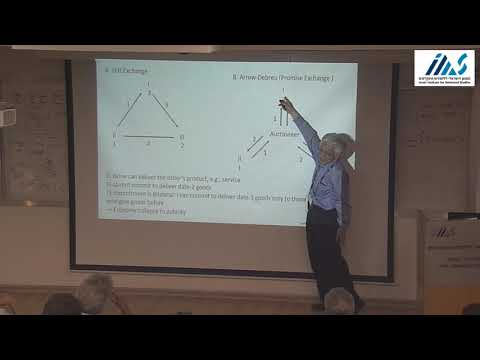 1:25:20
Nobuhiro Kiyotaki
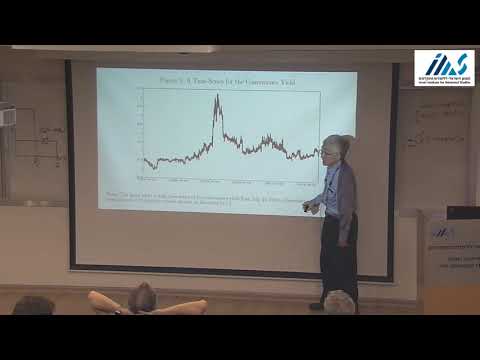 1:36:07
Nobuhiro Kiyotaki
![Thumbnail for Nobuhiro Kiyotaki - A Macroeconomic Model with Financial Panics [Keynote address, 9th MFS Workshop] by Nobuhiro Kiyotaki](https://img.youtube.com/vi/TW4GnchNFKA/hqdefault.jpg) 55:39
55:39Nobuhiro Kiyotaki
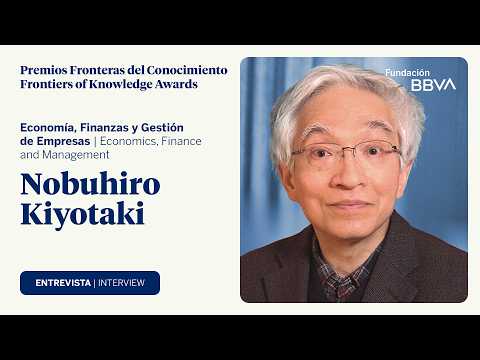 5:58
5:58Nobuhiro Kiyotaki
 5:58
5:58Nobuhiro Kiyotaki
 4:53
4:53Nobuhiro Kiyotaki
![Thumbnail for Thomas T. Sekine- ch. 1/10 intro to Marx, Uno and the Critique of Economics [political economy] by Thomas T. Sekine](https://img.youtube.com/vi/jxRhP2_0ESI/hqdefault.jpg) 1:17:58
1:17:58Thomas T. Sekine