Chicago School:Free Market Explained
Chicago School:Free Markets Explained Welcome to the A2Z of Economics! In today’s quick dive, we unravel the Chicago School of Economics, a groundbreaking group of thinkers from the University of Chicago. Discover how they championed free markets, limited government interference, and the power of rational self-interest. Key figures like Milton Friedman, Gary Becker, and Ronald Coase reshaped economic thought, advocating that less control leads to better outcomes. Learn how their insights became instrumental during the economic challenges of the 1970s, influencing leaders like Ronald Reagan and Margaret Thatcher to trust the market. Join us as we break down complex ideas into simple terms! If you find this video helpful, like and share it! #ChicagoSchool #FreeMarkets #EconomicsExplained #A2ZofEconomics 1. #ChicagoSchool 2. #FreeMarkets 3. #Education 4. #LearnEconomics 5. #CasualLearning 6. #EconomicsExplained 7. #MarketInsights 8. #FinancialLiteracy 9. #YouTubeEducation 10. #ExploreEconomics
About This Footage
The Enduring Legacy of the Chicago School: [Gary Becker](/artist/gary-becker)'s Vision for Free Markets
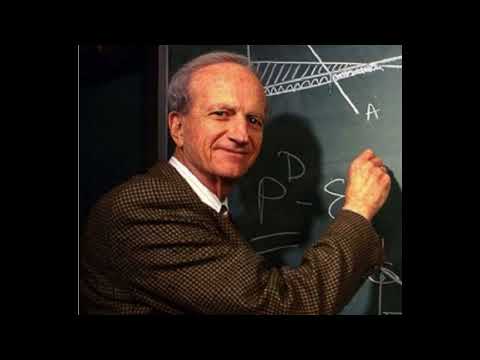
In this 3:01 minute clip from the 1970s, renowned economist Gary Becker offers a concise yet insightful explanation of the Chicago School's core principles. As one of the leading figures of the third generation of the Chicago school, Becker's expertise and influence in shaping economic thought are still felt today. This footage is notable not only for its historical significance but also for providing a clear understanding of the free market ideology that has had far-reaching implications on global economic policies.
Becker's presentation is characterized by his trademark clarity and precision, making complex concepts accessible to a broad audience. He skillfully breaks down the Chicago School's philosophy into its fundamental components: the emphasis on free markets, limited government intervention, and the power of rational self-interest. By doing so, he provides a compelling argument for why less control from governments can lead to better economic outcomes.
The significance of this clip lies in its timing, coinciding with the economic challenges of the 1970s. During this period, the world was grappling with stagflation, high inflation, and sluggish growth. It was against this backdrop that thinkers like Becker, Milton Friedman, and Ronald Coase were advocating for a more laissez-faire approach to economics. Their ideas resonated with leaders such as Ronald Reagan and Margaret Thatcher, who would go on to implement policies based on the Chicago School's principles.
Becker's explanation is particularly noteworthy for its emphasis on the importance of individual rationality in driving economic decisions. He posits that individuals acting in their own self-interest can lead to socially beneficial outcomes, a concept that has become a cornerstone of modern economics. This idea challenges traditional notions of government intervention and highlights the potential for markets to correct themselves through competition.
The Chicago School's influence extends far beyond the realm of academia. Its ideas have shaped economic policies worldwide, influencing everything from monetary policy to trade agreements. The clip serves as a testament to the enduring legacy of Becker and his colleagues, whose work continues to inform economic debates today.
In an era where economic complexity often seems overwhelming, this footage offers a refreshing reminder of the power of clear thinking and concise communication. Gary Becker's explanation is a masterclass in distilling complex ideas into simple terms, making it an invaluable resource for anyone seeking to understand the principles of free markets and their impact on global economies.
As we continue to navigate the complexities of modern economics, this clip serves as a timely reminder of the importance of understanding the fundamental principles that underpin our economic systems. Gary Becker's vision for free markets may have been formulated decades ago, but its relevance remains unwavering in today's fast-changing economic landscape.
Curated from public records and music databases.
About Gary Becker
Gary Stanley Becker (; December 2, 1930 – May 3, 2014) was an American economist who received the 1992 Nobel Memorial Prize in Economic Sciences. He was a professor of economics and sociology at the University of Chicago, and was a leader of the third generation of the Chicago school of economics. Becker was awarded the Nobel Memorial Prize in Economic Sciences in 1992 and received the United States Presidential Medal of Freedom in 2007. A 2011 survey of economics professors named Becker their f...
More about Gary Becker→Added
Know someone who'd love this clip?
Share it with friends and fellow fans.