0 views
Share this clip
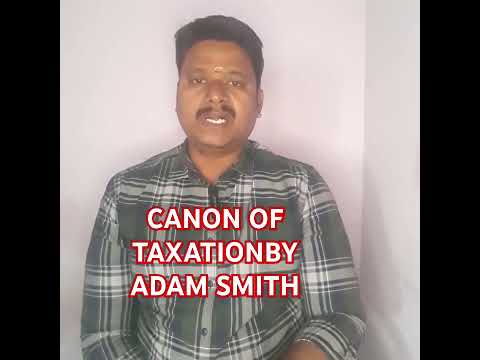
Karl Marx Economics Development Theory | Theory of Surplus Value
Know someone who'd love this clip?
Share it with friends and fellow fans.
Share this clip
Disclaimer: MarketVault is an educational video curation platform. Nothing on this site constitutes financial advice, investment advice, or a recommendation to buy or sell any asset. Always consult a qualified, regulated financial advisor before making investment decisions. Investing carries risk — you may lose money.
Know someone who'd love this clip?
Share it with friends and fellow fans.
karl marx economics development theory | theory of surplus-value in Hindi Website www.vishnueconomicsschool.in NOTES AND BOOK STORE; - https://www.instamojo.com/vishnugupta55529 Download my app Vishnu ECONOMICS SCHOOL from playlist or link is given below https://play.google.com/store/apps/details?id=co.jarvis.ves Contact Phone Number: 9711855529 Mail id: vishnugupta55529@gmail.com TELEGRAM ;- https://t.me/Vishnueconomicsschool karl marx economics development theory | theory of surplus value in hindi Our channel for commerce students VE academy of Commerce https://youtube.com/channel/UCk8X09gAWVdMNBBu_iHOotQ WEBSITE www.vishnueconomicsschool.in DEMO ENGLISH MEDIUM https://youtube.com/playlist?list=PL8X-3l6UFjXiMTTdsOdBFE3LxJimmTkXH HINDI MEDIUM https://youtube.com/playlist?list=PL8X-3l6UFjXjK_lxp077PFPqvnj-euEAv ugc net exam 2022 strategies, यूजीसी नेट एग्जाम 2022 की रणनीति, Economics syllabus discussion NET Economics Micro-Economic Analysis Unit-1: Micro Economics Theory of Consumer Behaviour Theory of Production and Costs Decision making under uncertainty Attitude towards Risk Game Theory – Non-Cooperative games Market Structures, competitive and non-competitive equilibria, and their efficiency properties Factor Pricing General Equilibrium Analysis Efficiency Criteria: Pareto-Optimality, Kaldor – Hicks and Wealth Maximization Welfare Economics: Fundamental Theorems, Social Welfare Function Asymmetric Information: Adverse Selection and Moral Hazard UGC NET Syllabus Economics Unit-2: Macro Economics National Income: Concepts and Measurement Determination of output and employment: Classical & Keynesian Approach Consumption Function Investment Function Multiplier and Accelerator Demand for Money Supply of Money IS-LM Model Approach Inflation and Phillips Curve Analysis Business Cycles Monetary and Fiscal Policy Rational Expectation Hypothesis and its critique Unit- 3: Statistics and Econometrics Probability Theory: Concepts of probability, Distributions, Moments, Central Limit theorem Descriptive Statistics – Measures of Central tendency & dispersions, Correlation, Index Numbers Sampling methods & Sampling Distribution Statistical Inferences, Hypothesis testing Linear Regression Models and their properties – BLUE Identification Problem Simultaneous Equation Models – recursive and non-recursive Discrete choice models Time Series Analysis Unit-4: Mathematical Economics Sets, functions and continuity, sequence, series Differential Calculus and its Applications Linear Algebra – Matrices, Vector Spaces Static Optimization Problems and their applications Input-Output Model, Linear Programming Difference and Differential equations with applications Unit-5: International Economics International Trade: Basic concepts and analytical tools Theories of International Trade International Trade under imperfect competition Balance of Payments: Composition, Equilibrium and Disequilibrium and Adjustment Mechanisms Exchange Rate: Concepts and Theories Foreign Exchange Market and Arbitrage Gains from Trade, Terms of Trade, Trade Multiplier Tariff and Non-Tariff Barriers to trade; Dumping GATT, WTO and Regional Trade Blocks; Trade Policy Issues IMF & World Bank Unit-6: Public Economics Market Failure and Remedial Measures: Asymmetric Information, Public Goods, Externality Regulation of Market – Collusion and Consumers’ Welfare Public Revenue: Tax & Non-Tax Revenue, Direct & Indirect Taxes, Progressive and non-Progressive Taxation, Incidence and Effects of Taxation Public expenditure Public Debt and its management Public Budget and Budget Multiplier Fiscal Policy and its implications Unit-7: Money and Banking Components of Money Supply Central Bank Commercial Banking Instruments and Working of Monetary Policy Non-banking Financial Institutions Capital Market and it’s Regulation Unit-8: Growth and Development Economics Economic Growth and Economic Development Theories of Economic Development: Adam Smith, Ricardo, Marx, Schumpeter, Rostow, Balanced & Unbalanced growth, Big Push approach. Models of Economic Growth: Harrod-Domar, Solow, Robinson, Kaldor Technical progress – Disembodied & embodied; endogenous growth Indicators of Economic Development: PQLI, HDI, SDGs Poverty and Inequalities – Concepts and Measurement Social Sector Development: Health, Education, Gender Unit-9: Environmental Economics and Demography Environment as a Public Good Market Failure Coase Theorem Cost-Benefit Analysis and Compensation Criteria Valuation of Environmental Goods Theories of Population Concepts and Measures: Fertility, Morbidity, Mortality Age Structure, Demographic Dividend Life Table Migration Unit-10: Indian Economy Economic Growth in India: Pattern and Structure Agriculture: Pattern & Structure of Growth, Major Challenges, Policy Responses Industry: Pattern & Structure of Growth, Major Challenges, Policy Responses Services: Pattern & Structure of Growth, Major Challenges, Policy Responses
Adam Smith (baptised 16 June [O.S. 5 June] 1723 – 17 July 1790) was a Scottish economist and philosopher who was a pioneer in the field of political economy and key figure during the Scottish Enlightenment. Seen by many as the "father of economics", or the "father of capitalism", he is primarily known for two classic works: The Theory of Moral Sentiments (1759) and An Inquiry into the Nature and Causes of the Wealth of Nations (1776). The latter, often abbreviated as The Wealth of Nations, is r...
More about Adam Smith→Added
A Rare Convergence of Economic Thought
This clip page is a treasure trove for those interested in the development of economic theory. At 17:22 minutes long, the video provides an in-depth summary of Karl Marx's Economics Development Theory and his concept of Surplus Value. What makes this footage particularly notable is the convergence of two influential economists from different eras: Adam Smith and Karl Marx.
Adam Smith, widely regarded as the "father of economics" or the "father of capitalism," was a Scottish philosopher and economist who laid the foundation for modern economic thought with his seminal works, The Theory of Moral Sentiments (1759) and An Inquiry into the Nature and Causes of the Wealth of Nations (1776). His ideas on free markets, division of labor, and the concept of the "invisible hand" have had a lasting impact on economic theory.
On the other hand, Karl Marx, a German philosopher and economist, is best known for his critique of capitalism in Das Kapital (1867-1894) and The Communist Manifesto (1848). His ideas on historical materialism, surplus value, and class struggle have shaped Marxist thought and continue to influence contemporary economic debates.
The video's focus on Marx's Economics Development Theory and Surplus Value is particularly interesting given the relevance of these concepts in today's global economy. The concept of surplus value, for instance, has been a subject of debate among economists and policymakers, with some arguing that it contributes to income inequality and others seeing it as an essential component of capitalist production.
The expert who provides this summary, while not explicitly identified as Adam Smith, is likely drawing from his works and ideas. The video's format as a book summary suggests that the presenter has distilled complex economic concepts into a concise and accessible narrative.
What sets this footage apart is its interdisciplinary approach to economics. By exploring the intersection of Marxist thought with classical economic theory, the video offers a unique perspective on the evolution of economic ideas. This convergence of perspectives can help viewers appreciate the nuances of economic theory and its applications in real-world contexts.
For those interested in economics, finance, or philosophy, this clip page is an invaluable resource. The video provides a rare opportunity to engage with influential thinkers from different eras and explore the ongoing relevance of their ideas in contemporary economic debates. Whether you are a student of economics, a researcher, or simply someone curious about the development of economic thought, this footage is sure to captivate and inspire.
Curated from public records and music databases.
 1:06
1:06 0:47
0:47Financial analyst
 29:53
29:53 6:22
6:22Financial analyst
 21:51
21:51 0:58
0:58 0:55
0:55