Karl Marx — Rare Footage & Clips
Karl Marx, the German philosopher and social theorist, is one of the most influential thinkers of modern times. His ideas on economics, politics, and society have shaped the course of human history, leaving an indelible mark on the world. As a key figure in the development of Marxist theory, his works continue to be studied and debated by scholars, policymakers, and activists around the globe.
Marx's magnum opus, "Das Kapital," is a three-volume critique of classical political economy that has had a profound impact on our understanding of capitalism. Written between 1867 and 1894, this monumental work employs his theory of historical materialism to analyze the inner workings of capitalist systems. Marx's ideas on surplus value, alienation, and class struggle have become cornerstones of Marxist thought, influencing generations of thinkers, politicians, and revolutionaries.
One of the most significant aspects of Marx's legacy is his collaboration with Friedrich Engels. Together, they co-authored "The Communist Manifesto," a pamphlet that has become one of the most influential documents in modern history. Written in 1848, this concise yet powerful work outlines the principles of communism and serves as a call to action for those seeking to overthrow capitalist systems.
Marx's intellectual development was shaped by his studies at the University of Bonn and the University of Berlin, where he was heavily influenced by the philosophy of Georg Wilhelm Friedrich Hegel. As a Young Hegelian, Marx critiqued and developed Hegel's ideas in works such as "The German Ideology" and the "Grundrisse." His time in Paris, where he wrote his influential "Economic and Philosophic Manuscripts of 1844," was marked by intense intellectual activity and collaboration with Engels.
In recent years, Marx's ideas have experienced a resurgence in popularity, particularly among younger generations. The clip "Karl Marx Economics Development Theory | Theory of Surplus Value" (2022) offers a clear and concise explanation of Marx's theory of surplus value, highlighting its relevance to contemporary debates on income inequality and economic justice.
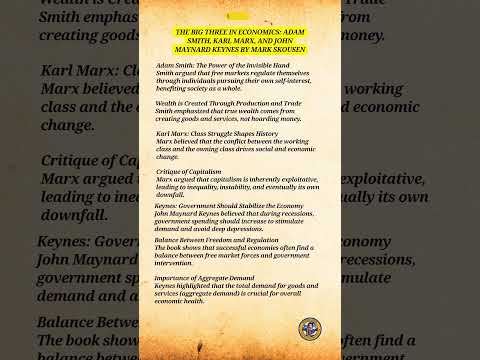
Marx's influence extends beyond the realm of economics, with his ideas informing discussions on politics, sociology, and culture. The clip "Big Three in Economics summary: Adam Smith economic ideas: Karl Marx vs Adam Smith" (1952) provides a useful comparison between Marx's views on capitalism and those of Adam Smith, highlighting the fundamental differences between these two influential thinkers.
However, not all scholars have been kind to Marx's legacy. The clip "Did Karl Marx plagiarize Henry C Carey's ideas" raises questions about Marx's intellectual honesty, sparking a debate that continues to this day. While some argue that Marx borrowed heavily from Carey's work without proper attribution, others defend his use of existing ideas as a necessary step in the development of Marxist theory.
Marx's Law of Value, outlined in "Marx's Law of Value: Intro to Marxist Economics | Socialism 101" (1967), remains a central concept in Marxist thought. This law posits that the value of commodities is determined by the socially necessary labor time required for their production. As such, Marx's ideas on value have had a profound impact on our understanding of economic systems and the distribution of wealth.
In conclusion, Karl Marx's legacy is complex, multifaceted, and far-reaching. His ideas continue to shape debates on economics, politics, and society, inspiring new generations of thinkers and activists. As we navigate the complexities of modern capitalism, Marx's critiques of alienation, surplus value, and class struggle remain more relevant than ever.
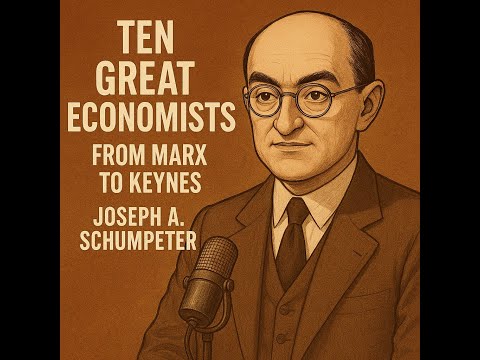
The clip "Series Trailer: Ten Great Economists (From Marx to Keynes) | A Schumpeterian Analysis" (1952) provides a useful introduction to the broader context of Marxist thought, situating Marx within a larger tradition of economic thought. This trailer sets the stage for an in-depth exploration of the lives and ideas of ten influential economists, including Marx, Adam Smith, and John Maynard Keynes.
As we continue to grapple with the challenges of modern capitalism, Marx's ideas offer a powerful critique of existing systems and a vision for a more equitable future. His legacy serves as a reminder that economic thought is not static, but rather an evolving discipline shaped by the contributions of countless thinkers over time.
In the words of Marx himself, "The ruling ideas of each age have ever been the ideas of its ruling class." As we navigate the complexities of our own era, it is essential to engage with Marx's ideas and consider their relevance to contemporary debates on economics, politics, and society.
Curated from public records and music databases.