0 views
Share this clip
Should You Really Turn Off the Lights? Economics vs. Everyday Habits Explained #economy #facts
Know someone who'd love this clip?
Share it with friends and fellow fans.
Share this clip
Disclaimer: MarketVault is an educational video curation platform. Nothing on this site constitutes financial advice, investment advice, or a recommendation to buy or sell any asset. Always consult a qualified, regulated financial advisor before making investment decisions. Investing carries risk — you may lose money.
Know someone who'd love this clip?
Share it with friends and fellow fans.
Is turning off the lights worth your time—or just a habit from the past? Discover what leading economists like Gary Becker, Richard Thaler, and John Maynard Keynes might say about flipping that switch. Learn how rational choice theory, mental accounting, and social norms all play a role in this surprisingly deep household debate. Save money, avoid arguments, and understand the economics behind your light switch decisions! #EconomicsExplained #EnergySavingTips #BehavioralEconomics #RationalChoice #LightSwitchDebate #RichardThaler #GaryBecker #JohnMaynardKeynes #HomeEconomics #MentalAccounting #EverydayEconomics #SaveElectricity #SustainableLiving #CostBenefitAnalysis #EconomicThinking
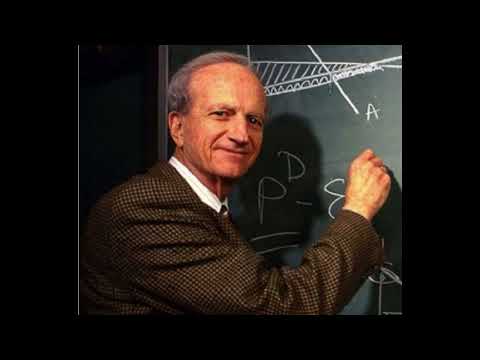
Gary Stanley Becker (; December 2, 1930 – May 3, 2014) was an American economist who received the 1992 Nobel Memorial Prize in Economic Sciences. He was a professor of economics and sociology at the University of Chicago, and was a leader of the third generation of the Chicago school of economics. Becker was awarded the Nobel Memorial Prize in Economic Sciences in 1992 and received the United States Presidential Medal of Freedom in 2007. A 2011 survey of economics professors named Becker their f...
More about Gary Becker→Added
The clip "Should You Really Turn Off the Lights? Economics vs. Everyday Habits Explained" is a fascinating example of how economics can be applied to even the most mundane aspects of everyday life. The expert featured in this footage, Gary Becker, was a renowned American economist who made significant contributions to our understanding of human behavior and decision-making.
Becker's work on rational choice theory, which posits that individuals make decisions based on their own self-interest, is particularly relevant to this discussion. By applying this framework to the simple act of turning off lights, we can see how seemingly trivial habits can have a significant impact on our wallets and the environment. The expert explains how mental accounting, or the way people categorize and prioritize expenses, plays a crucial role in determining whether one chooses to conserve energy.
One of the most interesting aspects of this footage is its ability to illustrate the intersection of economics and psychology. By examining the social norms that influence our behavior, we can gain insight into why some individuals are more likely to turn off lights than others. This highlights the importance of understanding not just individual preferences but also the broader cultural context in which they operate.
The expert's discussion of cost-benefit analysis is also noteworthy. By weighing the costs and benefits of turning off lights, we can see how even small actions can have a significant impact on our energy consumption and, by extension, the environment. This approach to decision-making is particularly relevant in today's world, where concerns about climate change and sustainability are increasingly pressing.
What makes this footage truly remarkable is its ability to make complex economic concepts accessible to a broad audience. By using everyday examples like turning off lights, the expert is able to illustrate key principles of economics in a way that is both engaging and relatable. This approach is particularly valuable for those who may be intimidated by more abstract or technical discussions of economics.
The inclusion of other notable economists, such as Richard Thaler and John Maynard Keynes, adds depth and context to the discussion. Their contributions highlight the ongoing relevance of their ideas to contemporary debates about human behavior and decision-making. By drawing on this rich intellectual heritage, the expert is able to provide a nuanced and multifaceted exploration of the economics behind everyday habits.
Overall, this footage offers a fascinating glimpse into the world of economics and its ability to illuminate even the most mundane aspects of life. By applying rigorous analytical techniques to seemingly trivial issues, we can gain a deeper understanding of human behavior and decision-making. As such, it is a valuable resource for anyone interested in exploring the intersection of economics and psychology.
Curated from public records and music databases.
 23:51
23:51Gary Becker
 20:11
20:11Gary Becker
 0:22
0:22Gary Becker
 27:22
27:22Gary Becker