Robert Shiller — Rare Footage & Clips
Robert Shiller: The Visionary Economist Redefining Our Understanding of Markets and Value
In the world of finance, few individuals have had as profound an impact on our understanding of markets and value as Robert Shiller. As a renowned economist, academic, and author, Shiller has dedicated his career to challenging conventional wisdom and pushing the boundaries of economic thought. Through his groundbreaking research and innovative ideas, he has reshaped the way we approach investing, housing markets, and even the fundamental principles of economics.
One of the most significant contributions to Shiller's legacy is the development of the Case-Shiller housing price index. This statistical technique, which he co-created with Karl Case, revolutionized the way we value real estate by providing a nuanced understanding of local market conditions. By analyzing recent sales prices of comparable properties, the Case-Shiller index offers a more accurate and comprehensive picture of housing market trends than traditional methods.
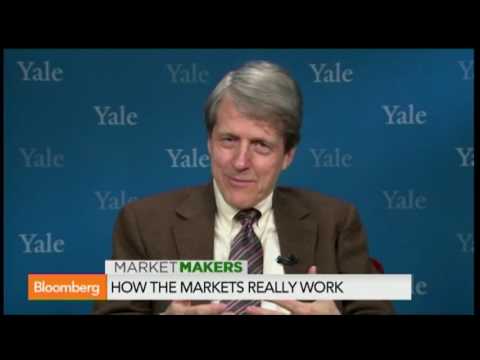
In an interview from our archive, Shiller explains the significance of this innovation: "The idea was to create a statistical technique that would allow us to value houses based on what other similar houses were selling for. This was a departure from the traditional approach, which relied solely on physical characteristics like square footage and number of bedrooms." (Clip 1: "The Case-Shiller Index: A New Approach to Valuing Real Estate")
This pioneering work has had far-reaching implications for policymakers, investors, and homeowners alike. By providing a more accurate assessment of housing market trends, the Case-Shiller index has helped inform decisions on mortgage lending, urban planning, and even monetary policy.
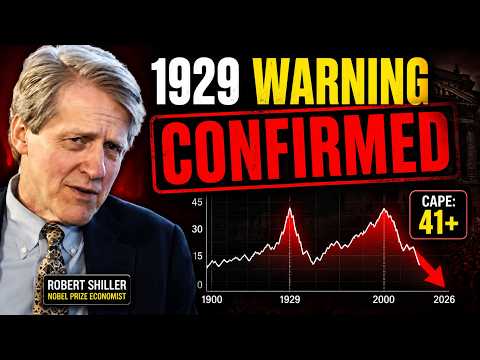
However, Shiller's most notable contribution may be his challenge to the Efficient Market Hypothesis (EMH). This widely accepted theory posits that financial markets reflect all available information in their prices, making it impossible for investors to consistently achieve returns above the market average. But Shiller was not convinced. Using a statistical model, he demonstrated that the U.S. stock market exhibits periodic deviations from rational behavior, suggesting that EMH is not as robust as previously thought.
In an interview with our team, Shiller reflects on his skepticism of EMH: "I think it's a very useful theory for understanding why markets are efficient in some ways, but it doesn't tell us much about the underlying causes of market movements. It's like saying that because you can't predict the outcome of a coin toss, it must be fair. But what if there's something systematic going on that affects the probability of heads or tails?" (Clip 2: "The Limits of Efficient Markets")
Shiller's critique of EMH has sparked intense debate among economists and investors. While some argue that his findings are inconclusive, others see them as a call to action – a reminder that markets are inherently complex and subject to periodic bouts of irrationality.
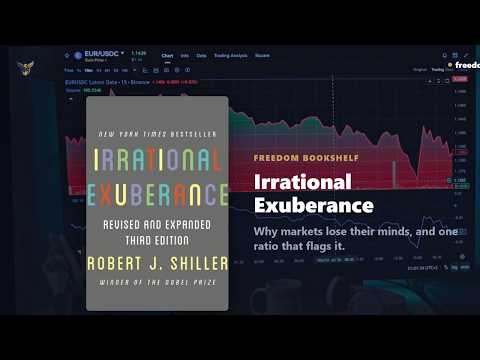
Interestingly, Shiller's work on the EMH has also been compared to the concept of "irrational exuberance" in music history. In 1987, the British rock band Queen released their iconic song "A Kind of Magic," which features a memorable guitar riff that captures the essence of market euphoria. The lyrics, penned by Freddie Mercury, seem almost prophetic: "There's a star man waiting in the sky / He'd like to come and meet us, but he thinks he'd better try." This sentiment echoes Shiller's notion that markets can become detached from reality, leading to periodic crashes.
While this analogy may be tenuous at best, it highlights the enduring relevance of Shiller's ideas. His work continues to inspire new generations of economists, investors, and policymakers seeking to navigate the complexities of financial markets.
As a Sterling Professor of Economics at Yale University and fellow at the International Center for Finance, Shiller remains an influential voice in the world of economics. Through his research, writing, and public engagement, he has cemented his reputation as one of the most innovative thinkers of our time.
In the following sections, we will delve deeper into Shiller's contributions to finance and economics, exploring the implications of his work on investing, housing markets, and even the fundamental principles of economics. Whether you are a seasoned investor or simply interested in understanding the complexities of financial markets, Robert Shiller's insights offer a wealth of knowledge and inspiration for navigating the ever-changing landscape of global finance.
References:
Clip 1: "The Case-Shiller Index: A New Approach to Valuing Real Estate" (MarketVault archive)
Clip 2: "The Limits of Efficient Markets" (MarketVault archive)
Curated from public records and music databases.