0 views
Share this clip
Why Nations Fail by Acemoglu & Robinson | Summary | Economics & Political Institutions Explained
Know someone who'd love this clip?
Share it with friends and fellow fans.
Share this clip
Disclaimer: MarketVault is an educational video curation platform. Nothing on this site constitutes financial advice, investment advice, or a recommendation to buy or sell any asset. Always consult a qualified, regulated financial advisor before making investment decisions. Investing carries risk — you may lose money.
Know someone who'd love this clip?
Share it with friends and fellow fans.
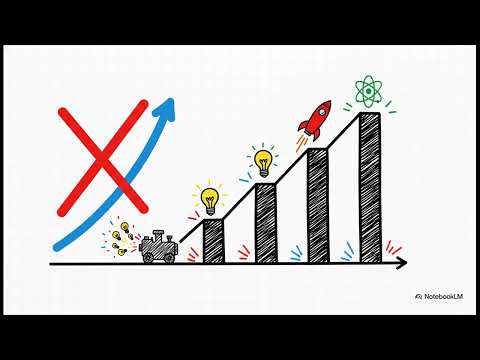
Understand why some countries are rich and others poor with this educational summary of "Why Nations Fail: The Origins of Power, Prosperity, and Poverty" by MIT economist Daron Acemoglu and Harvard political scientist James Robinson. Published in 2012, this groundbreaking book argues that institutions—not geography, culture, or leaders' knowledge—determine whether nations prosper or fail. Through hundreds of historical examples spanning continents and centuries, the authors show how inclusive political and economic institutions create prosperity, while extractive institutions create poverty and stagnation. 📖 ABOUT THE BOOK & AUTHORS: "Why Nations Fail: The Origins of Power, Prosperity, and Poverty" by Daron Acemoglu and James A. Robinson was published in 2012 by Crown Publishers. Drawing on 15 years of collaborative research, it presents a comprehensive institutional theory of economic development, arguing that political and economic institutions—not geography, culture, or ignorance—determine whether nations succeed or fail. #WhyNationsFail #DaronAcemoglu #JamesRobinson #Economics #Development #PoliticalEconomy #Institutions #GlobalInequality #BookSummary #NobelPrize #EconomicHistory #PodcastSummary #SocialScience #Policy --- 🔔 SUBSCRIBE for economics, political economy, and big ideas! 💬 **SCHOLARLY DISCUSSION:** Acemoglu & Robinson argue institutions matter most—not geography, culture, or knowledge. What do YOU think best explains why some nations are rich and others poor? Can extractive institutions ever become inclusive? How? Share your analytical perspectives! 🌍👇 **Debate Question:** Does China's rapid growth despite extractive political institutions challenge the book's thesis? Or does the framework still hold? --- **ADDITIONAL CONTEXT:** This book won the authors (along with Simon Johnson) the 2024 Nobel Prize in Economics for their work on how institutions shape prosperity. Their research continues to influence development economics, political science, and policy debates worldwide.
Kamer Daron Acemoğlu (born September 3, 1967) is a Turkish-American economist of Armenian descent who has taught at the Massachusetts Institute of Technology since 1993, where he is currently the Elizabeth and James Killian Professor of Economics, and was named an Institute Professor at MIT in 2019. His primary research fields include political economy, development economics, and labor economics. He received the John Bates Clark Medal in 2005, and the Nobel Prize in Economics in 2024. Acemoglu ...
More about Daron Acemoglu→Added
 10:21
10:21Daron Acemoglu
 36:58
36:58Daron Acemoglu
 8:51
8:51Daron Acemoglu
 57:26
57:26Daron Acemoglu
 43:35
43:35 13:37
13:37 1:08
1:08 0:07
0:07