About This Footage
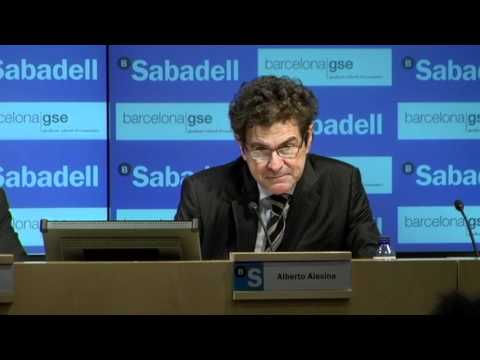
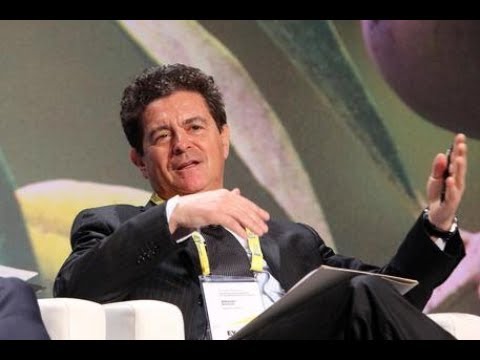
This 2014 footage of Alberto Alesina, a renowned Italian economist and Nathaniel Ropes Professor of Political Economy at Harvard University, is notable for its insightful analysis on the timing of austerity measures and fiscal adjustments in Europe. The clip, which spans an hour and nineteen minutes, provides a unique glimpse into Alesina's thoughts on the economic challenges facing the continent.
Alesina's keynote address, which begins around 9:00 minutes into the footage, is particularly noteworthy for its critique of Europe's handling of the crisis. He argues that the region has failed to adopt anti-cyclical fiscal policies, instead opting for austerity measures that have exacerbated the economic downturn. This criticism is in line with Alesina's previous research on the subject, which has shown that fiscal contractions can be particularly damaging during times of economic stress.
One of the most interesting aspects of this footage is Alesina's suggestion that European countries implement permanent tax cuts to facilitate structural reforms. He believes that such a move would allow governments to address long-term issues without being hindered by short-term budget constraints. This idea is in line with Alesina's broader research on the importance of fiscal policy in promoting economic growth and stability.
Alesina also critiques the European obsession with investing in infrastructure, arguing that this approach has not yielded the desired results. Instead, he advocates for a more nuanced approach to economic development, one that takes into account the unique needs and challenges of each country. This emphasis on context-specific solutions is a hallmark of Alesina's work, which has sought to bridge the gap between economics and politics.
The Q&A session that follows Alesina's keynote address provides further insight into his thoughts on the European crisis. He acknowledges the progress made in establishing a banking union, but notes that much more needs to be done to address the underlying structural issues facing the region. His conclusion, which quotes Thomas Philippon's observation that "things are difficult because they are complicated," is a poignant reminder of the complexity and nuance required to tackle such challenges.
This footage is also notable for its historical significance. Recorded in 2014, it provides a snapshot of Alesina's thoughts on the European crisis at a time when the region was still reeling from the aftermath of the financial crisis. In light of subsequent events, including the ongoing struggles of countries like Greece and Italy, this footage offers valuable lessons for policymakers and economists.
In memory of Alberto Alesina, who passed away in 2020, this footage serves as a testament to his enduring legacy in the field of economics. His work continues to influence researchers and policymakers around the world, and this clip provides a unique window into his thought process on some of the most pressing economic issues of our time.
The context provided by the event report and the UBS Center's website offers further insight into Alesina's ideas and their relevance to the broader European debate. The tribute to Alesina that appears on the UBS Center's website is a fitting tribute to his contributions to the field, and serves as a reminder of the impact he had on the world of economics.
Overall, this footage is an invaluable resource for anyone interested in understanding Alesina's thoughts on the European crisis. It provides a unique glimpse into his thought process, and offers valuable insights for policymakers and economists seeking to address some of the most pressing economic challenges facing the region today.
Curated from public records and music databases.