About This Footage
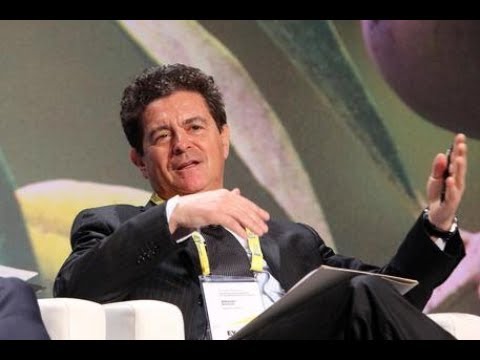
This 9:49 clip featuring Alberto Alesina, the late Nathaniel Ropes Professor of Political Economy at Harvard University, offers a timely and thought-provoking analysis of the complex interplay between high public debts and low interest rates. As an economist renowned for his work on the intersection of politics and culture, Alesina's insights are particularly valuable in understanding the challenges facing policymakers in today's economic landscape.
The footage is notable not only because of Alesina's expertise but also because it tackles a pressing issue that has significant implications for economic stability and growth. The legacy of the last financial crisis has left many countries with high public debts, which are further complicated by low interest rates. While low interest rates can provide room for expansionary fiscal policies to boost aggregate demand, they also create risks if not managed carefully.
Alesina's discussion highlights the need for policymakers to reconsider fiscal rules in the Eurozone, particularly in light of the Maastricht Treaty's restrictions on debt monetization. He questions whether these rules should be relaxed or reformed to accommodate the changing economic environment. This is a critical issue, as Italy's struggles with public debt stabilization are a prime example of the challenges facing policymakers.
One of the key takeaways from Alesina's analysis is that there is a pressing need for greater coordination between fiscal and monetary policy. He argues that this coordination can help mitigate the risks associated with high public debts and low interest rates. This is particularly relevant in the context of the Eurozone, where member states face common economic challenges.
Alesina's expertise as an economist of politics and culture also shines through in his discussion of the social and cultural implications of fiscal policy decisions. He notes that ageing populations and high public debts push policymakers in opposite directions, requiring a nuanced understanding of the complex interplay between economic, social, and political factors.
The clip is also notable for its relevance to current events. The ongoing challenges facing Italy's economy, including its struggles with debt stabilization, make Alesina's analysis particularly timely. His discussion highlights the need for policymakers to think creatively about how to address these challenges while minimizing risks to economic stability.
Overall, this footage offers a valuable contribution to the ongoing debate on fiscal policy and economic stability in the Eurozone. Alesina's insights are informed by his extensive research and expertise as an economist of politics and culture, making him an authoritative voice on this critical issue.
Curated from public records and music databases.