2 views
Share this clip
Gary Becker’s Theory of Derived Demand Explained | Consumer Behavior MEC 108 IGNOU MA Economics
Know someone who'd love this clip?
Share it with friends and fellow fans.
Share this clip
Disclaimer: MarketVault is an educational video curation platform. Nothing on this site constitutes financial advice, investment advice, or a recommendation to buy or sell any asset. Always consult a qualified, regulated financial advisor before making investment decisions. Investing carries risk — you may lose money.
Know someone who'd love this clip?
Share it with friends and fellow fans.
Gary Becker’s Theory of Derived Demand Explained | Household Production, Consumer Behavior & Exam-Ready Notes Discover how Gary Becker’s groundbreaking 1965 Theory of Derived Demand transformed consumer theory by redefining the household as both a producer and a consumer. 🌟 In this powerful framework, individuals do not derive satisfaction directly from market goods—they derive utility from commodities (Zi) that the household produces using a mix of purchased goods/services + time inputs. 🏠⚙️⏱️ Just like a firm uses raw materials to produce output, households combine market goods with time to generate final commodities that yield utility—making the demand for market items a derived demand. 📦➡️🎯 This shift explains why people buy goods not for themselves, but for the services these goods help create, such as nutrition, comfort, cleanliness, skills, leisure, and wellbeing. 🍽️📚✨ Perfect for students of IGNOU MEC/MECE, UGC-NET Economics, and anyone exploring modern microeconomic foundations, this explanation boosts conceptual clarity, exam scoring potential, and real-world understanding of consumer behavior. 🎓🔥 Learn the core logic, production analogy, and exam-useful keywords behind Becker’s revolutionary idea—essential for microeconomics, household behavior models, and advanced consumer theory. 💡📘 --- SEO Keywords (Optimized for Search & Exams) Gary Becker Theory of Derived Demand Household Production Theory Becker 1965 Consumer Behavior Derived Demand Economics Commodities Zi Household Production Time allocation in consumer theory Household as producer and consumer Microeconomics IGNOU MEC IGNOU MECE Exam Notes UGC NET Economics Microeconomics Consumer demand theory advanced concepts Theory of household production function Market goods vs commodities utility Becker time and goods model Household production microeconomics summary --- Trending Hashtags (Exam + Academic + Public Awareness) #GaryBecker #DerivedDemand #HouseholdProduction #Microeconomics #ConsumerTheory #IGNOU #MEC #MECE #UGCNETEconomics #EconomicsNotes #StudyGram #EconFacts #PublicEconomics #MarketDemand #HouseholdBehaviour #ExamPreparation #EconomicsStudents #LearningEconomics #AcademicContent #EconConcepts
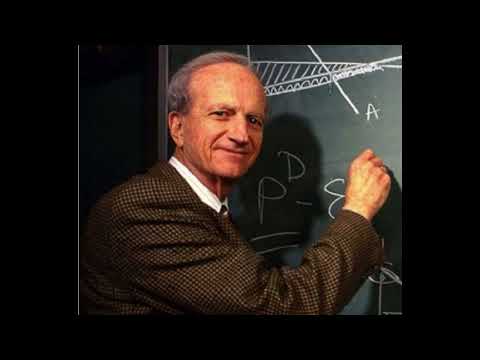
Gary Stanley Becker (; December 2, 1930 – May 3, 2014) was an American economist who received the 1992 Nobel Memorial Prize in Economic Sciences. He was a professor of economics and sociology at the University of Chicago, and was a leader of the third generation of the Chicago school of economics. Becker was awarded the Nobel Memorial Prize in Economic Sciences in 1992 and received the United States Presidential Medal of Freedom in 2007. A 2011 survey of economics professors named Becker their f...
More about Gary Becker→Added
This 1965 footage featuring Gary Becker is a seminal moment in the development of modern economic thought, particularly in the realm of consumer behavior. The clip, which clocks in at 5:54 minutes, offers an in-depth explanation of Becker's groundbreaking Theory of Derived Demand.
Becker, a renowned economist and Nobel laureate, revolutionized the field by redefining the household as both a producer and a consumer. His theory posits that individuals derive utility not directly from market goods, but rather from commodities (Zi) produced within the household using a combination of purchased goods/services and time inputs. This framework fundamentally alters our understanding of demand, shifting it from a direct to a derived concept.
The production analogy is a crucial aspect of Becker's theory. Just as firms use raw materials to produce output, households combine market goods with time to generate final commodities that yield utility. This process makes the demand for market items a derived demand, rather than an end in itself. In other words, people buy goods not for their own sake, but because they contribute to the creation of services such as nutrition, comfort, cleanliness, skills, leisure, and wellbeing.
This theory has far-reaching implications for microeconomics, household behavior models, and advanced consumer theory. By understanding that individuals derive utility from commodities produced within the household, economists can better grasp the complex relationships between market goods, time inputs, and final consumption. This insight is particularly relevant in today's economy, where households are increasingly involved in various forms of production, from food preparation to DIY projects.
Becker's Theory of Derived Demand has had a lasting impact on the field of economics, influencing generations of economists and policymakers. The clip provides an excellent introduction to this concept, making it an invaluable resource for students of IGNOU MEC/MECE, UGC-NET Economics, and anyone seeking to deepen their understanding of modern microeconomic foundations.
The expert's explanation is clear, concise, and engaging, breaking down the complex logic behind Becker's theory into manageable components. The production analogy is skillfully employed to illustrate the household as a producer-consumer unit, making it easier for viewers to grasp the core concepts. This footage is an excellent tool for students seeking to boost their conceptual clarity, exam scoring potential, and real-world understanding of consumer behavior.
In conclusion, this 1965 footage featuring Gary Becker's Theory of Derived Demand is a must-watch for anyone interested in economics, particularly those exploring microeconomic foundations, household behavior models, and advanced consumer theory. The expert's explanation provides a comprehensive overview of the theory, making it an essential resource for students, researchers, and policymakers alike.
Curated from public records and music databases.
 1:57:50
Gary Shilling
 1:19
1:19 0:31
0:31 0:42
0:42Benjamin Graham
 23:51
23:51Gary Becker
 20:11
20:11Gary Becker
 0:22
0:22Gary Becker
 27:22
27:22Gary Becker